
Best Ways to Create AI Characters in 2026
Discover how to build an AI character from scratch using text prompts or images and turn it into a consistent conversational experience. This guide breaks down how to design a believable AI character step by step.


create AI character
What Does It Mean to Create an AI Character?
To create an AI character, you’re not just generating an image. You’re building a digital personality that can communicate, respond, and evolve through interaction. In simple terms, an AI character is the product of three things working together: a clearly defined role, a consistent voice, and conversational ability.
Most people start by trying to create AI character chat experiences using prompts or templates. You describe who the character is, how they speak, and what they do, and the system turns that into a conversational entity. It sounds simple, and at a basic level, it is.
However, when users attempt to create an AI character for free with random tools, they often end up with something shallow. Although an AI character may appear “good” or “correct” a couple of times, it still does not have the necessary consistency and memory to engage users over an extended period of time.
Creating an AI character typically comes down to three steps:
- Defining its personality.
- Structuring how it behaves.
- Connecting the AI character to a conversation or interface system.
Once these elements align, the character starts to feel less like a tool and more like a real presence.
How to Create an AI Character in 5 Easy Steps?
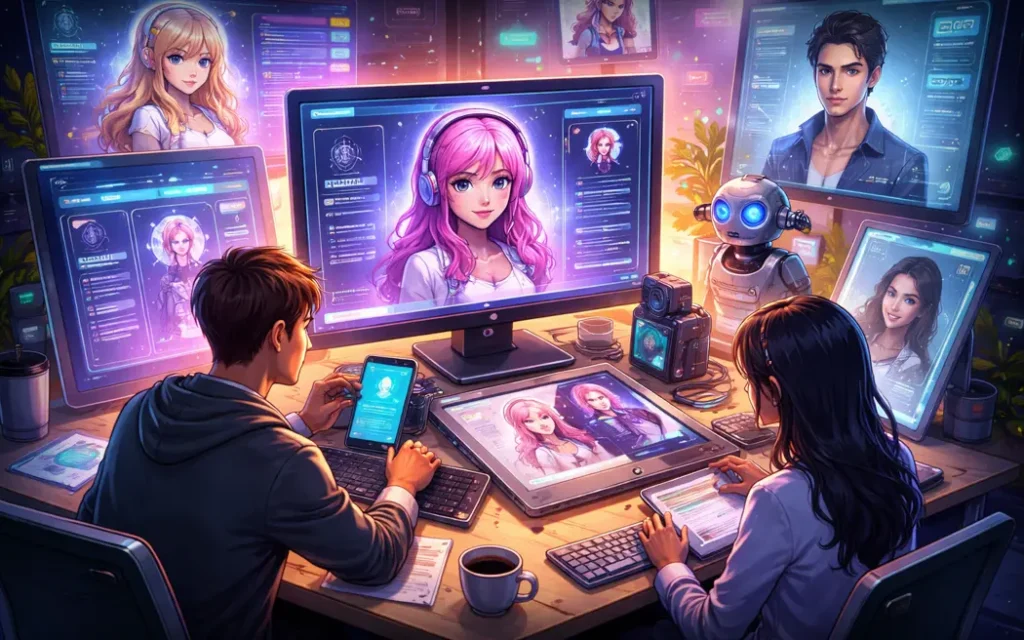
1. Define identity. Determine who or what they will be, their foundational experience, their reason for existing, and anything else you feel would be important to establish.
2. Define personality and tone. Decide on how this individual speaks (formal, informal), the extent to which they’ll use emotional language, and the level of vocabulary they’ll employ when communicating with you (i.e., simpler language).
3. Structure the prompt. Combine all relevant information from #1 and #2 (identity + tone) along with a complete set of specific behavioral guidelines into a single coherent instructional block.
4. Test in chat. Communicate with your AI character using chat to get an idea of how reasonable and consistent its responses will be.
5. Refine and lock behavior. Note any issues and revise them as needed. Create a prompt that you can reuse for your AI character from this information.
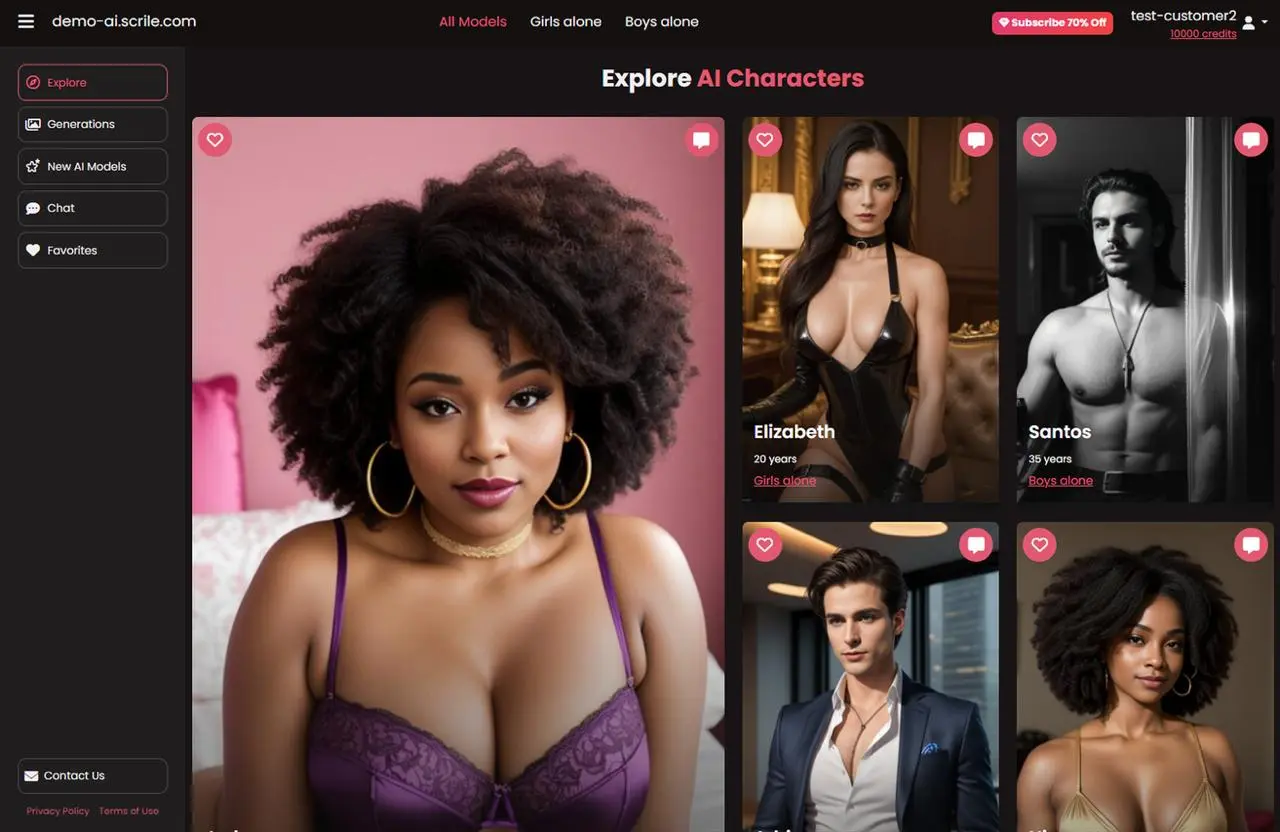
Main Ways to Create an AI Character: Tools & Approaches
Create an AI Character Chat
When you’re building AI character-based chat, the focus should be on the dialogue component before the visual element. This is common with:
- AI companionship and entertainment bots.
- Customer support agents (chatbots).
- Expert or coaching characters.
The biggest issue is ensuring the character consistently delivers the same logic and tone of voice over time; if not, they will break the user’s immersion quickly.
To ensure this occurs as planned, you must have the following:
- A defined personality prompt.
- Clearly defined behavior guidelines and rules.
- Predefined conversational scenarios or frameworks
Without these parameters defined, even the highest-quality models will begin to erode in quality; ultimately, they will start to sound generic and boring.
AI Character Generator from Text
The most flexible method today is using an AI character generator from text. You describe the character in detail, and the system builds responses based on that input.
Here’s a typical workflow:
- Create a structured prompt (who/what + tone/rules).
- Generate character responses based upon the prompt. The character interaction will determine how to refine character responses.
- This type of workflow allows you strong control over the results. However, if you write an ineffective prompt, the output will be weak.
Because of this, experienced creators treat prompts as specifications for creating a product rather than simply writing a description.

Create an AI Character Based on a Photo
Another popular route is to create an AI character based on a photo. Here, visuals come first, and personality is added later.
You upload or generate an AI character photo, then attach behavior and dialogue to it. This works well for:
- Influencer-style AI personas.
- Branding and storytelling.
- Social media content.
But there’s an important distinction that separates strong visuals from strong characters. Strong visuals do not automatically define strong personalities. Many of the strong-looking projects fall completely flat when it comes to conversation because of their weak and undefined personality layer.
Common Mistakes When You Create an AI Character

Overly generic prompts
When a character has loose specifications and ambiguous descriptions, such as “friendly expert” or “helpful assistant”, the character responds inconsistently and lacks a recognizable voice.
The absence of constraints
Many creators will leave the responses of the character undefined. Because they do not have clear boundaries in place when defining what their character is permitted to do. It leaves the responses of the character to drift, to be contradictory of the character’s previous message, or to completely violate the tone set for their character.
Voice inconsistency
A character could be very professional in one message, then have a very casual style in another message. This is often the result of not having a clearly defined tone, vocabulary, and rules of communication established for the character before the character begins to generate responses.
The lack of scenario thinking
Strong AI characters are designed for specific interactions: support conversations, onboarding flows, or entertainment dialogues. Without predefined scenarios, responses feel reactive rather than intentional.
Context and Memory
Finally, many people ignore context and memory. They treat each message as a standalone exchange, which makes the character feel shallow. Users expect continuity, even in simple conversations.
AI Character Writer: Building Personality That Feels Real
At some point, every creator realizes that tools alone aren’t enough. To truly stand out, you need to think like an AI character writer, not just a prompt user.
A good character always requires a clear backstory that provides an identity for that character. Not just the type of character but the culture and experiences that shaped that character.
Backstory and Identity Design
Instead of writing “marketing expert,” define the following:
- Background: 10+ years of experience working with startups using software as a service.
- Motivation: Helping other entrepreneurs grow and succeed faster.
- Attitude: Direct and somewhat sarcastic, with a practical approach for solving problems.
When you add these types of details to the design of your backstory, it will provide your character with depth and also assist in maintaining continuity across the various topics your character will be included within.
A good backstory does not have to be long. A good backstory should be defined well enough to be able to guide your character’s behavior.
Speech Patterns and Voice
A character’s voice can bring a character to life. But often it is overlooked.
Define:
- Vocabulary (technical vs simple).
- Sentence style (detailed vs. short).
- Emotional tone (sharp, funny, supporting).
As an example, your mentor may have a voice full of authority that uses very short, decisive statements, whereas your friend has a softer voice that uses more details and takes longer to get to the point.
In writing with good characterization, it’s also important to maintain that consistency through the entire story. A little bit of deviation in your tone can disrupt the reader’s experience.
Boundaries and Safety
Solid character development happens because you understand the difference between what people will say and what they shouldn’t.
Establish guideline boundaries:
- No situation for comment.
- Limits on commentary (no violence/anger/animosity).
- Ethical limitations.
This limits unpredictability and makes it safe for users. It protects your offering and ultimately lays the groundwork for either expansion of growth in the market or creating a source of revenue or sustainability.
Example Prompt Framework
To simplify the process, many creators use a structured approach:
- Identity block: who the character is.
- Style block: how they speak.
- Rules block: what they can and cannot do.
- Scenario block: how they behave in key situations.
This is where an AI character prompt generator becomes useful. It helps standardize inputs and makes scaling easier if you’re building multiple characters.
In practice, the better your structure, the less you rely on trial and error.
Why Create AI Character: Use Cases and Business Models

Once you move beyond experimentation, the question shifts from how to why you should create an AI character in the first place. And this is where things get interesting.
AI-generated personas can be a creative asset; they’re becoming another type of digital asset—one that can be developed, scaled, and monetized.
Community and Engagement
The most immediate application for this technology is through audience engagement. Instead of just creating static content, with AI, you can create an exciting, ongoing experience for audiences.
Many creators are using AI characters to do the following:
- Build communities through interactivity.
- Expand their brand into the 24/7 world without experiencing creator burnout.
For example, if a creator’s own AI character is answering audience questions, providing direction, and/or entertaining audiences, then there will be a deeper connection with that audience than just seeing a post or video of the creator.
Most importantly, AI-created characters will keep users connected to you longer than traditional posts or videos.
Monetization Models

AI characters give you lots of ways to make money besides advertisements or sponsorships, which is why they can be so popular. There are some typical ways to make money with AI characters:
- Charge a monthly fee for premium chat access.
- Charge for each message sent (per message).
- Charge for providing AI-assisted coaching.
- Provide exclusive content (or digital media) through an AI character.
Unlike traditional products that do not change as more people use them, these types of products become more valuable (i.e., generate increased revenues) with every additional user engaged.
Example Economics (Mini Calculation)
Let’s break it down with a simple scenario.
- 500 active users.
- $10 per month subscription.
That gives you $5,000 in monthly revenue.
Now assume:
- Platform or infrastructure cost: 20% ($1,000).
You’re left with $4,000 net per month.
And this is a conservative estimate. With stronger positioning or niche targeting, pricing can go significantly higher.
“The technology’s larger impact will be in complementing and augmenting human capabilities, not replacing them.”— Harvard Business Review
Consistency Framework: The Key to a Successful AI Character
If there’s one thing that separates a working prototype from a real product, it’s consistency. Anyone can create AI character free using basic tools. But making that character behave reliably over time—that’s the hard part. Without a framework, even a well-designed character will drift. Tone changes, logic breaks, and users lose trust.
Prompt Framework
To be consistent, you need a structure in your environment. By using a prompt framework that you can reuse, you will give the character a consistent design over time.
Your framework should contain the following minimum elements:
- Fixed identity (role, history).
- The rules of tone and style.
- Behavior rules.
- Context handling (what the character remembers).
This will reduce the number of random occasions where the response does not match the expectations of the user and therefore provide predictability to the positive side of the response.
Tone and Vocabulary Control
Many characters miss their mark when it comes to their tone. While this may seem okay initially, the accumulation of minor errors creates a disconnected relationship between the character and the audience over time.
In order to avoid this, define the following:
- frequently used words by your character;
- never-used words by your character;
- level of formality used by your character.
A character who acts as a business mentor will not change to act like an informal chatbot. By establishing a clear set of tone rules, you help to create a voice of recognition.
Why Free Tools Often Fall Short
When people try to create an AI character for free, they usually rely on disconnected tools. One for prompts, another for chat, maybe a third for visuals.
The end result is an unconnected ecosystem whereby:
- You have no control over the personality of your character.
- Your character has no persistent memory.
- You cannot monetize your character.
Although these free platforms provide an excellent testing ground for concepts, if you really want to experience the long-term sustainability and growth in this project, you should provide some structure to your working environment.
AI Character Prompt Generator and Automation

Once you start building more than one character, things get complicated fast. That’s where an AI character prompt generator becomes less of a convenience and more of a production tool.
Instead of writing every prompt from scratch, you move toward reusable systems. This is especially important if you plan to scale characters for different audiences or use cases.
Role of Prompt Templates
Prompt templates serve as a kind of checklist for developing behavior. They help you create consistent behaviors for a character, regardless of changing inputs.
Most prompt templates are very similar in structure and contain the following types of blocks:
- Identity Block (defines who the character is).
- Tone Block (defines how the character communicates).
- Rules Block (defines what the character tries to avoid).
- Context Block (defines what the character should remember and/or prioritize).
This type of structure creates less randomness in output results, making them more predictable over time.
Additionally, prompt templates will save you time; instead of having to recreate the character from scratch every session, you simply modify existing parameters.
Automation Pipelines
Next is where creators connect prompts together into workflow pipelines.
A workflow will normally consist of four steps:
- Create an input prompt.
- Generate a character.
- Refine a response.
- Deploy the refined response into a chat system.
This is where the AI character generator from text becomes powerful. You’re not just generating a character once—you’re iterating on it continuously.
It also allows you to test variations quickly. Small changes in tone or rules can be evaluated without rebuilding everything from zero.
Multimodal Future: AI Character Video Generator
AI characters are no longer limited to text chats. The next step is clearly multimodal, where interaction expands into voice and video. This is where the AI character video generator trend becomes especially interesting.
We’re moving from static conversations to full digital presence. And for creators, that changes how audiences perceive “characters” entirely.
From Chat to Presence
While text-only characters do have some level of efficacy, they remain largely an abstract medium. Through the use of video, we can also use this medium to define the identity and express emotion for a character.
With an AI-generated video, a character:
- can speak directly to the user;
- is able to use facial expressions and gestures;
- can convey content in a much more “human” manner.
This creates greater emotional engagement, as users now have the opportunity to experience the response rather than simply read one.
Use Cases for Creators and Brands
We are already witnessing the use of AI (artificial intelligence) video characters in numerous places:
- Through visual influencers who are on social media.
- AI tutors assist in helping people understand difficult subjects.
- Using AI video characters as brand spokespersons.
The presence of video results in greater trust and retention amongst viewers. Human beings respond instinctively to image and sound rather than reading dynamic text.
The primary message is this: the application of AI characters is mimicking more and more the ways in which humans express themselves. Therefore, video is the next evolution of AI character alternatives to animation.
How to Choose the Right Approach?
Consider the current situation and make a choice depending on what you have in your surroundings and your resources. The way in which an AI character develops will depend more on how you plan to use it than on any specific technology or technique that was used to create that AI character. Ask yourself if you are experimenting, creating as a hobby, or creating something to generate income.
Quick Comparison: What Works Best?
| Approach | Best for | Strengths | Weaknesses |
| Free generators | Testing ideas | Fast, no setup | Weak control, no scalability |
| Text-based creation | Creators & writers | Flexible personality design | Requires prompt skill |
| Photo-based characters | Branding & influencers | Strong visual identity | Weak behavioral depth |
| Full systems | Businesses & products | Monetization + structure | Requires setup effort |
“AI will augment human capabilities, freeing up workers to engage in more productive and higher-value tasks.” – McKinsey Report
From AI Character to Product
Once you move beyond experimentation, the next step is no longer about how to create an AI character for free or tweak prompts. It becomes about infrastructure.
When moving from thinking about AI characters as separate outputs to thinking of them as a system with users, access, monetization, and ongoing content management as a single entity, that’s when the real change will occur. The next step after trying to “create an AI character” using individual generators would be to build that character into a product that includes the same components as any other product. The most straightforward way to launch an AI layer will be with Scrile AI, where you define the characters or scenarios. Scrile AI manages all the other aspects, including branding, dashboards, payments, and scaling.
Launch Your AI Character Product With Scrile AI
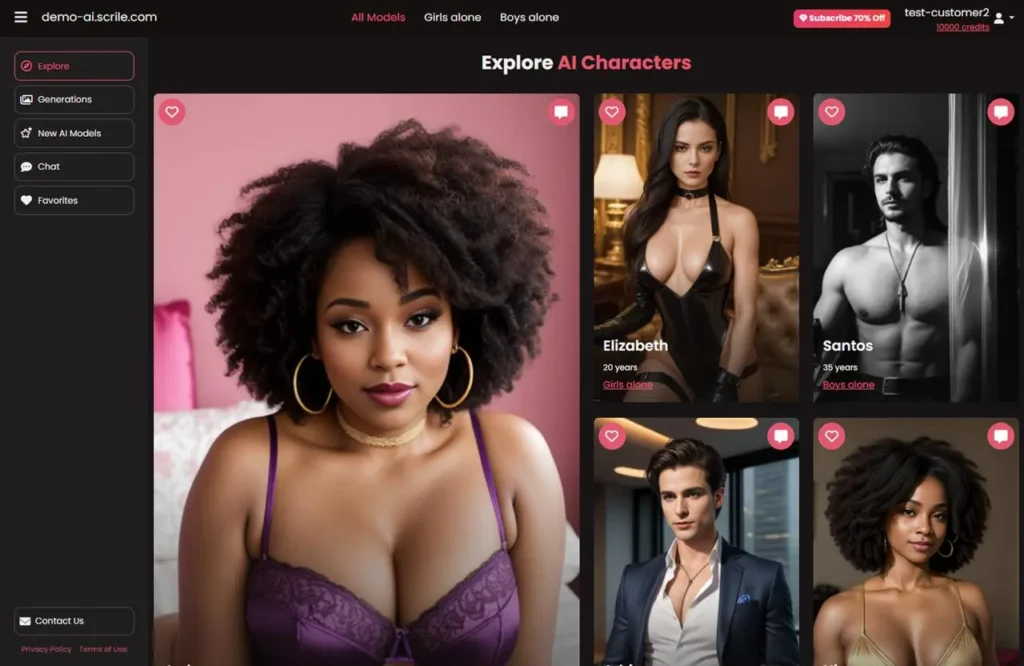
At this point, Scrile AI becomes relevant not as a tool but as a deployment layer for everything you’ve built conceptually.
Scrile AI combines all your systems into one. With it, you can:
- Create interactive products based on characters.
- Manage user access and subscriptions to products.
- Create and expand upon many different AI characters.
- Concentrate on what is being produced, rather than the infrastructure that runs it.
FAQ: Create AI Character
How can I create my own AI character?
How does an AI character prompt generator work?
Can I create my own AI for free?
What is the difference between an AI character and a chatbot?
How do AI characters make money?
