
How to Sell AI Art in 2026: Marketplaces, Stock & Your Own Site Guide
Learn how to sell AI art on Etsy, Amazon, Adobe Stock, Instagram, and NFTs. A practical 2026 guide covering pricing, platforms, and building your own sales system.

how to sell AI art
How to Sell AI Art: It’s Not Just About Uploading Files
If you want a fast, practical breakdown of how to sell AI art, here’s the reality. You don’t make money by uploading random images. You make money by turning AI visuals into useful, well-packaged products that solve a specific need. That’s the core principle behind how to sell AI-generated art online today.
Start simple. Test demand on platforms like Etsy by learning how to sell AI-generated art with bundles, print sets, or niche-specific designs. Focus on clear use cases, not just aesthetics.
Then expand. Attract attention to your work through social networking. Use stock photography to build up your passive income. Eventually, build your own customer audience and sales channel.
To recap some ideas:
- Build products – not just pictures.
- Find customers by confirming demand on existing marketplaces.
- Use social networks to reach potential customers.
- Scale those sales with collections and repeat buyers.
“Generative AI can augment creativity as a new collaboration tool for humans in enterprise settings.” — TechTarget
How to Actually Start Selling AI Art? 7 Practical Steps

To start selling digital products created with artificial intelligence (AI), here are seven steps you can follow.
Step 1: Find a Specific Niche
Don’t choose a broad topic. Find a clear use case that people pay for. Some examples include printable wall art, book covers, social media templates, and game assets. You can use either Etsy or Amazon to check if there are lots of listings with excellent reviews to determine if people are buying in the niche you have selected.
Step 2: Create a Batch of Images with Consistency
Instead of creating single images, try to create from 50 to 100 images at once using either Midjourney or Stable Diffusion. When creating your batch set, make sure you use the same category or theme for the entire batch, use the same color palette throughout your image set, and select a consistent image format for all of your images.
Step 3: Turn your Images into a Product
Create a complete product with multiple images (20 to 100), export your images at least 300 DPI so that they can be printed. Provide multiple aspect ratios when necessary, and name your product according to the images you created.
Step 4. Mock up and Present Your Product
Before you upload your product, create some visuals displaying how the product will look when placed inside a home or office:
- Put your art into an interior mockup.
- Use 5-10 preview images for each product.
- Clearly state the bundle size and the product’s use.
The better your product looks, the better the chance it will have to convert.

Step 5. Upload Product to Market (Etsy or Amazon)
When creating a listing for your product, be sure to include SEO content:
- Title: must include the same keywords your potential buyers will search for when looking for your products. Example: “Printable Wall Art Set 30 Prints Bundle.”
- Tags: include 10-13 relevant keywords for each product.
- Description: fully explain what the product is, giving full-size dimensions as well as product usage.
- Price: for bundles, ASP should be in the $9-19 range.
Publish and ensure all files are easily downloaded by customers.
Step 6. Get That Initial Traffic
Get the word out that you have a product for sale:
- Post short videos of the process of creating your product.
- Post visuals of the before or after from using AI to create your products.
- Include a link to your shop in your bio.
Goal: Generate initial clicks and engagement signals.
Step 7. Expand What is Working
Once you have had some views or sales for your products:
- Continue to create additional products in your niche.
- Increase bundle size (30 Images →60 Images).
- Create collections.
Over time you will have a catalog of products that generate traffic and revenue consistently.
How to Sell AI-Generated Art Online: Main Channels Explained

Once you understand what actually sells, the next step is choosing where to sell it. This is where many creators get stuck, because different platforms work in very different ways.
If you’re serious about how to sell AI-generated art online, you need to treat each channel as part of a broader system, not a one-size-fits-all solution.
4 Main Sales Channels
In principle, AI art can be sold through four different marketplace classifications:
- Marketplace (Etsy or Amazon). Traffic is pre-built in, and validation is quick and easy, but there are limitations regarding control over your products.
- Stock Platform (Adobe Stock). Passive income model, however, only through large volumes of sales.
- Social Platform (Instagram). Very beneficial for visibility and marketing (brand awareness); however, no direct sales.
- Collectible (NFT). Niche buyer group who are motivated by scarcity and feel/experience the story behind the piece.
Each platform attracts a unique type of buyer; however, more importantly, each of them expects to be sold a unique type of product.
Why One Platform Isn’t Enough
Many people make the error of depending upon a single sales platform. An example of this would be a person who sells exclusively on Etsy, while ignoring any other sales channels. While this may be effective for a short time, it presents a high risk.
Marketplaces such as Etsy have control over how visible you are as a seller. Each time they change their algorithm, your rank may drop, and one day you could lose all of your sales. The advantage of a platform like Instagram is that although they do not generate a direct income for you, they do give you an audience or an “ownership” in that audience.
The best way to reach your desired outcomes as an artist is through utilizing multiple platforms and multiple pathways.
Marketplaces: How to Sell AI-Generated Art on Etsy & Amazon

Marketplaces are usually the first step for beginners. They give you something you don’t have yet—traffic. That’s why most creators start here when learning how to sell AI-generated art on Etsy or exploring how to sell AI-generated art on Amazon.
However, traffic alone doesn’t guarantee sales. You still need the right product and presentation.
“Generative AI can transform this landscape by fostering divergent thinking, challenging existing biases, aiding in the evaluation of ideas, enhancing the refinement of concepts, and promoting collaborative innovation among employees and customers.” — Harvard Business Review
How to Sell AI-Generated Art on Etsy

Make a Product
Bundle 20-50 photos into a single theme. Must be able to produce a high-quality image, which has been exported at 300 dpi in either JPG or PNG file format.
Create Mockups
Develop five to ten JPG or PNG image previews of your artwork displayed in real-life locations to provide buyers with some examples of how they may utilize your work. Provide the total number of items available in the images.
Create Your Listing
Include key search words/phrases in both your title and tag search terms. Titles should consist of both a title that describes your printable artwork, such as “Printable Art – Minimalist Bohemian Artwork”, along with webpage linking/tag search words.
Upload your Files and Write Your Description
Upload all of your files to your website, with a clear understanding of what is contained within the file, such as size, format, and instant download options.
Set Pricing
To keep your prices competitive, start with a price range of $9 to $19 for your bundles.
Post and Test
Consolidate between five and ten products so you can be found with more search terms, and measure which have views or sales.
Optimize and Scale
To optimize and scale your listings, improve everything & scale to the highest level possible by:
- Improving title & tag markets through past performance.
- Development of additional listings in the same market.
- Expanding your bundles; e.g., going from thirty images to sixty images.
Consistency in the quantity of different items listed for sale also affects sales. Shops with a higher number of listings tend to do better because they are covering more search queries associated with their products.
How to Sell AI-Generated Art on Amazon

Amazon is a different game. Here, you’re not just selling files—you’re selling physical or print-on-demand products.
If you’re researching how to sell AI art on Amazon, the most common formats include:
- Books with minimal content (like journals and planners).
- Printables or posters.
- Coloring books.
The primary benefit to selling through Amazon is a larger volume of potential customers than through Etsy. Conversely, because of such intense competition, profit margins are lower than on Etsy.
When selling through Amazon, it is important to pay attention to layout, order of operations for publishing, and product descriptions because there’s less flexibility with those aspects when compared to Etsy. However, you may develop sales volume over time with Amazon sales.
Stock Platforms: How to Sell AI-Generated Art on Adobe Stock

Stock platforms follow a completely different logic. Instead of selling products directly, you earn small payouts from repeated downloads. That’s why many creators explore how to sell AI-generated art on Adobe Stock as a way to build passive income. However, this model only works if you understand its constraints.
Adobe Stock supports AI-generated images with several restrictions, including clear disclosure of when an image is generated by AI, as well as meeting quality and originality standards for your submitted files.
In addition, there are technical standards for quality, which include:
- High resolution.
- No artifacts or distortions.
- Clean subject matter and usability.
You are not targeting feelings or aesthetics like you would in a marketplace, but rather the functionality of your images.
The most successful categories of images usually consist of:
- Backgrounds and textures.
- Business or technology concepts in graphic form.
- Abstract images for presentation purposes.
- Generic lifestyle images
In other words, your content is meant to be reused by designers, marketers, and companies.
Social Selling: How to Sell AI Art on Instagram

Social platforms don’t work like marketplaces. You’re not listing products—you’re building attention. That’s why understanding how to sell AI art on Instagram is really about building a funnel, not just posting images.
Done right, Instagram becomes your top source of traffic.
Instagram as a Sales Funnel
Look at Instagram as the introduction to potential customers. They find you on Instagram, and then they follow you before they purchase your product or service from you through the following:
- Your Etsy shop.
- Product links.
- Your own website.
Instagram provides the ability to grow your business because you aren’t only depending on the marketplace’s algorithms; you are also building a demand for your business.
What Content Actually Works
It’s rare to grow by posting random AI images. The platform rewards engagement as opposed to simply posting the images, and they do not make a connection with the audience.
When posting, the following tends to perform well:
- Document the process. Include images of how you arrived at the final image or show what changes were made to the original image.
- Show before and after images. Provide an image of the raw output next to the final image for comparison.
- Purpose-driven images. Keeping a consistent theme will help to attract a particular audience to your page.
- Use short-form video (like Reels). This is where most of the reach will be found today.
The goal is simple; get people to stop scrolling.
Turning Followers Into Buyers
Attention alone doesn’t pay. You need a bridge between content and sales.
Effective approaches include:
- Linking to your shop in bio.
- Offering free samples or previews.
- Promoting bundles or collections.
- Creating limited drops.
Over time, your audience starts to trust your work. That trust is what drives repeat purchases.
How to Sell AI Art as NFT

NFTs sit in a different corner of the AI art market. This is not about utility or bulk downloads. It’s about ownership, scarcity, and narrative. That’s why learning how to sell AI art as NFT requires a different mindset compared to Etsy or stock platforms.
Here, the buyer is not just purchasing an image. They are buying a collectible.
NFT Market Positioning
Volume is less important than the perceptions of the NFT; one strong piece of art can be much greater than multiple low-quality pieces as long as it has a strong concept. Successful NFT AI art is characterized by:
- Strong visual identity.
- Clear story or concept.
- Limited editions/scarcity.
Without these elements, founders can find it extremely difficult to attract collectors.
What Actually Sells: From Images to Products

At this stage, we need to step back and look at something very practical. A lot of creators focus on visuals first, but the real question is simple: what do people actually buy?
This is where the concept of how to sell AI digital art becomes less about creation and more about packaging.
Why Single Images Don’t Sell Well
To be real, most standalone AI images don’t cut it these days for many different reasons.
- None of them are exclusive.
- There’s no clear purpose of use with them.
- They usually don’t warrant a high price point.
The majority of buyers aren’t looking to buy “just art”, but rather looking for something they can use immediately, whether it’s to decorate a room, use in a current project, or build out an asset for their company.
Because of those reasons, single-item listings will typically sell poorly, especially in niches with high volume.
Best-Selling AI Art Formats
Rather than using separate images, good sellers will use bundled items that are sold as a complete unit. Some of the more predictable types to sell will be:
- Bundles and Packs. Example: 30-100 images with a common theme to download:
- Printable wall art sets. Intended for decoration or framing within an interior space
- Book cover, or template, design. Targeted mainly at independent authors and publishers:
- Digital asset bundles. This includes: icons, backgrounds, UI elements and textures.
- Themed collections. Multiple pieces have a common style or story line.
The simplest part is if the customer has a complete item, they will generally pay more for that complete item.
Trust, Rules & Compliance: Don’t Get Banned or De-Ranked

This is the part many creators underestimate when learning how to sell AI-generated art online. You can have strong visuals and good products, but if your listings violate platform rules, your growth can stop instantly.
Every marketplace has one shared priority: trust and transparency.
Disclosure: Be Clear About AI Generation
Now a majority of platforms will require you to clearly indicate that the material you posted was created by an AI. This includes:
- Being explicit about where your material came from.
- Not describing AI-generated art as traditional illustrations.
- Following the specific labeling guidelines that apply to whichever platform is relevant to your post.
For example, when working on how to sell AI-generated art on Etsy, transparency is not optional anymore. It’s part of compliance.
Clear wording protects you. It also builds trust with buyers, especially commercial users who care about licensing.
Licensing and Rights: What You Must Understand
A lot of new people become very confused here when they create their own creations.
Remember:
- To stay away from creating outputs using copyrighted characters or brands.
- Follow style restrictions if those apply to your output.
- You’re putting your license terms clearly for the use of the completed pieces of artwork commercially.
Most importantly, your buyer/customer will want to know that they can use your work commercially with no confusion. Confusion means fewer sales.
Common Mistakes That Get Listings Flagged
Here are some common challenges:
- Using inaccurate descriptions like “One-of-a-kind hand-painted artwork”.
- Close duplication of well-known artistic styles.
- Not following AI rules on how to label work on platform.
- Uploading inconsistent or poor-quality uploads.
The automation systems used by platforms to moderate listings do not care about good intent. Mistakes will suppress or remove your listings.
Economics: Pricing, Margins & Revenue Logic

Once you understand platforms and product formats, the next question is simple: how do you actually make money consistently?This is where how to sell AI art becomes a numbers game, not just a creative one.
Most creators underestimate pricing strategy. They either price too low and burn effort, or price too high without perceived value. The right balance sits in structured packaging and clear positioning.
Pricing Strategy That Actually Works
In most cases, AI art monetization falls into three pricing tiers:
- Low-priced goods ($3–$15). Simple bundles, small print packets, starting packs.
- Medium-range goods ($15.00 – $50.00), larger bundles, niche bundles, and commercial-use products.
- Higher-priced products ($50.00 +) include extended licenses, complete product collections, and limited product collections.
The key is not just price, it’s perceived completeness. A buyer pays more when the product feels finished and ready to use.
Marketplace vs. Ownership: The Control Problem

At first, marketplaces feel like the perfect solution for how to sell AI-generated art online. You get traffic, search visibility, and ready-made buyers. Everything seems efficient.
But there’s a trade-off that becomes more obvious over time: you don’t control the system you depend on.
The Hidden Risk of Marketplaces
Etsy, Amazon, stock libraries, and other platforms use algorithms for their operations. Algorithms can have a direct impact on your visibility.
- Changes to the ranking of your listings can happen overnight.
- Listings may be re-ranked at any time without notice.
- Your competition can force you to be lower on the list.
- Policy changes from the platform can negatively affect your entire product catalog.
Your ability to earn money from these platforms is tied to their policies, so you have little to no control over them.
Traffic vs. Ownership
Marketplaces give you something valuable: traffic. But they don’t give you the asset behind it.
You don’t own:
- The email list.
- Your audience.
- The distribution channel.
So even if you generate steady sales, you are always renting attention. That’s the core limitation.
Building a Real Business Around AI Art

By now, the pattern should be clear. Learning how to sell AI art is not about finding a single platform or a secret trick. It’s about combining product thinking, distribution, and long-term audience building.
To start selling your products fast, use all three methods: marketplace, social media, and stock sites. Each method has its own pros and cons, but using all three will give you the best chances for long-term success.
The most successful creators have a similar path:
- Platform dependency.
- Adding passive income through selling products.
- Building your brand through creating products to sell.
Ownership Is the Real Growth Layer
At a certain point, there is a limit to how much you can rely on Etsy, Amazon, or stock sites as sales channels: not because they’re bad channels, just because they weren’t designed for you to have long-term control over your products.
This is one of the reasons that creators are moving toward:
- Directly selling product.
- Subscription services.
- Branded digital stores.
- Exclusive access to content.
With these types of sales, you can create a more steady and scalable income stream.
Once you’ve figured out how to sell AI-generated art online on platforms, the next step is to bring sales under your brand.
Scrile Connect: Turning AI Art Into a Scalable Platform
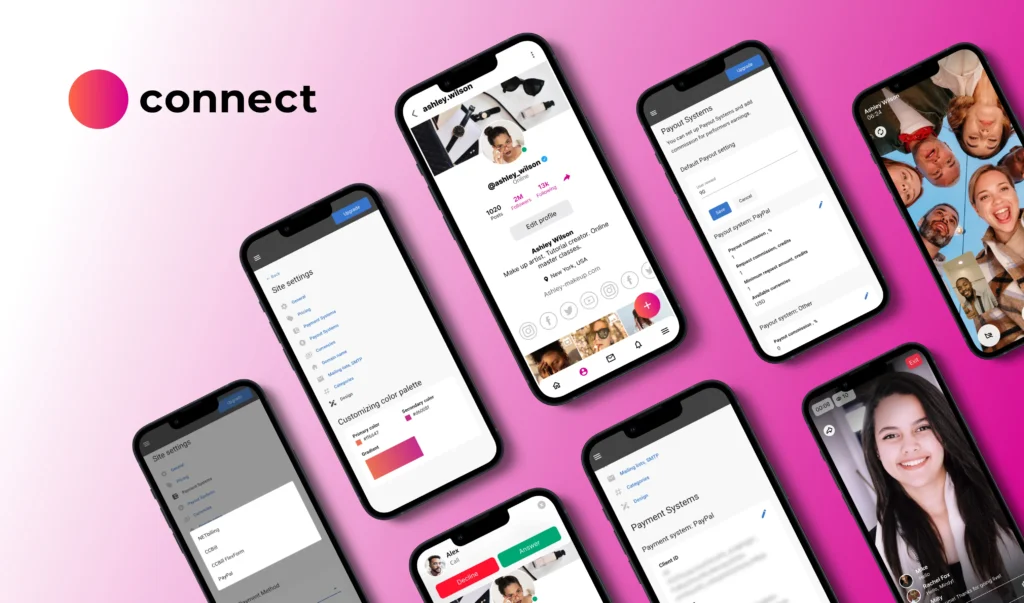
If you want to move beyond marketplaces, tools like Scrile Connect allow you to build your own ecosystem for selling AI art.
On Scrile Connect, you can:
- Build your brand with a custom platform.
- Bypass the marketplace; sell direct to your audience.
- Be able to sell subscriptions for exclusive offerings.
- Own your pricing, access, and relationship with your customers.
You don’t have to conform. You can create your own rules on a custom platform.
Summing Up: Where to Sell AI Art in 2026

| Platform / Channel | Best for | Income model | Control level | Difficulty | Key advantage | Main limitation |
| Etsy | Digital downloads, printable AI art | Direct sales per product | Low | Medium | Built-in buyer traffic | High competition & SEO dependency |
| Amazon | Prints, books, POD products | Royalties per sale | Low | Medium | Massive global reach | Low margins, strict formatting rules |
| Adobe Stock | Backgrounds, textures, commercial visuals | Micro-royalties per download | Low | High | Passive long-term income | Very low per-download earnings |
| Audience building, traffic generation | Indirect (funnels to sales) | Medium | Medium | Brand building & organic reach | No direct monetization | |
| NFT platforms | Collectible digital art | One-time or auction sales | Medium | High | High-value speculative sales | Volatile demand, niche audience |
| Own Platform (Scrile Connect) | Full AI art business model | Subscriptions + direct sales | High | High | Full ownership + recurring revenue | Requires audience building |
To sum up, the opportunity in AI art is still real, but it’s evolving fast. The biggest winners won’t be those who just learn how to upload content.
They’ll be the ones who understand how to turn creative output into structured products, loyal audiences, and owned distribution channels. That’s where the real long-term value lives.
FAQ: How to Sell AI Art in 2026
Can you legally sell AI-generated art?
The largest risk is not the act of selling itself, but copyright and data provenance of training inputs used to generate the output. If a generated result too closely resembles an existing copyrighted work or imitates a protected brand identity, the seller may face marketplace restrictions, DMCA takedowns, or legal disputes.
To reduce risk, it is recommended to:
• Not create characters or brand names that already exist;
• Review the terms of service of the selling platform;
• Avoid imitating any single living artist’s distinct style.
The safest approach is to treat AI as a tool for creating original and transformative work rather than replication.
Where can I sell AI art for free?
Other commonly used options include:
• Etsy (no monthly subscription, listing-based costs depending on region/policy updates);
• Gumroad-style digital marketplaces;
• Social media platforms such as Instagram or Facebook with direct sales workflows.
While these platforms may be free to start, success still requires investment in marketing, audience building, product presentation, and traffic generation.
How to legally make money with AI?
Common monetization approaches include:
• Selling bundles of AI-generated artwork;
• Offering freelance creative services;
• Producing and monetizing video content on social platforms;
• Creating print-on-demand products;
• Licensing digital assets for commercial use.
How to sell AI art online successfully?
Key practices include:
• Selling image bundles instead of single pieces;
• Using marketplaces primarily for validation and discovery;
• Targeting specific niches such as book covers, wall art, or game assets;
• Driving external traffic via social media and content marketing.
Creators who treat AI art as a structured product business tend to outperform those who treat it as a casual creative activity.
What is the best long-term strategy for selling AI art?
A common progression looks like this:
• Start with marketplaces such as Etsy or Amazon;
• Build an audience on Instagram and other social platforms;
• Expand into stock platforms for additional income streams;
• Transition toward owned platforms, subscriptions, or direct sales systems.
The primary objective is to reduce dependence on third-party marketplaces while increasing control over audience relationships and revenue streams over time.
