
Start a movie club that keeps members coming back
Learn how to start a movie club with a format, film selection, discussion plan, member roles, engagement tools, and a model that earns repeat visits.

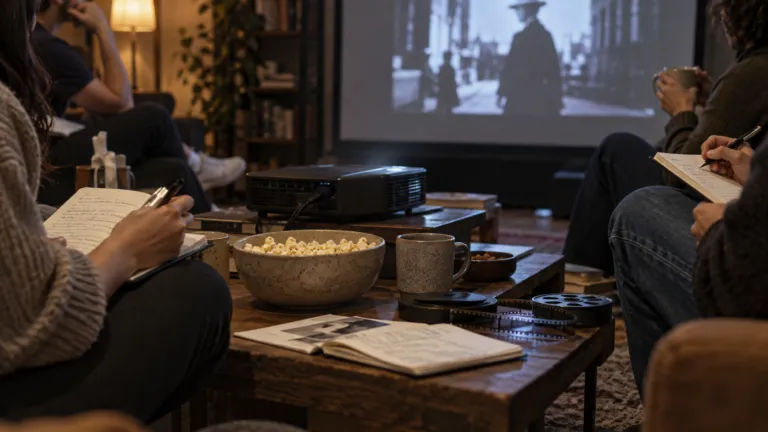
Friends gathering in a small screening room with a projector and film discussion notes
Quick answer
To start a movie club, define whom it serves and why they should return, choose an online, offline, or hybrid format, and test one carefully selected film. Give members a predictable event rhythm, a simple discussion structure, and meaningful influence over future programming. Assign operational roles before promoting the club.
How to start a movie club as a repeatable community
Start with a specific member promise, not a list of films. “A monthly club for local horror fans who want thoughtful conversation” gives people a reason to join and tells you what to screen, where to meet, and how formal the discussion should feel.
Movie clubs are appealing because watching is only the entry point. Members also discover titles, exchange interpretations, and build relationships around a shared taste. That social layer distinguishes a club movie night from another evening spent browsing alone. Your concept should therefore identify an audience, a programming lens, and the experience members receive after the credits.
Treat the first screening as a pilot. Select an accessible film that supports more than one interpretation, fits the venue and audience, and does not require extensive homework. Confirm screening rights and venue rules before advertising. Then invite a defined initial group rather than broadcasting to everyone; useful feedback is easier to collect when the promise is specific.
- Audience: name the people the club is designed to connect.
- Lens: choose a genre, era, region, craft, theme, or rotating programme.
- Experience: decide whether conversation, discovery, networking, or entertainment leads.
- Return reason: announce the next choice or member decision before everyone leaves.

Consider a neighborhood club built around “overlooked science fiction with friendly debate.” Its organizer chooses a recognizable opening film, asks members what surprised them, and ends by offering two contrasting directions for the next event. The film may change, but the promise remains stable: discovery without academic gatekeeping. The limitation is deliberate—people seeking new releases or silent study now know this is not their club. Write your own promise in one sentence and use it to reject mismatched ideas.
Choose an online, offline, or hybrid film club format
Choose the format according to the experience you sell. Offline clubs create atmosphere and local relationships; online clubs widen access and make discussion easier to continue; hybrid clubs add flexibility but also create the most operational friction.
Do not choose hybrid merely because it sounds inclusive. A room discussion and a video call demand different facilitation, audio, rights, and attention. A cleaner hybrid model separates activities: members watch through lawful individual access, discuss online, and meet offline for selected events. This avoids treating remote members as spectators of a conversation happening elsewhere.
| Format | Best when | Operating constraint | Good first move |
|---|---|---|---|
| Offline | Local connection and shared atmosphere matter most | Venue, accessibility, screening rights, and equipment | Test one dependable venue |
| Online | Members are dispersed or need flexible access | Viewing access, time zones, and conversation fatigue | Separate viewing from discussion |
| Hybrid | The community already spans local and remote members | Two experiences must feel intentional | Assign a remote host |
Program a short opening season rather than choosing indefinitely. Give it a recognizable theme while varying tone, length, origin, or period. Members should influence the programme without turning every choice into an exhausting referendum. The organizer can shortlist suitable films; members can then choose among options that all satisfy the club promise.

Build the operating system behind each screening
A movie club needs one reliable member record, one event calendar, one discussion home, and clear ownership of recurring tasks. The smallest tool stack that members consistently use is better than an impressive collection of abandoned channels.
Email and group chat can support an early pilot, but information soon fragments across invitations, votes, reminders, and discussion threads. When continuity becomes important, online community management software can consolidate membership, content, events, and administration. A private community platform is especially relevant when conversations or member benefits should remain available only to approved or paying participants.
- Programmer: curates eligible films and explains why each fits.
- Producer: manages venue or call setup, access, rights, and contingencies.
- Host: opens the event, protects airtime, and moves the discussion forward.
- Community lead: welcomes members, publishes follow-ups, and notices disengagement.
One person can initially hold several roles, but the responsibilities should still be named. Create a repeatable event record containing the film, access method, venue or meeting link, accessibility details, discussion prompt, and owner for each task. Afterward, preserve recommendations and member reflections so the value compounds instead of disappearing into a scrolling chat.

Turn attendance into participation and sustainable membership
Retention comes from agency, recognition, and continuity. Members return when their contributions shape the club, when conversation feels safe and worthwhile, and when the next interaction begins before enthusiasm from the current screening fades.
Use a discussion arc rather than asking whether everyone liked the film. Begin with an easy observation, move toward craft or interpretation, invite disagreement about a specific choice, and finish with a connection to the next programme. The host should make room for quieter members without converting leisure into compulsory seminar participation. Informal conversation can be the correct format when the audience prefers it.
- Before: publish context and one question without prescribing an opinion.
- During: welcome newcomers and explain how participation works.
- After: capture recommendations, memorable observations, and follow-up threads.
- Next: let members nominate, introduce, or host a suitable future selection.
If demand becomes durable, decide whether the club remains informal or becomes a branded membership business. Paid access should fund or unlock a clear benefit, such as exclusive community content or member-only access—not merely place a tollbooth before the same chat. A community platform for creators can fit a host-led club, while a white label community platform becomes relevant when brand ownership and a distinct member experience are strategic priorities.

Before charging, test the value proposition in plain language: members pay for what continuing benefit, delivered by whom, with what dependable rhythm? Revenue adds obligations around access, moderation, support, and cancellations; it does not make weak programming stronger. If the answer depends on belonging between screenings, build the member space before adding more events. Scrile Connect can support a branded community with memberships, exclusive content, paid access, profiles, engagement tools, admin controls, and monetization.
Give the club an owned home between screenings
A successful movie club eventually creates more value between events than a loose chain of reminders can hold. Member profiles, gated content, paid access, continuing discussion, and administrative control then become part of the operating model.
Scrile Connect – Community Platform is designed for branded membership communities that combine exclusive content, engagement, and monetization. Use the community engagement plan template to translate your club promise into a repeatable member journey before deciding what to build.
Frequently asked questions
What is a film club?
A film club is an organized community that watches, discusses, and curates films around a shared interest. It may meet online, offline, or through a deliberately separated hybrid format.
How do I start a movie club with no existing audience?
Define a narrow promise, invite a small group through relevant local or online networks, and run one pilot screening. Ask participants what would make them return before expanding promotion.
What is the best first movie for a film club?
Choose an accessible film that fits the club’s theme, is lawfully obtainable, and supports competing interpretations. The best choice serves the audience rather than displaying the organizer’s taste.
Can a movie club meet online?
Yes. Members can obtain lawful individual access, watch independently, and join a scheduled or asynchronous discussion. Confirm regional availability, captions, and participation expectations in advance.
Do movie clubs need screening licenses?
Public or group screenings may require permission or licensing, depending on the film, venue, jurisdiction, and event structure. Verify the applicable rights before promoting or charging for a screening.
How should a film club discussion be structured?
Open with an accessible observation, move into craft and interpretation, invite evidence-based disagreement, and close with recommendations or the next programming decision.
How can a movie club make money?
A club can charge for membership or access when it provides a clear continuing benefit, such as curated programming, exclusive content, private discussions, or special member experiences. Rights and local rules still apply.
What tools does a movie club need?
At minimum, it needs a member contact record, event calendar, communication channel, voting method, and discussion space. Add a dedicated community platform when access, content, administration, or payments become difficult to manage separately.
