
Best Video Interviewing Software Solutions for Faster Hiring in 2026
Video interviewing software allows companies to reduce time-to-hire, automate candidate screening, and streamline recruiting workflows. This guide explains how video interview platforms work, what features are important, and which ones will be the best in 2026.


video interviewing software
What Is Video Interviewing Software?
Video interviewing software is a centralized hiring solution that helps teams conduct interviews, evaluate candidates, and collaborate efficiently in one place.
Here are some of the new capabilities that businesses can find in today’s video interviewing solutions:
- Candidates can be screened automatically through one-way interviews.
- Live video interviews can be conducted right from the solution through integrated tools.
- Email- and phone call-based scheduling of interviews will be significantly reduced.
- Tracking and collecting structured team feedback from multiple members on candidates’ performance throughout their interview process.
Best Video Interviewing Software in 2026
- HireVue provides a platform that uses artificial intelligence to help with large-scale recruiting, automate candidate screening, and perform data analysis on hiring trends. It’s an example of how technology can improve the efficiency of your recruiting process.
- Spark Hire is an affordable video interview service aimed at small-to-medium-sized businesses that allows for quick candidate vetting and simple, collaborative hiring processes.
- VidCruiter offers a unique way to conduct your recruiting interviews by allowing employers to build their interview process from scratch using customizable workflows. Additionally, employers can evaluate job candidates through a standardized set of metrics.
- Willo‘s lightweight, asynchronous video interview platform helps employers quickly assess potential job candidates. By enabling rapid candidate screening and feedback, employers can make informed hiring decisions.
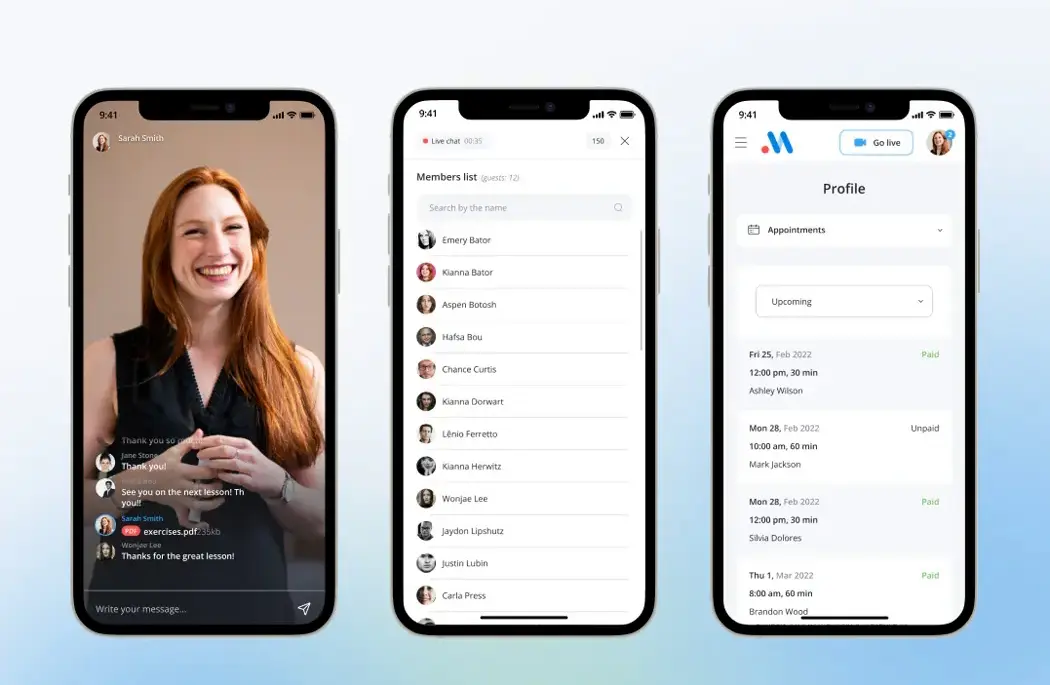
How Video Interviewing Software Works
Video interviewing software allows employers to make quick, informed decisions based on the data they receive from video interviews. This is done by creating a centralized location for employers and their hiring teams to manage all aspects of the hiring process.
By bringing all of the videos, results, and correspondence together in one place, video interview platforms facilitate the organization and collection of all of the information that is needed to evaluate each applicant efficiently.
The video interview platform provides potential employers with a comprehensive system for managing their entire hiring lifecycle, from initial contact with the candidate to the final decision.
Why Hiring Teams Need Recruiting Video Interview Software

Scheduling
Coordinating a group of people’s schedules to conduct interviews often requires several lengthy emails or messages about everyone’s availability. The complexities of time zones, last-minute changes to interviews, and candidates who do not show up for interviews create even further challenges.
Feedback
The second issue is feedback. It can take some time for a hiring manager to provide feedback following an interview. Further complicating matters, feedback can arrive from a variety of places and sources with little or no coordination between team members. This lack of coordination can create delays in decision-making as well as create a difficult-to-track bottleneck in your hiring process.
Consistency
Another issue is a lack of consistency. If there is no formalized hiring process to follow, interviews can be inconsistent with respect to each interviewee’s interview experience, including the questions asked, the format used, and what constitutes a successful interview. This inconsistency can make it difficult to evaluate candidates fairly.
“The actual reason most hiring processes feel painfully slow… is interview scheduling — a complex coordination problem.” – InterviewStream
How a Video Interview Platform Fixes This

A well-designed video interview platform replaces manual coordination with a clear, repeatable workflow. Scheduling becomes automated, so recruiters don’t waste time going back and forth. Interviews follow a defined structure, which improves consistency.
More importantly, feedback becomes centralized. Instead of chasing responses, teams review candidates inside the system, using shared scorecards and comments. That speeds up decisions significantly. With video interviewing software, hiring stops being reactive. It becomes a managed process.
Where One-Way Interview Software Adds Immediate Value
The majority of time incurred is in early-stage screening, as schedulers often spend hours on the phone that will lead to no results. One-way interview software allows applicants to record the responses to their pre-defined questions and employers to view those responses when most convenient for them without the need for scheduling.
The benefit of this method includes greater efficiency as well as greater quality assessment for employers, as all applicants have answered the same questions in the same manner, providing an objective basis for comparison. Thus, it results in quicker short lists, fewer delays, and ultimately, better candidates hired.
The Hiring Workflow: Where Video Interviewing Software Saves Time

Stage 1. Candidate Screening
This is where most teams lose time early on. Recruiters schedule dozens of intro calls, many of which don’t move candidates forward. With one-way interview software, this stage becomes asynchronous. Candidates record answers to predefined questions, and recruiters review them in batches.
Stage 2. Interview Scheduling
Scheduling is one of the most underestimated bottlenecks. Back-and-forth emails can delay interviews by days. A video interview platform solves this with built-in calendar syncing and automated booking. Candidates choose available time slots, and everything updates in real time.
Stage 3. Live Interviews
Live interviews still matter, especially for final stages. But they need structure. With recruiting video interview software, teams can run interviews directly inside the platform. Questions can be standardized, and sessions can be recorded for later review.
Stage 4. Evaluation and Team Collaboration
After interviews, decisions often stall. Feedback is delayed, and opinions are scattered across tools. This is where video interviewing software becomes a decision engine. Teams use scorecards, ratings, and internal comments to evaluate candidates in one place. Everyone sees the same information. Decisions happen faster.
Stage 5. Final Decision and Feedback Loop
The final phase focuses on improving hiring transparency and speed by preventing candidates from lingering in limbo for several days at a time. With a clearly organized system to monitor the status of candidates and maintain all communications, a recruiter can move a candidate onto the following stage or back to the previous stage, as needed, with no gaps in between.
In general, once a recruiting method has been fully implemented, the overall process will be much more predictable than in the past. With fewer surprises and more control, hiring teams will be able to achieve their goals much faster.
One-Way Interview Software: The Key to Scaling Early Screening
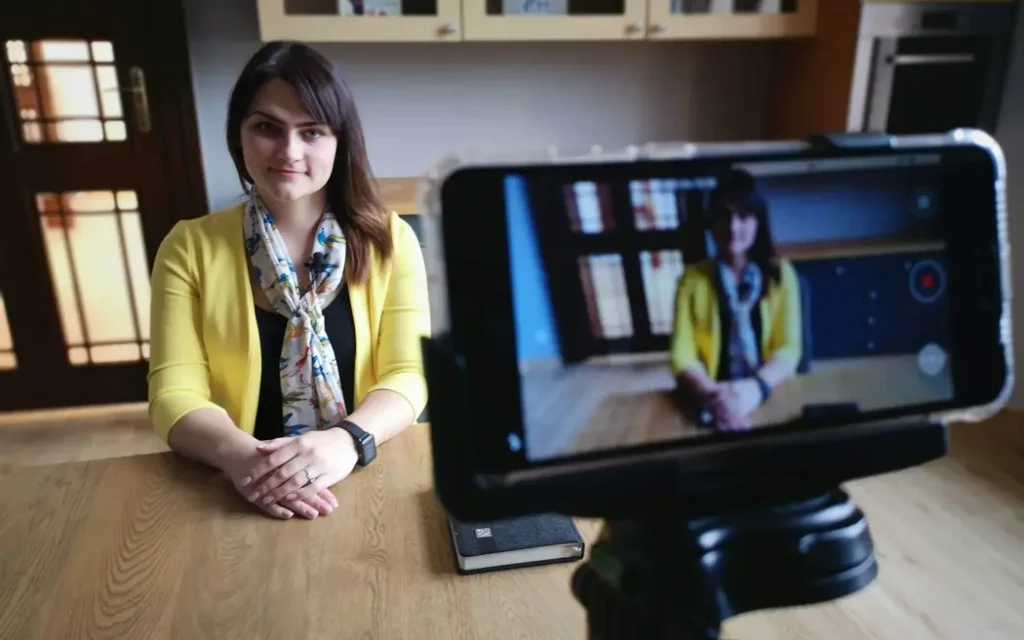
If there’s one feature that delivers immediate impact, it’s one-way interview software. This is where hiring teams reclaim the most time without sacrificing quality. Recruiters no longer schedule many initial sessions; recruiters shift the first interaction to an asynchronous format from live call formats to a more asynchronous format with candidates.
Instead of scheduling many intro phone interviews with a candidate, they have a process that allows the candidate to record their answers at any time and for recruiters to go through the recorded answers on a scheduled basis. It’s a relatively simple process but enables a greater level of recruiting efficiencies.
How One-Way Interviews Work
The process is straightforward. Recruiters create a set of predefined questions, often tailored to the role. Candidates receive an invitation and record their answers using video.
Those responses are then stored inside the video interview platform, where the hiring team can review, replay, and compare them side by side. No scheduling, no time zone issues, no unnecessary delays.
Why This Approach Works So Well
First, it saves time. Recruiters no longer spend hours on repetitive screening calls. Instead, they evaluate multiple candidates in a fraction of the time.
Second, it improves consistency. Every candidate answers the same questions under the same conditions. That makes comparisons more objective and reduces bias.
Third, it scales effortlessly. Whether you have 10 applicants or 200, the process stays manageable.
When to Use One-Way Interviews
The initial stages of hiring are the best time to use this method to screen candidates. It is helpful when:
- You are hiring many people.
- You get a lot of applications.
- You want to quickly sort through a lot of candidates.
- Your hiring team works in different places and time zones. In these cases, recruiting video interview software that works asynchronously is a clear advantage.
A Quick Reality Check
Certain organizations have concerns that candidates may not be satisfied with the format of the interviews. While this is a valid concern, it should only be considered an issue if the design of the experience is inadequate. If an employer provides candidates with clear instructions, sets reasonable deadlines, and follows up quickly, candidates will generally appreciate the flexibility offered to them.
From an employer’s perspective, the value of offering candidates multiple options for scheduling an interview can be seen in terms of efficiencies. The employer spends less time arranging a time for the interview and more time engaged in activities related to selecting the candidate that will best fit into the organization.
Improving Candidate Experience with a Video Interview Platform

It’s easy to focus on efficiency when talking about video interviewing software. But there’s another side that often gets overlooked: the candidate experience. And in today’s market, it matters just as much as internal speed.
Candidates don’t compare your process to your internal benchmarks. They compare it to every other company they’ve applied to. That means even small delays or confusing steps can quietly damage your employer brand.
What Candidates Actually Expect
Candidates most often do not anticipate lengthy and complex hiring procedures, and they are looking for the following:
- Easy access to the interview process without technical friction.
- Complete guidance for every step of the hiring process from the beginning until they receive a decision.
- Timelines that are accurate and aligned with each organization’s hiring timeline.
- Fast feedback on progress from employers regardless of the outcome.
A well-designed video interview platform directly supports these expectations. It removes uncertainty and makes the process feel structured rather than improvised.
Where Hiring Processes Usually Fail Candidates
Problems rarely come from the interview itself. They come from everything around it.
- Long gaps between steps.
- Unclear next stages.
- No feedback after interviews.
These small issues add up. And once candidates feel ignored, engagement drops quickly. With recruiting video interview software, communication becomes more consistent. Status updates are visible, and progress doesn’t depend on manual follow-ups.
Why One-Way Interviews Can Improve Experience
At first, one-way interview software might seem less personal. But in practice, it often improves the experience for early-stage candidates. Why? Because it removes scheduling stress.
Candidates can record answers when they feel prepared, not when they can squeeze in a 30-minute call during a busy day. That flexibility is a real advantage, especially for passive or working candidates.
A Better Experience Leads to Better Hiring Outcomes
One aspect many teams fail to recognize is that the candidate experience has a significant impact on acceptance rates. Even well-crafted offers may be turned down if the hiring process was viewed as unorganized or took too long to complete. Alternatively, when candidates have a positive candidate experience, that creates an environment of trust early on in the relationship with their future employer.
Trust is a key element for both employer and employee. When candidates are comparing two or more offers side-by-side, trust can often become a major factor in making their ultimate decision. So, while video interviewing software improves efficiency for recruiters, it also quietly strengthens your ability to attract and close top talent.
Key Features to Look for in Video Interviewing Software
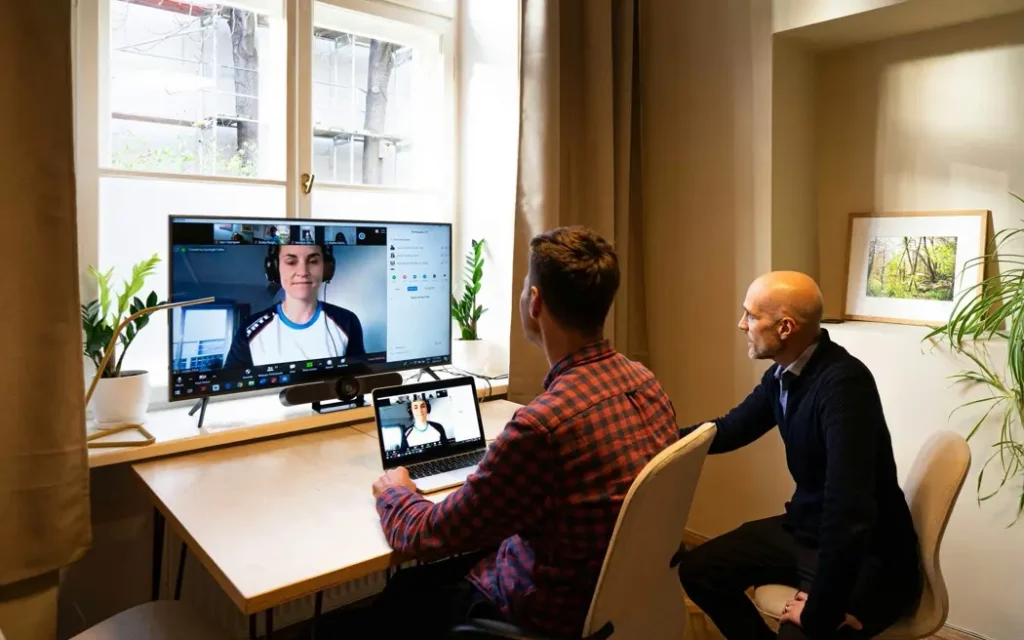
Once you move past the basics, the real question becomes: What actually makes a video interviewing software solution effective in day-to-day hiring?
Not every tool is built the same. Some focus only on video calls. Others try to cover the full workflow but end up feeling cluttered. The best results usually come from platforms that balance structure, automation, and usability.
Core Features That Should Be Non-Negotiable
A strong video interview platform should include the following:
- One-way interviews.
- Live interviews.
- Scheduling automation.
- Candidate tracking.
- Structured evaluation.
If an applicant does not get any feedback after an interview, they may feel like they are being ignored, which may lead to the applicant dropping off.
Recruiting Video Interview Software Advanced Features That Add Real Value

Advanced platforms also include: commenting, tagging, custom branding, and role-based access for recruiters and hiring managers. The ability to integrate with your company’s applicant tracking system (ATS) or other HR software will be critical for your hiring teams to efficiently communicate as they hire more employees.
Why Workflow Design Matters More Than Features
Long feature lists can distract you. The actual differentiator is how workflow design can lead you from screening candidates through the evaluation process and ultimately to the hiring decision. If the system has good workflow design, the process feels like it flows from step to step; if it doesn’t, there are just additional dashboards and tabs.
That’s why the most effective video interviewing software feels almost invisible when used correctly. It supports decisions without getting in the way.
Comparison Table: Video Interviewing Software Features

To make things clearer, here’s a simple breakdown of how different approaches compare:
| Feature / capability | Basic video tools | Standard platforms | Advanced recruiting video interview software |
| One-way interviews | ❌ | ✅ | ✅ |
| Live interviews | ✅ | ✅ | ✅ |
| Scheduling automation | ❌ | Partial | ✅ |
| Candidate tracking | ❌ | Basic | Advanced |
| Team collaboration | ❌ | Limited | Full |
| Workflow customization | ❌ | Limited | High |
| White-label branding | ❌ | ❌ | ✅ |
What stands out here is control. The more advanced the system, the less manual coordination is needed. And that directly translates into faster hiring cycles.
ROI Example: How Video Interviewing Software Saves Time and Money
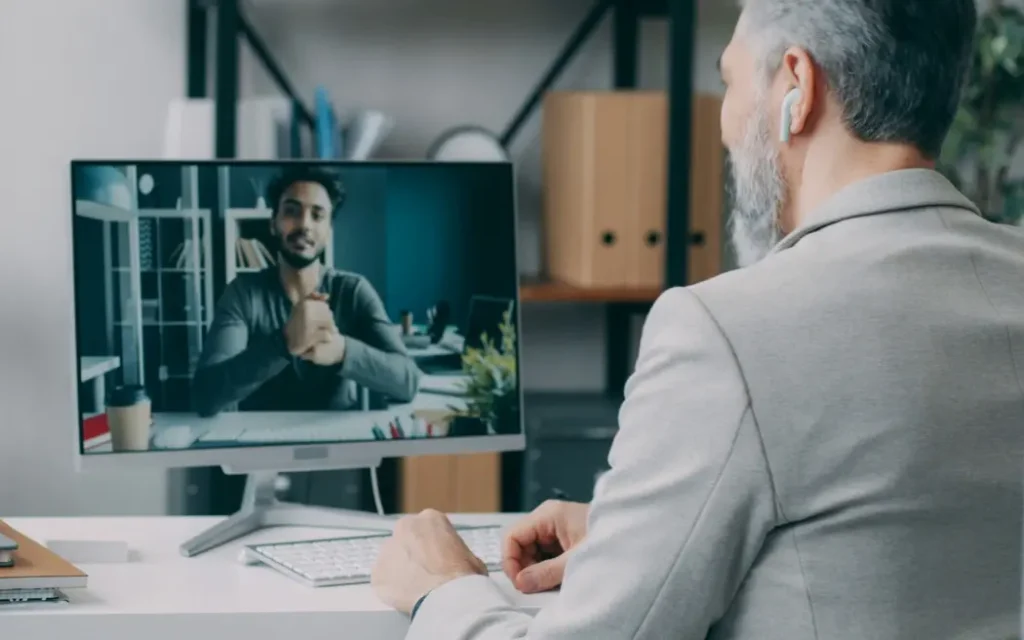
Let’s make this practical for a moment. Assume a recruiter earns or costs the company around $45 per hour. On average, they spend about 2 hours per candidate when you include scheduling, screening calls, and follow-ups.
Now let’s say the team processes 40 candidates per month.
Without automation:
- 2 hours × 40 candidates = 80 hours.
- 80 × $45 = $3,600 per month.
With video interviewing software (50% time reduction):
- 40 hours saved per month.
- 40 × $45 = $1,800 saved monthly.
That’s $21,600 per year in recruiter time alone.
In other words, video interview platforms don’t just improve workflow. They directly improve hiring economics.
Scrile Meet: Build Your Own Video Interview Platform
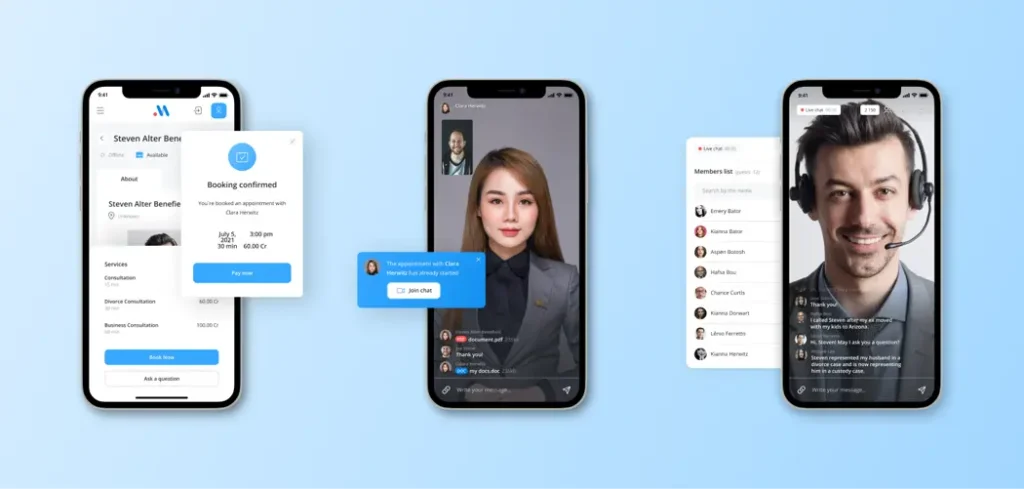
At this point, many teams start to realize something important: off-the-shelf tools are useful, but they often come with limits. Fixed workflows. Limited branding. Rigid processes. That’s where customization becomes a real advantage.
Scrile Meet is a customizable solution that lets companies build their own video interview platform instead of adapting to a generic SaaS product. It’s designed for teams that want full control over how hiring works—from candidate flow to final decision-making.
What You Can Build with Scrile Meet
With Scrile Meet you can create the following:
- A custom one-way interview software workflow
- An integrated scheduling system for interviews
- A live environment for the interviews
- An internal collaboration tool for hiring teams
- A candidate evaluation workflow
All of these features are integrated into a single structured system.
Scrile Meet works best when:
- Companies have experienced rapid growth in hiring needs.
- Teams feel the need to develop their own workflows rather than rely on existing tools that are too restricted or limited in functionality.
- Companies place a high value on branding as well as on candidate experience.
- Teams require complete control over the design of their workflow.
FAQ: Video Interviewing Software for Hiring Teams
What is video interviewing software used for in recruitment?
Hiring teams can utilize video interviewing software to help them with their hiring process. It enables recruiting professionals to eliminate the complexities and time-consuming aspects of coordinating interviews by replacing them with a structured digital flow for conducting interviews.
As a result, video interviewing software provides an efficient way for recruiters to evaluate prospective employees while eliminating any administrative burden and allowing them to spend more time making decisions rather than planning logistics associated with coordinating interviews.
How is a video interview platform different from regular video calling tools?
A conventional video calling tool, akin to a basic meeting application, essentially provides a means for communicating. A video interview tool has been designed specifically for a hiring workflow.
Video interview platforms include features that help track candidates, create structured interviews, provide candidates with an evaluation form, and even automate the scheduling process. As such, they create a managed environment around an interview.
What is one-way interview software, and when should it be used?
One-way interview software allows candidates to record answers to predefined questions without a live interviewer present. Recruiters can then review responses at any time.
The following areas benefit from this format:
- Increase in number of candidates being hired.
- Ability to quickly filter candidates for the company before moving to live interviews.
- Geographic or time zone considerations when hiring.
- Elimination of scheduling delays.
Can recruiting video interview software replace traditional interviews completely?
Not entirely. Recruiting video interview software enhances and structures the process, but it doesn’t eliminate the need for human interaction.
Hybrid approaches are commonly utilized by many organizations:
- Initial screening with one-way interviews.
- Following up with live interviews for assessment of candidates in more detail.
- The last phase will typically be completed in person and/or involve strategic discussions.
The software offers assistance for making informed choices through its supporting features but does not substitute for making decisions independently.
What are the main benefits of using a video interview platform for HR teams?
The major advantages are as follows:
- Shorter hiring timelines resulting from streamlined scheduling procedures.
- Standardized evaluations of potential employees.
- Improved collaboration among hiring team members.
- Centralized access to data and candidate responses.
- Increased scalability during high-volume recruiting.
To summarize, moving to an online structure helps HR teams transition from reactive coordination to structured hiring workflows.
Is video interviewing software suitable for small companies or only enterprises?
Video interviewing software is suitable for both small companies and enterprises, depending on hiring needs.
For small companies, automation and simplified screening help reduce workload and save time with limited HR resources.
For larger organizations, advanced automation, structured workflows, and scalability provide significantly greater value as hiring volume increases.
