
How to Sell Digital Products in Nigeria with Local Payments
Learn to sell digital products in Nigeria with local checkout, automated delivery, refund rules, email capture, upsells, and customer accounts.

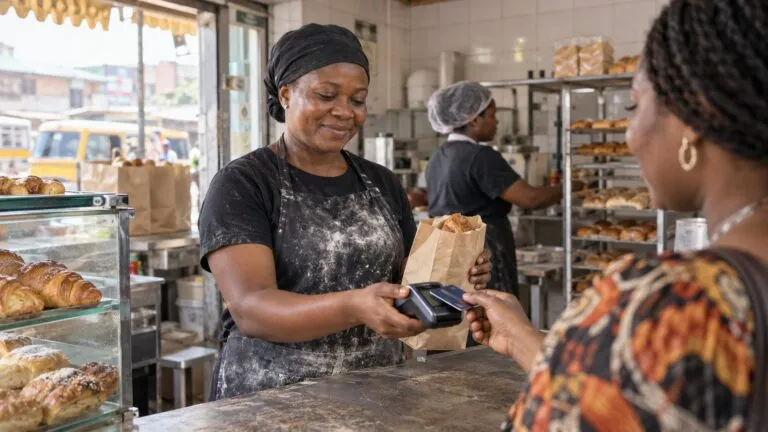
A bakery owner holds a card terminal as a customer taps a payment card, with fresh bread and a working bakery visible behind them.
Quick answer
To sell digital products online in Nigeria, package one specific outcome—such as an ebook, template, course, preset, or paid content collection—then connect a sales page to a checkout that works for your intended Nigerian buyers. Confirm payment before granting access, automate delivery, state refund and support terms, and capture customer consent for follow-up. Begin with a payment page or hosted storefront; move to a branded website when buyers need accounts, subscriptions, updates, or several related offers.
Choose a digital product that solves one narrow problem
The best first digital product is not the largest asset you can produce. It is the smallest complete result a defined buyer will pay to obtain without needing a private explanation from you.
Start with the buyer's job. A job seeker may want an editable portfolio template; a caterer may want a costing workbook; a designer may want reusable social-media assets; a specialist may package a guide, workshop recording, or resource library. If you want to sell ebooks online in Nigeria, the useful unit is not “my knowledge in PDF form.” It is a credible promise, such as helping a first-time exporter prepare a document pack. The title, preview, format, and support boundary should all reinforce that promise.
- Define the buyer, the situation, and the result in one sentence.
- Package every required file, instruction, licence term, and update note.
- Create a preview that proves relevance without exposing the complete asset.
- State whether the purchase provides a download, time-limited access, or ongoing access.
- Test the files on a phone as well as a computer before accepting orders.
Match the format to how customers will use it. Templates need editable source files and instructions. Audio packs need sensible filenames. Video products need access that does not force buyers to download enormous files. A bundle should have an index, because a folder full of mysteriously named files is not a premium experience; it is digital archaeology. The implication is simple: design fulfillment while designing the product, not after the first buyer asks where everything is.

How to sell digital products online with a local checkout
Use the simplest checkout that your intended customers can complete and that you can reconcile reliably. In Nigeria, that means testing the actual channels enabled on your account, the naira payment journey, confirmation events, settlement, and refunds before promotion begins.
A checkout link is only one component of the sale. The sales page must identify the product, file or access format, price, delivery method, support contact, and purchase terms. The payment system must return a trustworthy confirmation that your fulfillment process can verify. Do not release a product because a customer sent a screenshot; screenshots are messages, not settlement records. For a deeper payment setup decision, review how to accept payments online Nigeria before connecting promotion to delivery.
| Option | Best use | What you still need to verify |
|---|---|---|
| Paystack Payment Pages | A direct checkout link for a focused offer | Enabled payment channels, confirmation, refunds, settlement, and external delivery |
| Paystack Storefront | A simple catalog offered through Paystack | Product access, customer records, update delivery, and current account eligibility |
| Selar | Hosted pages and delivery for common creator products | Current terms, supported formats, payouts, branding, and buyer experience |
| Gumroad | A storefront aimed mainly at international buyers | Current Nigerian payout access, fees, currencies, and tax handling |
| Shopify | A broader branded commerce catalog | Local gateway compatibility, digital-delivery tooling, cost, and maintenance |
There is no permanent “best platform.” Availability, account approval, fees, payment methods, and settlement conditions can change, so verify them directly for your business and customer locations. If one provider cannot support the required model, compare relevant Paystack alternatives. Choose on completed transactions and manageable operations, not on the prettiest dashboard.
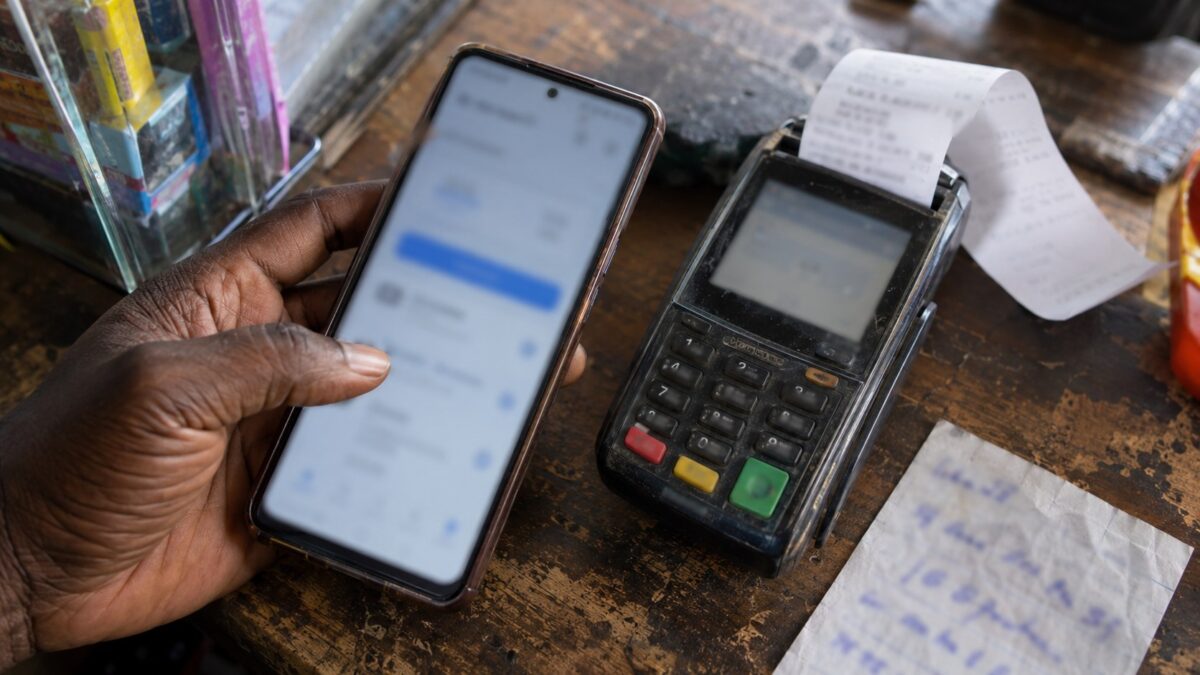
Automate payment confirmation and secure delivery
Delivery should begin only after server-side or platform-confirmed payment, then give the correct buyer controlled access to the correct product. Email can notify the customer, but it should not be the sole record of entitlement.
Build the flow as a chain: create the order, collect payment, verify its unique reference, mark the order paid, grant access, send instructions, and log the result. Make each step safe to retry so a delayed notification does not create duplicate messages or conflicting access. Keep the payment record separate from the delivery status; money can be confirmed even when an email provider is temporarily unavailable. That distinction lets support resend access without pretending the customer must buy again.
- Store an order reference, product identifier, customer contact, payment state, and delivery state.
- Use expiring download links or authenticated access where the product and risk justify it.
- Limit accidental exposure by keeping master files out of public folders and search indexes.
- Provide a resend-access route after confirming the buyer's identity.
- Keep a version record so previous customers can receive the update they are entitled to.
No delivery system can make a downloadable file impossible to copy. Security should reduce casual link leakage without punishing paying customers with brittle locks. For courses, paid posts, evolving libraries, or several purchases per buyer, an account is often more useful than repeated email attachments. Your next action is to map the normal path and the exceptions—late confirmation, mistyped email, expired link, duplicate charge, and updated file—before automation hides them.

Set refund rules and build a permission-based email list
Publish a plain-language refund and support policy before checkout, then collect customer email for receipts and access. Ask separately for marketing consent; a purchase relationship is not permission to send endless promotions.
Digital products create a genuine tension: a buyer may request a refund after receiving a file that cannot be returned, yet a broken or materially misdescribed product deserves a remedy. Define what qualifies, what evidence support may request, how access changes after a refund, and where customers contact you. Apply the policy consistently while retaining discretion for obvious errors such as duplicate payment. Do not copy another seller's terms blindly; consumer, privacy, and tax obligations depend on your business and customer locations, so obtain appropriate professional advice.
Use transactional email for receipts, delivery, security notices, and essential product updates. Keep promotional messages under a distinct consent record with the signup source and current status. Segment by the product purchased and the problem solved, not by vague labels such as “all customers.” A buyer of a proposal template may value an update or compatible workbook; unrelated blasts merely teach people to ignore you. Always provide a working way to stop marketing messages while preserving necessary order communications.
- Place key purchase, access, and refund terms near the buying decision.
- Create reusable support replies, but let a human handle ambiguous cases.
- Track delivery failures and repeated questions as product-quality signals.
- Request testimonials or referrals only after the buyer has had a fair chance to use the product.
The practical implication is that support and email are part of the product economics. Record refund reasons, delivery failures, consent, and repeat questions in systems you can export. Those records show whether the next investment belongs in clearer instructions, better fulfillment, or another offer.

A useful support test is to take a realistic complaint—“I paid, but the file will not open on my phone”—and follow it from inbox to resolution. Can support find the order without requesting sensitive payment details? Can it distinguish an unsupported format from a corrupted file? Can it issue the correct remedy and record why? The exercise will expose policy gaps that a polished FAQ conceals. Refund rules cannot eliminate judgment, and aggressive denial may cost more trust than the product is worth. Design the policy to deter obvious abuse while making legitimate resolution calm, traceable, and proportionate.
Use upsells carefully, then graduate to an owned catalog
Add an upsell only when it advances the result the customer already purchased. Move beyond a basic payment page when fragmented files, repeated support, subscriptions, or multiple purchases make customer accounts and an owned catalog operationally valuable.
The safest offer ladder follows the buyer's progress: a focused download, a complementary toolkit, guided implementation, and ongoing access where fresh value genuinely continues. Show the next offer after the original purchase is clear; do not bury the entry product beneath bundles and urgency devices. Measure net revenue by product after payment costs, refunds, support effort, and delivery tools. Gross sales can flatter a bad offer with the enthusiasm of a relative at a school play.
A payment page is appropriate when there is one clear offer and delivery remains simple. A hosted storefront becomes useful when discovery and a small catalog matter. A branded site becomes compelling when customers need accounts, purchase history, subscriptions, paid posts, private access, tips, or pay-per-view offers. Founders comparing broader creator monetization platforms should examine payment fit, customer ownership, data access, moderation needs, and the cost of switching—not merely launch convenience.
If recurring access is central, the operating model resembles a membership website more than a download shop. Decide which records and assets must survive a provider change: domain, customer consent, order history, product files, access rights, and analytics. Exportability is insurance against dependency. The next action is to set a migration trigger now, such as when support is repeatedly reconstructing purchase history or buyers cannot manage access themselves.

Turn a checkout link into an owned creator business
A local payment page can validate an offer, but durable creator revenue depends on everything around it: branded presentation, controlled access, customer relationships, repeat monetization, and an operating system you can improve.
Scrile Solo is designed for individual creators who want a creator-owned website for paid content, subscriptions, tips, pay-per-view offers, and direct fan engagement. It is a stronger fit when your digital products are becoming an ongoing audience business rather than a folder of isolated downloads.
Frequently asked questions
What digital products can I sell in Nigeria?
Common options include ebooks, editable templates, workbooks, design assets, presets, audio packs, recorded workshops, courses, paid content, and access to updated resource libraries. Choose a format that delivers a specific result and is practical for customers to use on their usual devices.
What are the best platforms to sell digital products in Nigeria?
The best fit depends on the buyer and operating model. Paystack Payment Pages suit focused payment links; Paystack Storefront and Selar can suit simpler hosted selling; Gumroad may suit international audiences; Shopify supports a broader commerce setup. Verify current eligibility, fees, payment methods, payouts, digital delivery, and customer-data access directly.
Can I use Paystack Storefront for digital products?
It can be considered for a simple product catalog and checkout, but confirm its current file-delivery workflow, account eligibility, buyer experience, update process, customer records, and support for your exact product before launching.
How do I deliver a digital product after payment?
Create an order, verify payment using its unique reference, mark the order paid, grant the correct access, send instructions, and log delivery. Use controlled download links or authenticated accounts where appropriate, with a documented process for failed emails and resends.
How can I stop buyers from sharing my download link?
You cannot make a downloaded file impossible to copy. You can reduce casual leakage with expiring links, authenticated access, sensible download controls, personalised files where appropriate, and clear licence terms without making access hostile to legitimate buyers.
Should I offer refunds on downloadable products?
Publish clear terms covering broken files, material mismatch, duplicate charges, access problems, and suspected abuse. Apply them consistently and obtain professional advice on obligations that apply to your business and customer locations.
When should I replace a payment page with my own website?
Consider a branded website when you have several related offers, repeat buyers, subscriptions, paid content, customer accounts, frequent updates, or support staff repeatedly reconstructing purchase and access history.
Do I need an email list to sell digital products?
An email list is useful for delivery, essential updates, compatible offers, and customer retention. Keep transactional communication separate from marketing, record consent, send relevant messages, and provide a working way to stop promotional email.
