
Why volunteers make fundraising campaigns work better
See how volunteer fundraising improves reach, trust, and donor follow-up through practical roles, message controls, measurement, and campaign workflows.

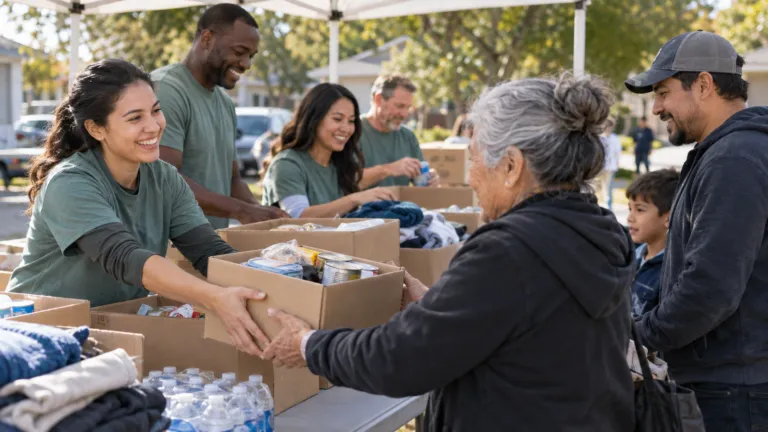
Volunteers distributing supplies at a neighborhood donation drive
Quick answer
Volunteer fundraising works because people respond differently to a trusted person than to another institutional announcement. Volunteers extend a campaign into workplaces, neighborhoods, schools, and personal networks. The advantage appears when the nonprofit supplies a clear case for support, safe ways to ask, one donation destination, and prompt follow-up.
The real role of volunteer fundraising
Volunteer fundraising turns committed supporters into a distributed campaign team. Its value is not free labor alone: volunteers contribute relationships, local knowledge, credibility, and access to conversations that nonprofit staff cannot manufacture on demand.
The operating unit is a trusted introduction. A volunteer can explain why the cause matters in language appropriate to a parent group, workplace, congregation, sports club, or neighborhood. The organization must still own the facts, donation process, consent rules, and donor records. That division keeps the ask personal without letting the campaign become a collection of improvised promises.
Place volunteers inside the nonprofit fundraising plan before launch. Define the audience each person can credibly reach, the action they should request, and the staff member who handles questions or sensitive cases. A volunteer fundraiser may host a small event, share a campaign page, introduce a potential sponsor, thank donors, or gather approved stories. They should not invent impact claims, negotiate benefits, or keep donor details in private files.
The practical implication is simple: recruit for trust and fit, not merely headcount. One well-briefed community organizer may open better conversations than a large list of nominal ambassadors. Give every volunteer a bounded role, a named owner, approved materials, and a clear escalation path before asking them to represent the cause.

Which fundraising tasks should volunteers own?
Volunteers should own tasks where personal connection improves participation, while staff retain tasks involving compliance, financial control, sensitive data, or binding commitments. The right assignment depends on the volunteer’s confidence, network, skills, and access to support.
| Campaign task | Best owner | Control required |
|---|---|---|
| Personal introductions and page sharing | Volunteer | Approved message and official link |
| Local event hosting and peer outreach | Volunteer with staff contact | Budget, safety, and escalation rules |
| Impact facts and beneficiary stories | Staff prepares; volunteer distributes | Consent and current wording |
| Donation processing and donor records | Staff and platform | Access controls and documented workflow |
| Major-gift terms or sponsor benefits | Authorized staff | Formal approval and written record |
Start with the campaign’s bottleneck. If awareness is weak, volunteers can map relevant groups and make introductions. If people visit but hesitate, they can answer ordinary questions and point to trust assets. If donors disappear after giving, volunteers can support thanks and community updates. The same discipline should shape how to promote a fundraiser: give people one primary action rather than a buffet of links, slogans, and competing event pages.
Use a short role card for every assignment: audience, action, approved wording, materials, deadline, data rule, and escalation contact. This makes volunteering to help plan a fundraiser productive without quietly appointing every enthusiastic participant as campaign director. Let volunteers choose among defined roles, then train for the role selected.

Choice matters because not every willing volunteer wants to make a direct financial ask. A reserved subject expert may be excellent at answering program questions; a well-connected local owner may secure introductions; an organized student may coordinate check-in; and a beneficiary advocate may prefer reviewing story consent rather than telling the story publicly. Matching the task to the person protects confidence and improves execution. It also provides an honorable way to decline solicitation work without being treated as less committed.
How to make volunteer-led campaigns more effective
Effective volunteer campaigns replace improvisation with a light operating system: one case for support, one authoritative donation destination, reusable trust materials, quick staff support, and measurement tied to each outreach route. Consistency should support human conversations, not flatten them.
- Brief: the problem, intended outcome, use of funds, and action requested.
- Equip: a campaign page, concise talking points, story permissions, and answers to common objections.
- Activate: assign audiences and outreach routes so volunteers do not repeatedly contact the same people.
- Support: provide a named staff contact for difficult questions, complaints, and technical problems.
- Close the loop: thank volunteers, report outcomes, and record useful donor context in the organization’s system.
Worked example: assume twelve volunteers are divided into three audience cohorts of four, and each volunteer starts four relevant conversations. That produces forty-eight planned conversations, not forty-eight promised donations. Track which cohort generated visits, completed gifts, questions, and follow-up permission. The calculation is 12 × 4 = 48; its purpose is workload and routing, not a revenue forecast.
Use fundraising analytics to compare routes without turning volunteers into a sales leaderboard. Measure message delivery, page visits, completed donations, recurring-support selections, follow-up consent, and unresolved questions where the platform and privacy rules allow. Review patterns by audience or activity, then improve the brief and donor journey.

Why volunteers matter to nonprofits and donors
Volunteers matter because they add human context to a financial decision and create a bridge between a campaign and the community it serves. For nonprofits, that bridge expands access and preserves local knowledge. For donors, it provides a credible person who can explain the cause and direct them to official information.
Is fundraising community service? It can be when the activity advances a public or charitable mission and is performed without private gain, although formal recognition depends on the institution and jurisdiction. More importantly, fundraising is mission work only when volunteers are respected as contributors rather than treated as an unlimited contact list. Protect their relationships, time, privacy, and right to decline an ask.
The value of volunteers to nonprofit organizations increases when their work creates durable supporter relationships. A shared platform can keep campaigns, donations, recurring support, updates, and community engagement under the organization’s brand instead of scattering the journey across personal accounts. Teams comparing a white label crowdfunding platform should examine ownership of branding and data alongside the volunteer and donor experience.
Scrile Connect – Fundraising Platform fits organizations that want to run fundraising campaigns, accept donations and recurring support, build supporter communities, and own campaign branding and data. The product decision comes after the operating model: clarify roles, controls, and follow-up first, then configure the platform around that journey.

Turn volunteer energy into an owned fundraising journey
Volunteer enthusiasm works best when every introduction leads to a credible campaign page, a controlled donation process, and consistent supporter follow-up. Scrile Connect brings campaigns, donations, recurring support, community engagement, branding, and organizational data ownership into the same fundraising environment.
Define the operating model first, then explore how to start a crowdfunding campaign and shape a branded platform around the supporter journey you intend to run.
Frequently asked questions
What is volunteer fundraising?
Volunteer fundraising is a managed approach in which unpaid supporters help generate donations through introductions, outreach, events, campaign sharing, donor thanks, and other clearly assigned activities.
Why are volunteers important to nonprofits?
They contribute trusted relationships, local knowledge, skills, time, and access to communities that staff may not reach directly.
Is fundraising community service?
It can qualify when it supports a charitable or public mission, but formal recognition and service-hour rules depend on the institution and jurisdiction.
What should a volunteer fundraiser do?
A volunteer fundraiser should perform an agreed role, use approved facts and links, protect donor information, and refer sensitive or binding questions to authorized staff.
How can volunteering help plan a fundraiser?
Volunteers can test the campaign idea, identify suitable audiences, review the donor journey, organize local activities, anticipate questions, and advise on culturally appropriate outreach.
Should volunteers ask their friends for donations?
Only if they are comfortable doing so. Offer non-solicitation roles and never treat access to personal relationships as a condition of volunteering.
How should nonprofits measure volunteer fundraising?
Track assigned activities, conversations, visits, donations, follow-up permission, recurring support, questions, and donor retention where consent and platform data allow.
What tools do volunteers need for fundraising?
They need a concise brief, approved messages, an official campaign page, trust materials, clear data rules, a named staff contact, and a simple reporting process.
