
Make AI avatar video that feels like a real spokesperson
AI avatar video works best when speed, repeatable scripts, and easy revisions matter more than a live shoot. Here is where it helps and where it fails.

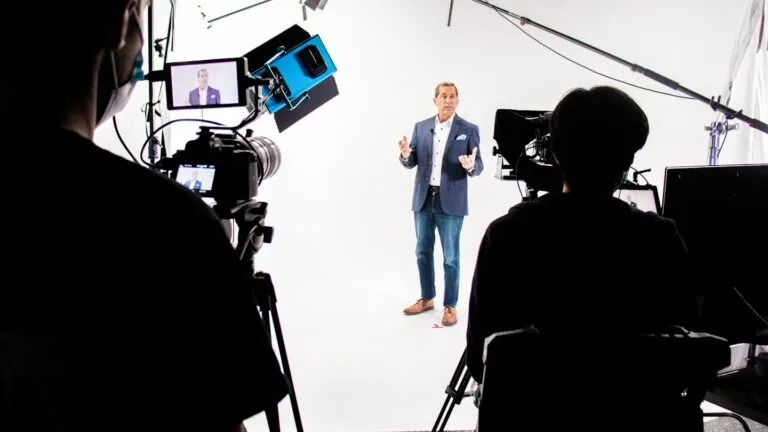
ai avatar video overview
Quick answer
If you need a face on camera but do not want a film crew, ai avatar video can turn a script or URL into a talking-head ad, explainer, onboarding clip, or sales video fast. The format is strongest when revisions are frequent, the message is repeatable, and the viewer needs a human face more than a big performance. It is the wrong choice when trust depends on real presence, body language, or a brand story that should feel unmistakably human.
For neutral context, this guide cross-checks the topic against Goldman Sachs Research's creator economy outlook. So the recommendation is grounded in external market signals rather than only product claims.
Why AI avatar video belongs in some content stacks and not others
Avatar video is not a magic shortcut. It is a production choice. When the job is to explain, repeat, localize, or update a message, a talking head can do the work with far less friction than a live shoot.
That matters in teams that ship ads, onboarding clips, product walkthroughs, or sales explainers on a schedule. One script change can replace a reshoot, a rebooking, and a new edit round. In a busy campaign, that can save days of back-and-forth that usually slow down launch or stall the next revision.
The tradeoff is trust. Viewers often accept an avatar when they want clarity, but they inspect it more closely when the video carries credibility, emotion, or high-stakes persuasion. A slight sync issue or flat stare can do more damage than the content itself. The term Uncanny valley exists for a reason.
Ads and short explainers
Short ads are a natural fit because the format does not ask the avatar to carry a long performance. The message is usually one hook, one proof point, and one action. That is exactly where a clean spokesperson clip can help.
A growth team can test several script versions in the time it would take to coordinate one live shoot. If the offer changes every week, or the hook needs fresh wording for each audience, avatar video keeps the production line moving. It also pairs well with an ai ad generator when the goal is rapid variant testing rather than one polished hero piece.
The failure mode is easy to miss. If the ad relies on emotion, body language, or a visible reaction to the product, the avatar can feel too even and too controlled. The result is a clip that looks finished but does not carry the kind of pressure a real spokesperson can create in a paid feed.
Onboarding and internal training
Onboarding is one of the cleanest use cases because repetition is the point. A support lead, operations manager, or HR owner can record the same policy, workflow, or product walk-through without repeating the same live explanation to every new hire.
That makes updates easier too. If one sentence changes, the team can fix the video without rebuilding the whole asset. In a process-heavy company, that can save more time than the initial production. It also keeps one version of the message in place instead of letting three managers explain it three different ways.
Avatar video fits best when the goal is consistency, not personality. If the training includes physical demonstrations, safety nuance, or a setting where body movement matters, a screen recording or live recording still beats a face-only talking head.
Sales videos and landing pages
Sales pages use avatar video for a simple reason: a human face can build trust faster than a block of motion graphics. A founder-style intro above the fold can make the page feel more direct, while the proof, pricing, or objections live lower on the page.
This is useful when the same pitch needs to be localized, rewritten, or re-cut for different markets. A team can keep the face and change the script instead of reshooting every version. That makes the format especially attractive for sales teams that need one message in three or five variants.
Avatar video is weaker when the conversion depends on the speaker being physically real in the room. In consulting, healthcare, luxury, or founder-led offers, the viewer may be asking, “Do I believe this person?” not just “Do I understand this offer?”
When avatar video is the wrong format
Use a real person when the offer depends on emotional credibility, subtle body language, or a product that needs to be seen in use. If the brand promise is built on authenticity, a synthetic face can become a distraction rather than an asset.
It also breaks down when the audience is likely to inspect the face instead of listening to the message. That happens in high-trust funnels, premium offers, and any situation where a small visual defect can lower confidence before the content even lands.
The healthy state is simple: avatar video handles the repeatable, update-heavy, clarity-first assets, while live-action handles the moments that need human presence. Keeping those two jobs separate usually creates a better content stack than trying to force one format to do everything.

| Use case | Best input | Why it fits | Where it breaks |
|---|---|---|---|
| Paid social ads | Short script | Fast variant testing and easy edits | Weak if the ad depends on emotion or live reaction |
| Onboarding | Script or URL | Repeatable explanations and policy updates | Fails if the workflow needs real demonstration |
| Sales landing pages | Script | Human face above the fold without filming | Can feel thin if trust proof is the main conversion trigger |
| Internal training | URL | One source document can become a usable video | Breaks when the source text is vague or outdated |
In a broader content stack, teams often use avatar video as the face layer and reserve motion design or screen capture for the proof layer. That split keeps the video human without making it carry every job at once. It also explains why the format appears in the same conversation as generative AI avatars even though the decision here is narrower: this page is about spokesperson-style video, not a full avatar platform map.
Script-to-video and URL-to-video workflow
The value of ai avatar video is not just the avatar. It is the path from a source idea to a publishable clip without a reshoot.
Most teams start with one of three inputs: a short script, a landing page URL, or a help article. The workflow is simple, but it only works when the source material is already focused. A page that mixes features, pricing, objections, and background story usually needs to be cut before it can speak well on camera.
What the input needs to work
A usable script should answer one question for one audience with one action at the end. If the first draft tries to do onboarding, selling, and support at once, the output often feels flat because the avatar is forced to read a message that never settled on a single job.
URL input is useful when the source page already has a clear structure. It works best for landing pages, help docs, and FAQ pages with a visible hierarchy. It is much weaker when the important point sits below a lot of filler or when the page was written for scanning, not speaking.
Where the editing work usually lands
Editing is not just trimming length. It is also changing text so it sounds natural when spoken. A sentence that looks fine on a page can sound stiff, too formal, or too long once the avatar has to say it out loud.
That is where the real time saving shows up. Instead of restarting production, the team edits the script, tightens the hook, and re-renders the clip. A revision that would have taken a full shoot cycle can collapse into a same-day fix if the input is clean.
What to check before anyone sees it
Run the video through three checks: does the mouth sync feel close enough, does the pacing stay natural, and does the first line land quickly enough to keep attention? The opening matters more than most teams expect because weak first seconds push viewers away before the value point arrives.
Then watch it on a phone and a laptop. A clip that looks passable in the editor can feel off on a smaller screen, where tiny sync issues or awkward framing become easier to notice. That simple check often catches the problem before the audience does.

One practical pattern is to convert one source asset into several formats: a help article becomes a product walkthrough, a landing page becomes a sales clip, and a policy note becomes onboarding video. That reuse is where the efficiency becomes visible, especially when a manager needs the same message in more than one place. It is also why the format is often easier to justify after the second or third asset than after the first.
What makes an avatar look believable enough for business use
Realism is not a single switch. It is a stack of small signals that have to line up. If one of them slips, the whole clip can start to feel synthetic even when the rest of the production looks clean.
For business video, “believable enough” is usually a better target than “perfectly human.” The goal is not to fool people into thinking they are watching a live actor. The goal is to keep them focused on the message instead of on the mechanics of the face.
Voice sync
Sync is the first thing people notice when something feels wrong. The lips do not need to be flawless, but they do need to match the sound well enough that the viewer is listening, not checking for errors.
This matters more in sales videos than in internal training. In a sales context, the audience is already deciding whether to trust the speaker. A small mismatch can become a bigger doubt than the script itself.
Facial motion and eye behavior
Natural blinking, small head movement, and light facial variation help the video feel present. Flat motion makes the avatar look like a speaking template rather than a person who is actually addressing someone.
Teams usually spot the weakness when they compare the clip to a real spokesperson on camera. The avatar may still be usable, but the gap is clearer once you watch both side by side. That comparison is useful because it shows where the avatar saves time and where it still gives up trust.
Framing, pacing, and script shape
Short lines usually work better than dense paragraphs. A script written for a web page often needs to be cut down before it can sound natural in video.
Framing matters too. A clean head-and-shoulders shot often feels more credible than a busy background that competes with the face. If the scene has too much motion, viewers start tracking the scene instead of the message.
Failure signals worth watching for
The weak version usually fails fast: a rushed opening, a face that moves too evenly, or a script that sounds like it was copied from a product page. Those problems do not just lower polish. They lower confidence.
A common mistake is to ask the avatar to carry a script that was never written for speech. That is when the output becomes generic, even if the image itself looks acceptable. The fix is usually to rewrite the copy, not to keep rerunning the same prompt.
How to review realism without overthinking it
Use a simple test: can a viewer stay with the first 10 seconds without thinking about the mechanics of the face? If yes, the clip is probably good enough for most business use cases. If not, the problem is not cosmetic; it is structural.
That is why some teams keep a real spokesperson for high-trust campaigns and reserve avatars for the repeatable, lower-risk assets. The best result is not maximum realism in the abstract. It is the right level of realism for the job.

AI avatar video vs live-action and simple text-to-video
Format choice matters more than tool choice. Teams often compare software before they compare what the video has to accomplish, and that leads to the wrong decision.
Live-action wins on trust and human nuance. Simple text-to-video wins when the job is pure explanation and no face is needed. AI avatar video sits between them: it gives you a person on screen without the cost and delay of filming, but it does not fully replace human presence.
| Format | Best when | Weak when | Cost signal |
|---|---|---|---|
| AI avatar video | You need a spokesperson with fast edits | Authenticity has to feel fully human | Lower than recurring live shoots |
| Live-action spokesperson | Trust, emotion, or brand credibility is the message | You need frequent script changes | Higher setup and reshoot cost |
| Simple text-to-video | The job is explanation, not human presence | The page needs a face to build trust | Lowest if motion graphics are enough |
When live-action still wins
Filmed talent still wins when the story itself is the offer. Product demos with physical objects, founder-led stories, premium consulting, and healthcare communication often need the tiny signals that only a real person gives.
If the viewer is buying based on conviction rather than clarity, live-action is usually safer. Avatar video can support the message, but it should not carry the emotional load alone.
When simple text-to-video is enough
Some content does not need a face at all. A pricing update, a policy note, or a product step-by-step can be better as screen capture, motion graphics, or a plain text video that gets to the point quickly.
That is the cleanest choice when the viewer needs information fast and the trust burden is low. Forcing a spokesperson into that job only adds friction. A simpler format can be more persuasive because it gets out of the way.
One useful rule: if the video is supposed to make the company feel more human, use a human face or a convincing avatar. If the video is supposed to make the process clearer, use the simplest format that still solves the problem. That is the line that keeps teams from overproducing a message that should have stayed plain.
Common mistakes that make avatar videos fail
The biggest failures are usually not technical. They are brief problems. Teams ask the avatar to say too much, sound too polished, or solve the wrong business problem.
That creates a cost that is easy to miss at first. The clip may still go live, but the audience feels the drag, and the next revision cycle starts sooner than planned. In practice, that means more time spent fixing the same asset instead of moving to the next one.
Overlong scripts
A long script turns an avatar into a reading device. Once the lines get too dense, the delivery gets flat and the viewer starts hearing the structure instead of the message.
Shortening the script usually fixes more than one problem at once. It improves pacing, reduces awkward pauses, and gives the avatar room to feel like it is speaking rather than reciting.
Wrong use case
Not every video should have a face. If the content is a process update, a policy change, or a screen-based demo, the avatar may be extra weight with no payoff.
The mismatch shows up when the audience wants proof and the video gives them a talking head instead. That is when people leave with a “nice clip, wrong format” reaction.
Too much realism expectation
Some teams fail because they expect movie-grade nuance from a format that is still best used as a production shortcut. That expectation can create unnecessary disappointment.
A better standard is whether the clip does the business job cleanly. If it keeps attention, carries the message, and lets the team revise fast, it is doing the work it was hired for.
How to avoid a public miss
Before publishing, watch the clip as if you were the buyer. Ask one question: does the video reduce uncertainty, or does it create a new one? That test catches more problems than a checklist full of abstract quality words.
Then review the asset on the channel it will actually live in. A clip that feels acceptable inside a production tool may fail inside a feed, on a landing page, or in an onboarding portal where attention is already thin.
What to collect before you choose a tool
Most weak avatar projects do not fail because the software is bad. They fail because the input is vague and nobody decided what “good enough” means for the business case.
Before choosing a tool, lock the source, the brand rules, and the review path. That way, if the output looks weak, you can tell whether the problem sits in the script, the brief, or the rendering.
Start with one job, not three
Pick one use case first. Do not try to make the first clip handle onboarding, selling, and support at the same time. That usually creates a script that sounds broad and lands nowhere.
A better first asset is one that can be judged cleanly. If the goal is a sales intro, then measure the sales intro. If the goal is a training clip, then measure whether the explanation stayed clear from start to finish.
Prepare the source content
Gather the script or source URL, the logo, the tone rules, and any claims the company cannot make. That keeps the review from becoming guesswork later.
If the source is a URL, make sure the page is not hiding the main point in the middle of filler. If the content is buried, the spoken version will usually sound buried too.
Set the review standard before production
Decide in advance who can approve wording, who checks brand fit, and who decides whether the video is good enough to publish. Without that handoff, teams spend too much time arguing over details that should have been fixed before the render.
A simple test set helps too: one ad, one explainer, and one onboarding clip. Compare viewer response and revision time against your old process. That is a much better signal than judging the format by a single draft that nobody planned for.
If you are comparing the wider category after this, the sister guide on generative AI avatars is the next step because it covers the broader platform landscape. For business users, that wider map matters after the spokesperson use case is already clear. A separate route is Scrile AI when the goal is to launch a branded AI experience rather than just produce one-off clips. For a narrower marketing branch, the ai ad generator guide helps when ad-variant speed is the main issue.
Build a pilot that proves the format, not the theory
Start small. One scenario, one script, one owner. A pilot that tries to prove everything usually proves nothing.
Give the test a short window: about a week for a marketing clip or two weeks for onboarding. The goal is not to win an abstract debate about avatars. The goal is to see whether the format lowers revision time, keeps the message clear, and avoids the friction of filming.
Pay attention to the before-and-after contrast. Before: a message waits on talent, scheduling, or a full edit cycle. After: the same message can be revised and reissued quickly without rebuilding the whole asset. That gap is the real business case.
How Scrile AI fits a spokesperson-video workflow
If a team wants a branded AI face without building the whole stack from zero, Scrile AI fits the stage after the use case is already chosen. It is a white-label platform for launching an AI companion service, which matters here because the same repeatability problem shows up when a business needs a consistent face on screen, controlled content, and a system it can keep operating without stitching together separate tools.
The fit is strongest when the company is testing a branded AI product idea, wants character variations, or needs a path to monetization instead of a one-off video. That is different from a simple clip generator. It is the right comparison when the business wants the content surface, user flow, and revenue model to move together rather than be assembled piece by piece.
In those cases, Scrile AI is worth reviewing because it compresses launch work, keeps the brand in one system, and gives the team room to scale if the pilot finds a market. For companies that want a repeatable AI presence rather than a single export, that is usually the practical path.
Where Scrile AI fits in an avatar video workflow
Scrile AI is a stronger fit when avatar video is only one part of a larger character-led product. If the plan includes recurring users, paid access, roleplay, image generation, or multiple AI personalities, the platform layer matters more than a single video export.
For teams building that kind of experience, Scrile AI gives the project a branded system for AI characters, conversations, monetization, and moderation instead of leaving those pieces to be assembled after the first campaign.
Frequently asked questions
When does AI avatar video stop being a good fit?
It stops fitting when the message depends on emotional trust, body language, or a visibly human presence. If the audience needs to believe the person, not just understand the script, live-action is usually safer.
What usually breaks first in a weak avatar video?
The first failure is often sync or pacing. Viewers notice a slightly off mouth movement or a rushed opening before they notice the rest of the clip.
How do you know whether to use avatar video or simple text-to-video?
Use avatar video when a human face helps build trust or keep attention. Use simple text-to-video when the job is explanation and the message does not need a spokesperson.
Can a URL-based workflow replace script editing?
Not fully. URL input can save time, but the page still needs trimming so the spoken version sounds natural and stays focused on one job.
What should a pilot measure first?
Measure revision time, viewer retention, and whether the audience still trusts the message. Those three signals show whether the format is helping or just looking modern.
When should a business keep a real spokesperson instead?
Keep a real spokesperson when authenticity is part of the offer, the product needs physical demonstration, or the funnel depends on a human feeling that an avatar cannot carry on its own.
