
Best AI Image Generator for Avatars: Consistent Characters
Discover how to choose the best AI image generator for consistent avatars in 2026. Learn practical methods to lock character identity across scenes, compare leading AI tools, and turn stable visuals into monetizable digital personas with Scrile AI.

best ai image generator
Anyone searching for the best AI image generator usually starts with excitement. The first portrait looks stunning. Clean lighting. Sharp details. A face that feels alive. Then you generate the second image. Different nose. Different jawline. The eyes shift shape. Suddenly it’s not the same character at all.
This is the real frustration. You’re not trying to create random art. You’re trying to build an avatar. A recognizable face. Something that can appear across posts, thumbnails, landing pages, maybe even products. Instead, every render feels like a cousin of the original.
Why does it happen? Most AI models are built on diffusion systems that introduce controlled randomness. Even small prompt tweaks change the outcome. Seeds shift. Latent variables shift. Without a locked identity structure, the model treats each image as a new interpretation rather than the same person in a new scene.
The result looks beautiful, but unstable.
This article breaks that cycle. We’ll look at how to achieve visual consistency, how to manage variation without losing identity, and how to turn a stable AI avatar into something that functions as a brand asset rather than a one-off experiment.

Why Character Consistency Creates Value
A single good image is impressive for a moment. A recognizable face builds value over time.
When people test different tools trying to find the best AI image generator, they usually focus on detail quality. Skin texture. Lighting. Style. What they discover later is that sharp pixels don’t create loyalty. Familiarity does.
The human brain reacts fast to repetition. See the same face a few times and it starts to feel known. Known turns into trusted. Trusted turns into engagement. That is the quiet engine behind influencer economics. It is not magic. It is repetition.
Consistency transforms an avatar from decoration into leverage. A stable character can appear in different scenes, outfits, or moods without losing identity. That continuity creates momentum. Posts feel connected. Stories feel intentional. The feed stops looking like experiments and starts looking like a universe built around one personality.
Here’s what actually changes once the face stays consistent:
- People recognize it instantly in thumbnails
- They click faster because it feels familiar
- Comments shift from “who is this?” to “she’s back”
- Series-based content becomes possible
- The avatar gains long-term brand memory
When creators search for the best AI image generator 2026, the real differentiator is no longer realism alone. It is control. Control over identity. Control over continuity.
That’s when the avatar stops being a random render and starts functioning as intellectual property.
How AI Image Models Handle Identity
To understand why faces drift, you need to understand how most AI image systems work under the hood. The majority of modern models are based on diffusion. In simple terms, the model starts with noise and gradually shapes it into an image based on your prompt. That shaping process includes randomness by design. It is what gives variety and creative flexibility.
Every time you generate an image, the system uses a numerical starting point often called a seed. Change the seed, and you change the noise pattern. Change the noise pattern, and facial structure shifts. Even if the prompt stays identical, small latent variations can produce a different nose bridge, different eye spacing, or a slightly altered jawline.
Prompt weighting also plays a role. When you describe features in text, the model interprets importance based on token influence. Some features get emphasized. Others weaken. If the balance changes even slightly, identity drifts. That is why relying on text prompts alone rarely produces stable characters. Words describe attributes, but they do not anchor a face at a structural level.
Many people experimenting with an AI art generator assume that repeating a prompt guarantees repetition of identity. It does not. Text is descriptive. Identity requires constraints.
Controlling variation means introducing boundaries.
Fixed seeds are the simplest control layer. Reusing the same seed preserves base structure while allowing controlled scene changes.
Reference images go further. Feeding the model an existing portrait anchors facial geometry.
Negative prompts reduce drift by explicitly excluding unwanted changes.
Prompt scaffolding adds structure. Instead of rewriting from scratch, you build a consistent base prompt and only adjust scene variables.
Once you move from pure prompting to controlled constraints, consistency becomes achievable rather than accidental.
Methods to Lock a Character Across Scenes
Once you understand how randomness works, the next step is building structure around it. Consistency does not happen by accident. It comes from systems. The goal is simple: the same character should look like the same person whether she is in a studio portrait, on a beach, in futuristic armor, or sitting at a desk.
Building a Control Framework for Your Avatar
Here are practical methods that creators actually use:
- Character sheet system: Start by defining the character as if you were briefing a 3D artist. Document facial proportions, eye shape, skin tone, hairstyle, body type, and lighting baseline. Add reference images and lock down small details like eyebrow thickness or lip shape. When generating new scenes, you always return to this anchor instead of rewriting the identity from memory.
- Seed reuse strategy: Once you generate a strong base portrait, record the seed number. Reuse that seed while only adjusting environment variables such as background, pose, or outfit. This preserves facial geometry while allowing situational changes. It is one of the simplest yet most effective methods to prevent drift.
- Expression matrix: Instead of generating random emotions, build a controlled set. Neutral, smiling, serious, playful, surprised. Generate them from the same seed family. This creates emotional range without losing structure. Over time, you build a predictable facial response library.
- Outfit matrix: Separate identity from clothing. Generate multiple outfits using the same facial anchor. Casual wear, business look, fantasy costume, gym outfit. This allows stylistic diversity while keeping the same person at the center.
- LoRA training basics: For deeper control, train a lightweight LoRA model using 20–50 curated images of your character. Platforms like Civitai AI provide community-trained models and examples. If you want full control, running a best local image generator ai setup gives you more flexibility for fine-tuning. This approach transforms the character into a persistent identity instead of a loosely described prompt.
People searching for the best AI image generator often overlook this: the tool matters, but workflow matters more. Stability is not a feature toggle. It is a method.
Common Mistakes That Break Avatar Consistency
Most consistency problems don’t come from bad tools. They come from unstable workflow.
One common mistake is rewriting the base prompt every time. Even small wording changes shift token weighting and facial structure. The model interprets it as a new person.
Another issue is ignoring seed numbers. If you don’t record and reuse seeds, you lose the structural anchor that preserves geometry. Each generation becomes a fresh variation.
Overloading prompts with style keywords is another trap. Adding cinematic, hyper-detailed, ultra-realistic, dramatic lighting, soft glow, and ten other modifiers often overwhelms identity signals. Style starts dominating structure.
Mixing models mid-project also creates drift. Switching between checkpoints or platforms changes how facial proportions are interpreted.
Finally, not documenting facial attributes causes long-term inconsistency. Without a written character sheet, you rely on memory. Memory introduces variation.
Consistency requires discipline. Without it, even strong AI tools produce unstable results.
Building an Avatar Asset Library
Once your character is technically stable, the next step is organization. Random folders full of renders will not scale. If you want long-term consistency, you need a structured asset base. Think of it like building a visual database for your avatar.
Many people chasing the best AI image generator stop after generating a few good portraits. That is where consistency starts to break down. Without a defined core library, every new scene becomes a reinvention. A proper asset library prevents that drift.
The 12-Image Foundation Kit
Start with a controlled set of twelve core images:
- Neutral portrait: A straight-on, clean expression image under balanced lighting. This becomes your master reference and anchor for all future generations.
- Three expressions: Smiling, serious, and playful, generated from the same structural base. These allow emotional variation without altering facial identity.
- Three lighting setups: Soft studio light, dramatic side lighting, and natural daylight. Keeping facial proportions identical while changing illumination builds versatility.
- Three outfits: For example, casual, professional, and stylized fantasy. The clothing shifts, but bone structure and facial geometry remain locked.
- Two camera angles: Slight three-quarter view and profile. This expands flexibility while preserving identity recognition.
This modular system allows you to assemble new scenes by combining pre-tested elements instead of improvising from scratch. Instead of describing everything again in text, you reference stable assets and adjust environment variables. Even advanced workflows using tools like photo ai benefit from this structure. Consistency stops being luck and becomes design.
Comparing Leading Image Generators for Consistency
People searching for the best AI image generator often assume that consistency is a built-in feature. It isn’t. Some tools excel at cinematic quality. Others allow deep structural control. Very few balance both. The difference becomes obvious when you try to render the same character across ten scenes instead of one.
Midjourney

Midjourney is known for visual richness. Textures are polished. Lighting feels dramatic. Stylization is strong even with short prompts. For concept art and mood-driven portraits, it performs impressively. The challenge appears when you attempt strict identity control. While you can reuse prompts and experiment with seed references, Midjourney tends to reinterpret faces with subtle shifts in bone structure and proportions. It rewards creative exploration more than strict determinism. If your goal is high-impact visuals with stylistic flair, it delivers. If your goal is long-term avatar stability across dozens of scenes, you will need extra discipline in prompt engineering and image referencing to prevent drift.
Stable Diffusion Ecosystem
Stable Diffusion offers something different: control. It is not just a tool, but an ecosystem. Local deployment, custom checkpoints, LoRA training, and seed control give creators deep influence over output. This is why many advanced users consider it the real candidate for best AI image generator when identity locking is critical. With the right workflow, you can freeze facial structure and adjust only environmental elements. The tradeoff is complexity. It requires more setup, more experimentation, and sometimes stronger hardware. However, for creators building consistent avatars rather than one-off artwork, Stable Diffusion provides structural stability that cloud-only systems often lack.
DALL·E and GPT-Based Generators

DALL·E and newer GPT-based image systems focus on accessibility. You describe what you want, and the system handles the rest. The learning curve is low. Iteration is fast. For general use, it performs well. The limitation appears when you push identity consistency. While reference-based generation improves continuity, text-first workflows still introduce variation in facial details. These tools are strong for creators who want convenience over granular control. They work well in content production environments where speed matters more than pixel-perfect structural repetition.
Adobe Firefly and Ideogram

Adobe Firefly approaches image generation from a brand-safety angle. It integrates well with existing creative workflows and supports commercial usage policies that appeal to businesses. Identity consistency is possible when working within a defined visual style, especially if you keep reference images inside the same project environment. However, Firefly leans more toward controlled design output than deep character persistence. Ideogram stands out for typography and composition control. If your avatar frequently appears in branded graphics or marketing layouts, Ideogram can be useful. Still, neither platform is engineered specifically for long-term character locking across dozens of narrative scenes. They are strong design companions but not identity-first systems.
Community-Driven Workflows
Outside official platforms, community-driven experimentation shapes what many users call the real frontier of the best AI image generator landscape. Discussions on best AI image generator reddit threads reveal recurring complaints about identity drift and paywalls. Many creators test what they believe is the best AI art generator, only to discover that style does not equal consistency. Others search for a best AI image generator free option or a reliable free AI image generator to avoid subscription costs. What emerges from these communities is clear: consistency rarely comes from switching tools repeatedly. It comes from workflow discipline. Users combine seed locking, LoRA training, structured prompt templates, and curated datasets. Community innovation often moves faster than official feature releases, but it demands technical curiosity and patience.
When comparing tools, the conclusion is less about declaring a single winner and more about matching your needs. If you prioritize visual drama and simplicity, some platforms shine. If your priority is structural persistence and identity stability, you need systems that allow deeper control. The search for the best AI image generator becomes less about hype and more about understanding how much control you require over your avatar’s face.
From Stable Images to Monetizable Digital Persona
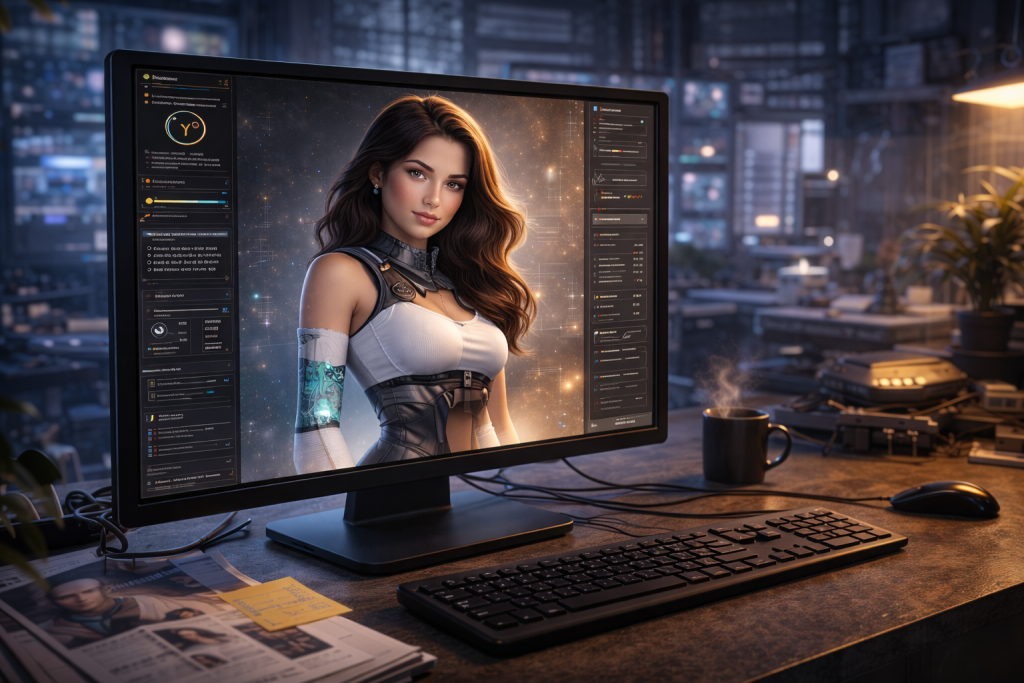
A consistent avatar is not just a visual upgrade. It changes how you think about content. Once the face stops shifting, you can build loops instead of one-off posts.
Content loops create rhythm. The same character appears every week in a new scenario. One episode shows a studio photoshoot. The next shows a behind-the-scenes moment. Then a themed set. Viewers begin to expect continuation. That expectation is powerful. It moves attention from novelty to attachment.
Serialized avatar storytelling works because people follow characters, not images. A stable face allows narrative arcs. The avatar can develop moods, preferences, even running jokes. Over time, the character feels less like generated art and more like a digital personality.
Fan psychology plays a major role here. Recognition lowers cognitive effort. When someone scrolls past a familiar face, they stop faster. That microsecond of recognition increases click probability. The shift from anonymous image to recognizable persona increases engagement and trust.
Creators often chase the best AI image generator thinking quality alone drives growth. In practice, consistency drives value. The same face appearing across feeds builds memory. Memory builds audience loyalty. Loyalty creates monetization potential.
When an avatar becomes recognizable, it can anchor sponsorships, product placements, exclusive drops, and subscription communities. The visual identity becomes the entry point into a broader ecosystem. At that stage, you are no longer generating pictures. You are developing digital intellectual property.
Turning an Avatar into an Interactive AI Character
Images alone create attention. Interaction creates retention. A static avatar can attract views, but it cannot respond. Once you attach conversational ability, the character shifts from content asset to interactive product.
An interactive AI character introduces engagement layers that images cannot provide:
- Real-time chat responses that simulate personality and deepen immersion.
- Persistent memory so the character recalls past conversations and builds continuity.
- Emotional tone control, allowing the avatar to respond differently to different users.
- Scenario-based interaction such as roleplay, coaching, entertainment, or exclusive dialogue.
- Personalized content generation triggered by user behavior.
Chat increases session duration. Users stay longer when the character responds. A memory layer strengthens the illusion of presence. Instead of random replies, the avatar references previous messages. That consistency builds attachment.
Monetization becomes more direct at this stage. Subscription access can unlock extended conversations. Paid messaging can gate premium replies. Tokens or credits can control exclusive content generation. Tiered memberships can offer different personality modes or visual styles.
The model is straightforward. Attention brings users in. Interaction keeps them engaged. Structured payment logic converts engagement into revenue.
Once your avatar moves from image series to conversational experience, it stops being a content experiment. It becomes a digital product with scalable income potential.
Scrile AI: Build and Monetize Your Own Platform
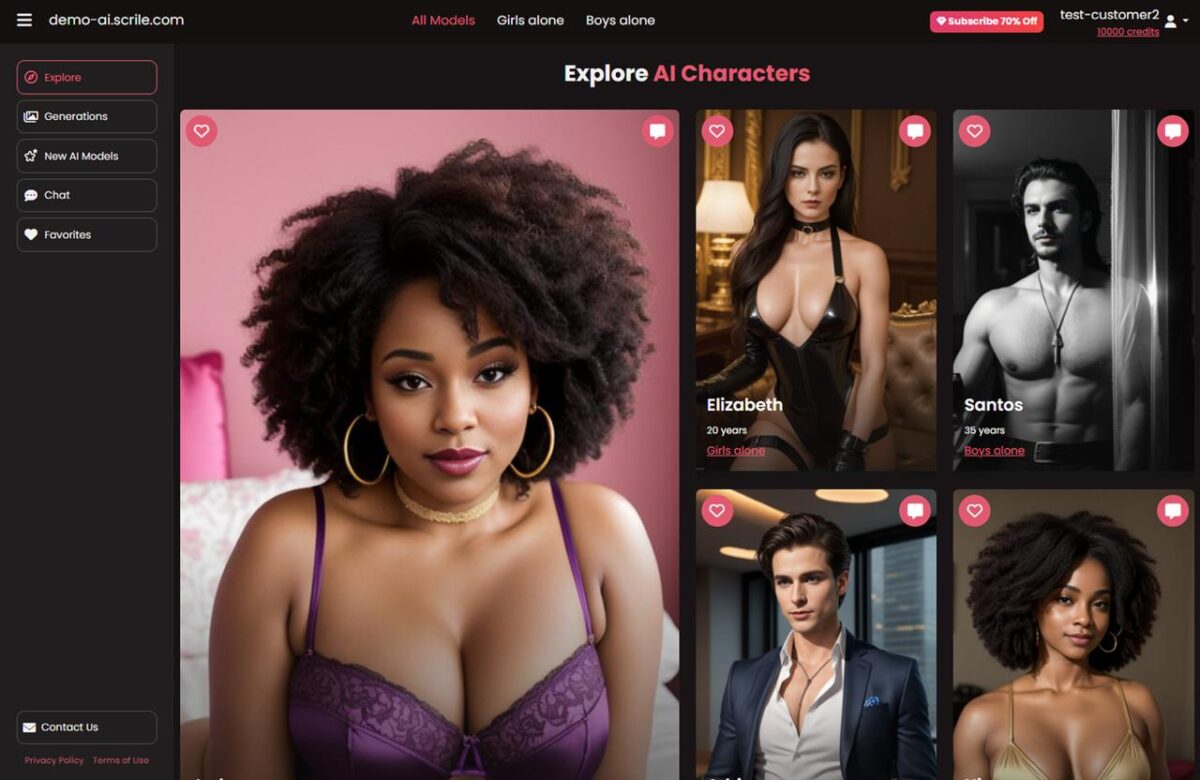
Up to this point, we’ve talked about generating stable images and turning them into interactive characters. The final step is infrastructure. If you want to move beyond scattered tools and third-party platforms, you need a system you control.
Scrile AI is not a SaaS app with preset limits. It is a development service that builds custom AI avatar platforms around your business model. That distinction matters. Instead of adapting your character to someone else’s ecosystem, the ecosystem is built around your character.
The platform can combine image generation with conversational AI in one environment. That means your avatar is not just producing visuals but interacting with users through structured chat logic. You decide how that interaction works and how it earns.
Scrile AI enables:
- A custom AI avatar platform under your brand
- Integrated image generation tied to specific characters
- Chatbot logic with memory and personality controls
- Flexible monetization models including subscriptions and tokens
- Full ownership of branding and user relationships
- Direct access to your user database and analytics
When people search for the best AI image generator, they are usually thinking about output quality. Long term, the bigger question is control. Who owns the experience? Who controls pricing and the data?
Scrile AI is built for creators and founders who want to launch monetizable AI avatars and interactive character platforms under their own rules, not inside someone else’s product.
Conclusion
Generating images is easy. Building identity is harder. That difference defines the gap between experimentation and ownership.
When a character looks different every time, it remains disposable. When the face stays stable across scenes, outfits, and expressions, it becomes recognizable. Recognition creates continuity. Continuity creates perceived value. Over time, the avatar stops being a visual experiment and starts functioning as intellectual property.
The conversation around the best AI image generator often focuses on style, realism, or speed. Those factors matter. But long-term value comes from control. Control over identity. Control over monetization.
A consistent avatar can anchor a content series. It can support subscriptions. It can power interactive experiences. The visual layer becomes the entry point into a larger system.
If you’re ready to move beyond scattered tools and build a structured AI avatar product under your own brand, contact the Scrile team. Scrile AI is designed for creators and businesses who want to turn consistent characters into scalable digital assets.
Related guides
