
Best Donation Platforms for Nonprofits in 2026
Explore the best donation platforms for nonprofits in 2026, compare fees, features, and limits, and learn when custom development with Scrile Connect becomes the smarter choice for scalable fundraising.

best donation platforms
In 2026, best donation platforms are no longer a background choice handled by a webmaster. They sit at the center of how nonprofits raise money, keep donor trust, and plan growth. Giving habits have shifted fast. More than 60% of donations now happen online, and recurring gifts continue to grow year over year, especially among donors under 45. Digital-first supporters expect the same speed and clarity they get from everyday online payments.
That expectation changes everything. Donors want to understand where money goes. They want to pay in two clicks. Cards, wallets, bank transfers, and even crypto are becoming normal options. When a form feels clumsy or confusing, people leave. Studies show that optimized donation flows can lift conversion rates by 20–30%. Poor ones quietly bleed revenue.
This is why infrastructure matters. The wrong setup creates friction, adds hidden fees, and weakens credibility. The right one feels invisible to donors and reliable to teams. In a crowded fundraising space, trust is fragile. Tools either protect it or slowly erode it.
Why Choosing the Right Donation Platform Is Critical
Choosing between best donation platforms is not a cosmetic decision. It directly affects how often people complete a donation and how confident they feel while doing it. Many nonprofits discover this only after launch, when traffic looks fine but donations lag behind expectations. The reason is usually hidden in small details that shape behavior.
A donation page is a moment of intent. People arrive ready to act. Any confusion, delay, or distraction weakens that intent. This is why the technical layer quietly turns into a strategic one.
Donor Experience Shapes Conversion
Most failed donations do not fail because of a lack of goodwill. They fail because the process feels awkward. Redirects to external pages interrupt focus. Mandatory account creation feels unnecessary. Limited payment methods block donors who prefer a specific option.
Simple flows work better because they respect attention. A clean form with clear amounts and familiar payment methods often converts more reliably than complex interfaces filled with extra features. One-time donations usually happen fast and emotionally. Recurring donations follow a different logic. People agree to them when they feel safe and in control. Clear terms and easy cancellation matter more than clever upsells.
This is where well-designed online donation platforms show their value. They reduce hesitation instead of adding steps.
Fees, Ownership, and Long-Term Cost
Cost structure deserves careful attention. Platform fees and payment processor fees are often mixed together in marketing, yet they hit revenue differently. A “free” solution may still take a share through processing, add-on features, or forced upgrades.
Nonprofits should look closely at:
- how much is lost per transaction once all fees are counted
- who owns donor data and how easily it can be exported
- whether branding and messaging stay under nonprofit control
- how difficult it is to change the setup later
Ownership shapes long-term freedom. When donor relationships sit inside a third-party system, every future decision depends on its rules. The right choice supports growth. The wrong one quietly limits it.
Top Donation Platforms Nonprofits Use in 2026
The conversation around the best donation platforms often gets reduced to logos and popularity. In practice, nonprofits choose tools based on far less glamorous criteria: how predictable the fees are, how much control they retain, and how well the system holds up once campaigns grow beyond a simple donate button. The platforms below are widely used in real fundraising operations, not because they are trendy, but because they solve specific problems at scale.
These tools are commonly described as the best donation platforms for nonprofits, yet their differences matter more than their similarities. Each one reflects a distinct approach to online fundraising, from speed and simplicity to analytics-heavy optimization.
Donorbox
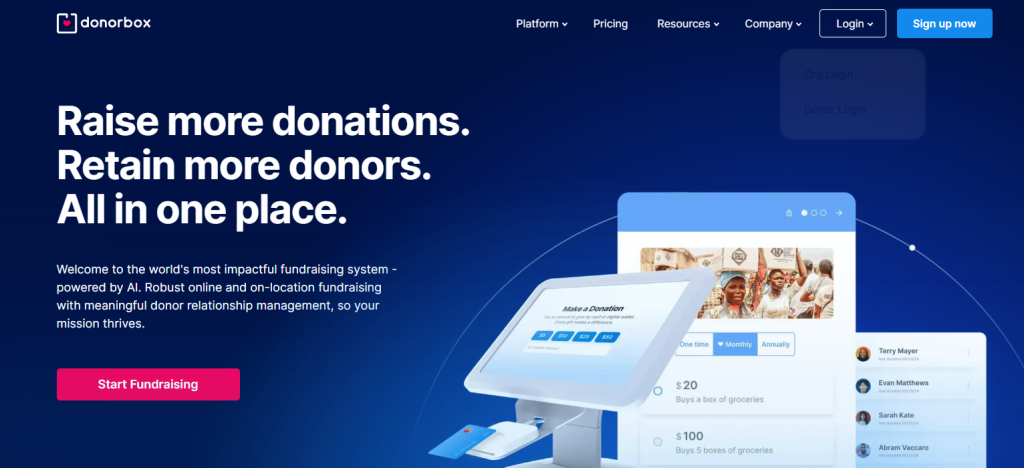
Donorbox is usually selected by nonprofits that want to launch fast without committing to a complex ecosystem. It focuses on embedding donation forms directly into existing websites, keeping the experience familiar for donors.
Pricing
- Platform fee: from 1.6% to 3.95% per donation
- Payment processing: typically 2.2–2.9% + $0.30 via Stripe or PayPal
- Pro Plan: $150/month
Pros
- Quick setup with embeddable forms
- Reliable recurring donation support
- Works well with WordPress and custom sites
Cons
- Limited customization beyond form layout
- Full dependence on Stripe and PayPal
- Advanced logic requires external tools
Donorbox performs well when fundraising needs are straightforward. Its limits appear when organizations want deeper control over donor flows, branding, or payment logic. It is efficient, but not flexible.
BetterWorld
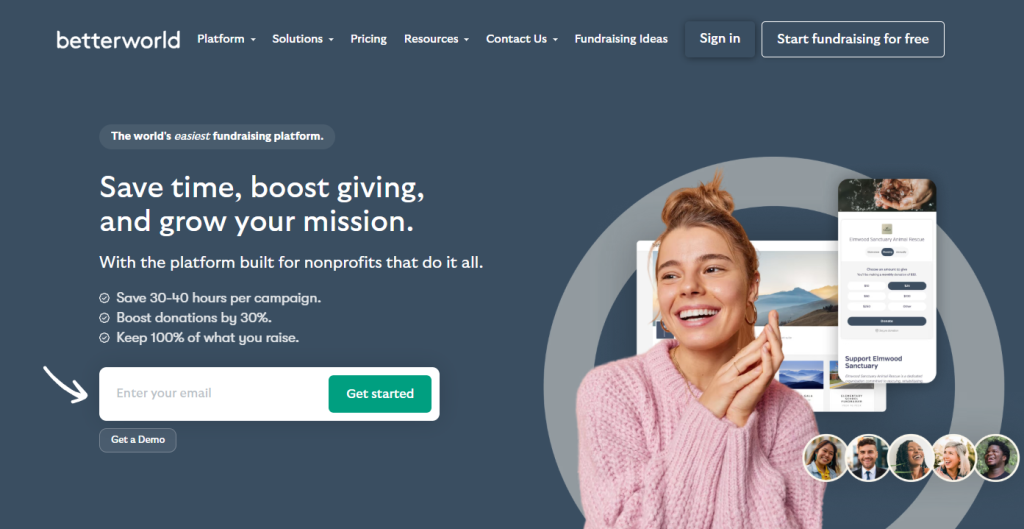
BetterWorld takes a broader view of fundraising, aiming to support multiple campaign formats inside one system. It is often chosen by nonprofits that run events, auctions, and community-driven initiatives alongside standard donations.
Pricing
- Platform fee: from 0% to 5%
- Payment processing: around 2.9% + $0.30
- Partner subscription plan: $129/month
Pros
- Crowdfunding, auctions, peer-to-peer, and monthly giving
- No platform fee model
- Accessible for event-based fundraising
Cons
- Limited design and workflow customization
- Feature depth varies by campaign type
- Reporting tools are basic
The appeal of BetterWorld lies in flexibility of format, not technical depth. It works well for organizations that value variety and ease of use, while teams needing tailored donation logic may eventually outgrow it.
Bloomerang + Qgiv Ecosystem
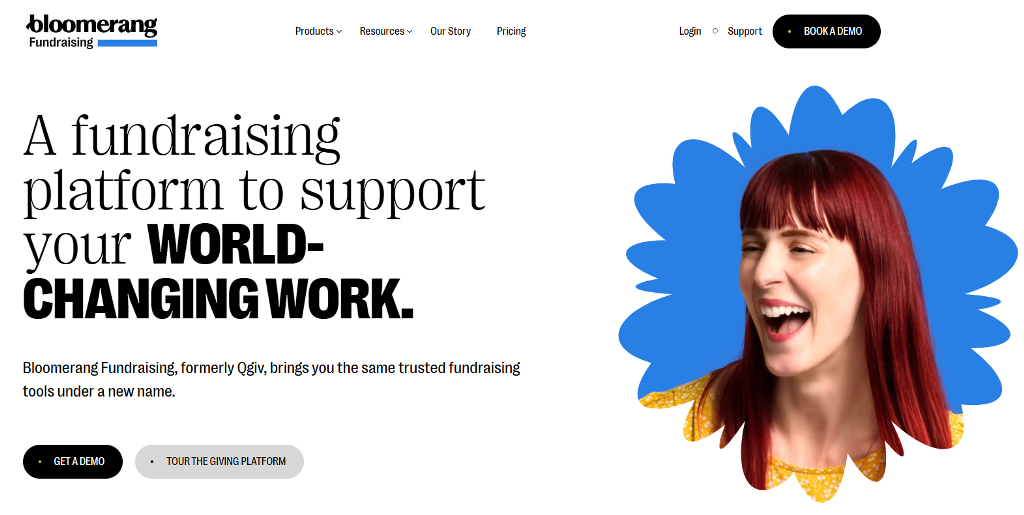
This combination is less about fast launches and more about structure. Bloomerang acts as the donor management core, while Qgiv handles the transaction layer and donation forms.
Pricing
- Bloomerang CRM: roughly $1,500 per year
- Qgiv fees: commonly 2.5–4% plus processing
- Costs scale with donor volume and features
Pros
- Strong donor data and reporting
- Flexible donation forms through Qgiv
- Built for long-term donor relationships
Cons
- Higher total cost
- Longer setup and onboarding
- Too complex for small teams
This setup suits nonprofits that treat fundraising as an ongoing operation rather than isolated campaigns. It rewards organizations with dedicated staff and stable donor bases. For lean teams, it can feel heavy.
Fundraise Up
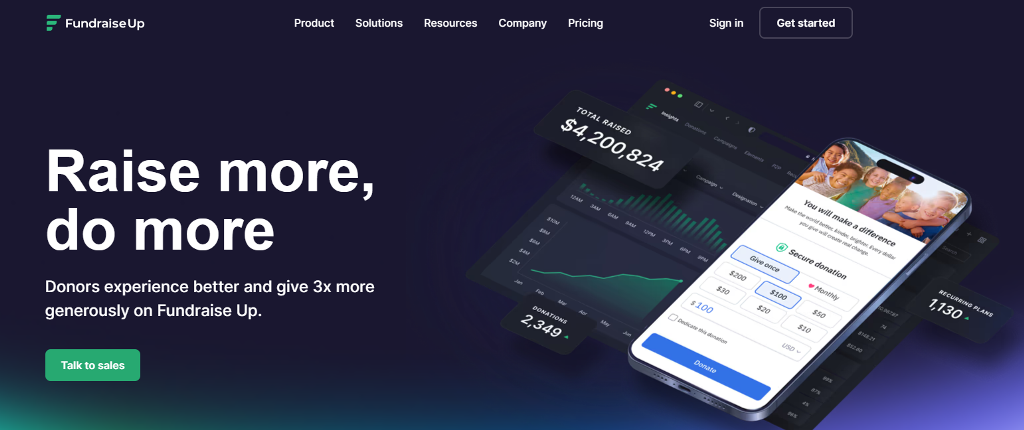
Fundraise Up is designed around one metric: conversion. Instead of focusing on form design, it concentrates on donor behavior and timing.
Pricing
- Platform fee: 4%
- Payment processing: around 2.9% + $0.30
- Custom pricing for larger organizations
Pros
- Smart donation prompts based on behavior
- Built-in A/B testing for amounts and messages
- Detailed conversion analytics
Cons
- Higher fees than most alternatives
- Limited control outside optimization logic
- Less suitable for custom payment flows
Fundraise Up can increase donation completion rates, especially for nonprofits with consistent traffic. The trade-off is cost and reduced flexibility. It fits organizations willing to pay for performance tuning.
GoFundMe Pro
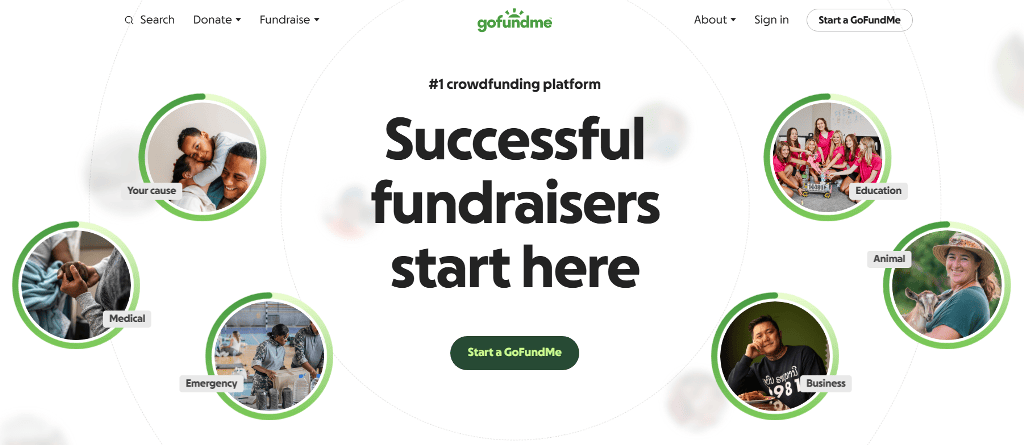
GoFundMe Pro targets nonprofits that want a recognizable donation experience tied closely to their own websites. It is a separate product from consumer GoFundMe.
Pricing
- Platform fee: 0%
- Payment processing: approximately 2.2–2.9% + $0.30
- Custom subscription pricing
Pros
- Strong brand recognition
- Website-based donation flows
- Peer-to-peer fundraising support
Cons
- Restricted customization
- Preset donation logic
- Limited payment flexibility
GoFundMe Pro works best when donor trust and familiarity are priorities. It simplifies explanation and onboarding, but customization boundaries appear quickly for organizations with more complex needs.
PayPal Fundraisers
PayPal Fundraisers is often chosen by nonprofits that want the fastest possible path to accepting donations, without onboarding a full fundraising platform. It relies on PayPal’s existing payment infrastructure and brand familiarity rather than advanced fundraising mechanics.
Pricing
- Platform fee: 0%
- Payment processing: standard PayPal rates, typically around 2.9% + fixed fee (varies by country)
- No monthly subscription
Pros
- Extremely fast setup
- Trusted payment brand for donors
- No platform fee
Cons
- Strict fundraising limits
- No advanced donor management
- Very limited customization
- Not designed for long-term or recurring campaigns
PayPal Fundraisers works best for short-term, low-volume campaigns where speed matters more than structure. It is suitable for emergency appeals, small community initiatives, or first-time fundraising efforts. The built-in limits make it impractical for ongoing donation programs or growing nonprofits. Once fundraising becomes recurring or more strategic, organizations usually move to more flexible systems.
Fees, Features, and Limits Compared
When nonprofits compare pricing pages, numbers often look similar. In practice, best donation platforms differ sharply once donation volume grows and campaigns diversify. Platform fees, processing fees, and built-in limits shape how much money actually reaches the cause. This comparison highlights where costs hide and where flexibility breaks.
| Platform | Platform fee (%) | Payment processing fees | Customization level | Recurring donations | Typical use case |
| Donorbox | from 1.6% to 3.95% | ~2.2–2.9% + $0.30 | Low–Medium | Yes | Quick setup for small to mid nonprofits |
| BetterWorld | from 0% to 5% | ~2.9% + $0.30 | Low | Yes | Events, auctions, peer-to-peer campaigns |
| Bloomerang/Qgiv | $1,500 per year | ~2.5–4% + processing | Medium | Yes | Donor management–driven fundraising |
| Fundraise Up | ~4% | ~2.9% + $0.30 | Medium | Yes | Conversion optimization at scale |
| GoFundMe Pro | 0% | ~2.2–2.9% + $0.30 | Low–Medium | Yes | Website-based nonprofit donations |
| PayPal Fundraisers | 0% | ~2.9% + fixed fee | Very low | No | Short, low-volume campaigns |
The table shows why fee stacking matters. A few percentage points compound quickly at scale. Limits matter just as much. Caps on duration, goals, or customization quietly restrict growth. Among the best nonprofit donation platforms, marketing promises fade fast once real volume and long-term plans enter the picture.
How to Choose the Best Option for Your Nonprofit
Picking a donation tool works better when you start with trade-offs, not feature lists. Some teams need speed above everything else. Others need ownership and room to grow. The answers point in different directions, even among the best online donation platforms for nonprofits.
If you run one-off campaigns, simple tools often make sense. They launch fast, explain themselves easily to donors, and require little maintenance. Ongoing programs tell a different story. Monthly donations, donor segmentation, and reporting push teams toward more structured systems.
Audience also matters. Local donors may prefer familiar payment methods and short forms. Global supporters expect cards, wallets, and sometimes alternative payments. This is where many online donation platforms for nonprofits begin to show limits.
All-in-one tools work well early on. They reduce setup time and decision fatigue. Over time, they can get in the way. Fixed logic, capped features, and data locked inside third-party dashboards slow teams down. The right choice today should still make sense a year from now.
Building a Custom Donation System with Scrile Connect
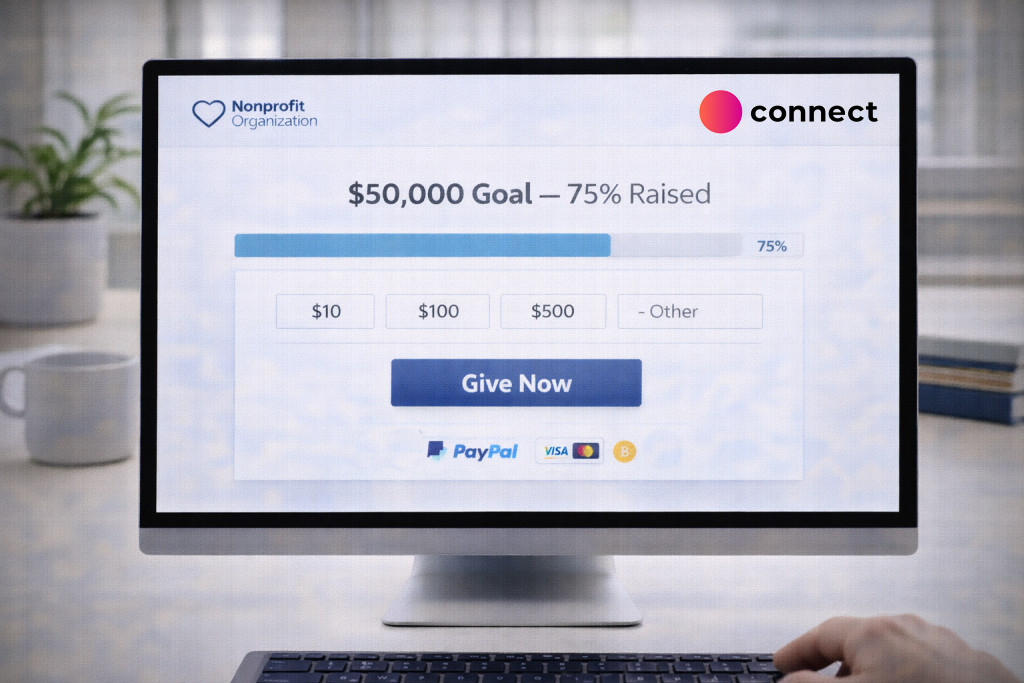
For nonprofits with growing ambitions, there comes a point when even the best donation platforms no longer fit the way fundraising actually works. Off-the-shelf tools are designed for average scenarios. Real organizations rarely stay average for long. Campaign logic becomes more specific, audiences spread across regions, and trust starts depending on brand consistency rather than platform familiarity.
Scrile Connect addresses this shift directly. It is not a ready-made platform and not a dashboard you sign into. Scrile Connect is a custom development service that builds donation systems around how a nonprofit operates, collects funds, and communicates with donors. The focus is on ownership, flexibility, and long-term stability.
With Scrile Connect, nonprofits can implement:
- fully branded donation interfaces that live on their own website
- custom donation logic, including variable amounts, conditional flows, and campaign-specific rules
- direct crypto donation support alongside traditional payment methods
- multi-currency and international payment setups
- complete ownership of donor data without third-party restrictions
This approach becomes especially valuable when standard tools start imposing limits. Fixed templates restrict experimentation. Platform rules dictate how donors interact. Data remains locked inside external systems. These issues rarely show up at launch, but they shape growth over time.
Scrile Connect is often chosen by teams that have already tested best online donation platforms for nonprofits and understand their boundaries. Instead of adapting processes to software, the software is built to match real fundraising needs. For nonprofits planning sustained campaigns, diversified payments, and deeper donor relationships, custom development offers clarity where generic tools begin to slow things down.
Conclusion
Choosing among the best donation platforms is a decision about control and durability. Donation systems are infrastructure. They influence trust, flexibility, and how confidently a nonprofit can scale. When fundraising becomes core to operations, ownership matters. If you need custom payment logic, crypto support, and full control over donor data, contact the Scrile Connect team and explore a donation system built specifically around your nonprofit’s goals.
Related guides
- What Is a Church Online Platform and How Does It Work?
- 15 Church Website Ideas to Inspire Your Design
- Donation Page Examples to Inspire Your Website
- Fundraising Analytics Metrics to Measure Your Impact
FAQ
Is there a better platform than GoFundMe?
For many nonprofits, BetterWorld is a strong alternative. It supports more than simple crowdfunding, including auctions, peer-to-peer campaigns, and monthly giving. This flexibility makes it useful for organizations that run varied fundraising formats rather than single campaigns.
Which platform is best for donations?
There is no single best option for every nonprofit. Bloomerang combined with Qgiv works well for organizations that need strong donor management alongside flexible giving tools. Fundraise Up focuses on improving conversion rates, GoFundMe Pro fits website-based campaigns, and PayPal supports simple, short-term fundraising.
Can I use PayPal for fundraising?
Yes, but with limits. PayPal Fundraisers allow up to $20,000 per campaign and run for 30 days. It suits short, low-volume efforts, not ongoing programs.
