
What Is a Church Online Platform and How Does It Work?
Discover what a church online platform is, how it works, and why digital worship matters in 2026. Learn key features like streaming, donations, and community tools — plus how Scrile Connect helps ministries build secure, branded online spaces for their congregations. Explore modern faith technology today.

church platforms
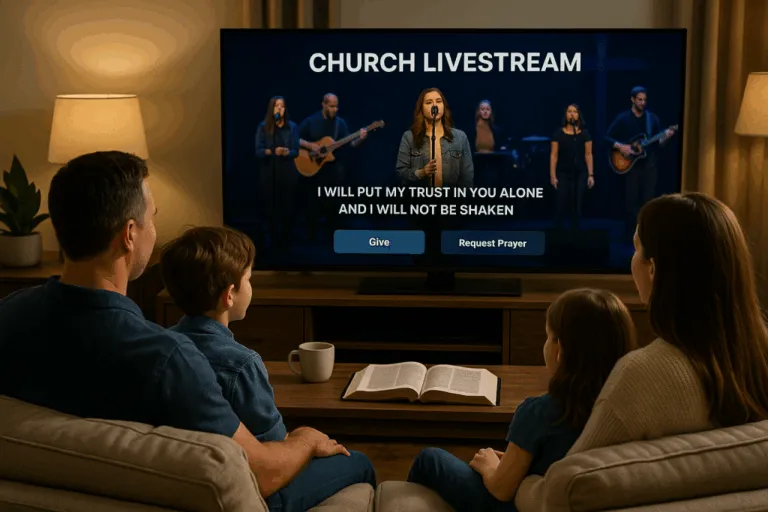
A few years ago, streaming a Sunday service felt like an experiment. Now, it’s just part of how church happens. From live prayer sessions to online small groups, ministries are using the web to reach people wherever they are — at home, at work, or across the world. The rise of the church online platform turned what used to be limited to a building into something that travels through screens and still feels personal.
For many, this shift wasn’t planned — the pandemic forced it. But what began as a necessity became a powerful new way to connect. Pastors who once worried about empty pews now speak to hundreds online. Members who moved away or can’t attend in person still pray, chat, and give together.
This article looks at how these platforms actually work — the features that make online ministry effective, the churches using them well, and why some congregations are now choosing to build their own with customizable tools like Scrile Connect. It’s not about replacing faith with technology. It’s about giving churches the tools to keep faith within reach for everyone.

What Is a Church Online Platform?
Think of a church online platform as the place where a congregation keeps meeting — just through screens instead of pews. It’s not one tool but a bunch of pieces working together: streaming, chat, donations, announcements, and small groups. Everything a church does on Sunday, plus all the little things that happen between Sundays.
It’s how pastors go live, how volunteers stay connected, how people who’ve moved away still show up every week. And yes, it’s where someone new might find the church for the first time — scrolling late at night, watching a sermon replay, deciding to reach out.
What makes it different from a simple video stream is the interaction. People type prayers into chat boxes, send emojis, drop private messages, share links, or just listen quietly with others. It’s still community, just in a new shape.
What churches usually do inside these spaces:
- Watch sermons live or later.
- Give through safe, built-in donation options.
- Chat with pastors or each other during the service.
- Join small groups, events, or prayer circles.
Platforms like Life.Church helped shape this approach early on. Their churchonline model showed that digital worship can feel just as real when the tools are built with care.
Core Features That Make Digital Ministry Work

Every thriving church online platform runs on the same few building blocks. The details may change, but the goal stays the same — keep people connected, engaged, and spiritually involved even when they’re miles apart. What started as livestreaming has turned into something bigger: an entire digital ecosystem where faith communities gather, talk, and give together.
Streaming and Live Interaction
At the heart of any online ministry is the broadcast itself — the part that feels most like church. A sermon goes live, worship music plays, comments start rolling in, and suddenly a hundred screens turn into a single shared space. Platforms now use features like adaptive bitrate streaming, embedded players, and simulcasting to YouTube or Facebook to make that experience smooth on any device.
What makes these streams different from regular videos is the energy. There’s chat happening beside the feed, prayer requests popping up, and volunteers moderating conversations like digital greeters. It’s the same sense of community, only powered through tech. For many who attend online church, this real-time participation is what keeps it feeling personal — not like watching a video, but like showing up.
Donations and Community Building
Money used to be the awkward part of digital church life. Now, giving is built right into the same interface. Members can tithe or contribute without jumping to another app, and everything happens securely. Studies show that recurring givers donate about 40% more per year than one-time contributors — proof that convenience builds commitment.
A strong church online platform also goes beyond money. It helps people stay visible to each other. Profiles, discussion boards, and prayer walls make it possible for members to know one another’s stories. The digital space starts feeling like an extension of real fellowship — different setting, same heart.
When all these pieces work together — live interaction, giving, conversation, belonging — the software platform starts feeling like home for the community.
Real Examples: How Churches Use Digital Platforms
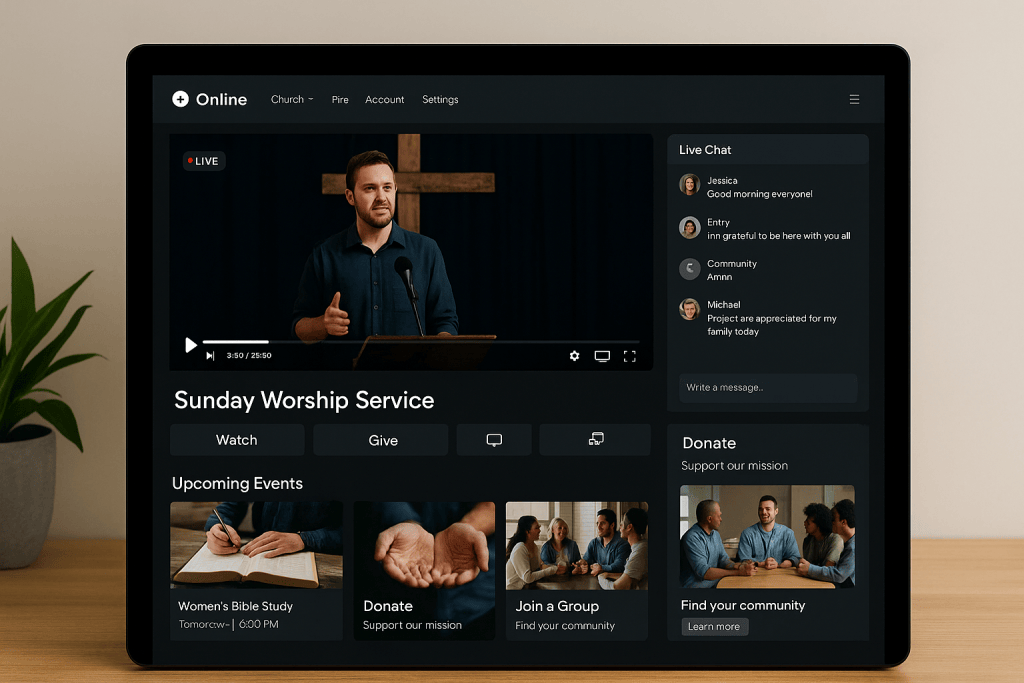
You can tell a lot about a ministry by how it runs online. Some build full tech teams; others stream from a phone. But all of them, in one way or another, rely on a church online platform to reach the people who can’t always walk through the doors.
Big names like Life.Church set the tone early. Their system looks more like a studio than a sanctuary — high-quality streams, multilingual chats, live prayer, and analytics that track engagement from every timezone. Hillsong follows a similar path, using global infrastructure to connect its campuses across countries.
Smaller congregations do it differently. They use whatever tools fit: YouTube, free SaaS dashboards, or plugins tied into a WordPress site. It’s personal and direct. A pastor reads comments mid-sermon. Someone posts a prayer in the chat. It works because it’s genuine, not because it’s expensive.
What most churches focus on:
- Keeping sermons and services easy to access.
- Making donations simple and safe.
- Building real interaction, not just passive viewing.
- Using data to learn what keeps members engaged.
To see how it plays out across different sizes, here’s what the setups often look like:
| Church Size | Platform Type | Features Used Most | Audience Reach |
| Large (10k+) | Custom platform | Streaming, analytics, multilingual support | Global |
| Medium (1k–10k) | SaaS or hybrid | Donations, live chat, event calendar | National |
| Small (<1k) | Free tools + embed | Video player, comments, links to giving | Local |
Why Build Your Own Website Instead of Using Pre-Made Tools

For many ministries, starting on a ready-made streaming or giving service makes sense. It’s quick, simple, and often free. But as a church community grows, those plug-and-play systems start to feel cramped. The layout can’t change much, the branding looks like everyone else’s, and there’s always that quiet worry — what happens if the platform goes down on a Sunday morning?
A custom site gives back control. Instead of working around someone else’s template, you build something that fits your rhythm — your colors, your tone, your values. A well-built church online platform doesn’t just host content; it becomes part of how the ministry communicates and runs.
Where generic tools start to fall short:
- Limited data and donor insight. Most pre-made systems share only surface-level stats — logins, view counts, maybe donation totals. A self-owned site can dig deeper, helping churches understand who’s watching, giving, or returning week after week.
- Branding stuck inside a box. Many off-the-shelf solutions force the same layouts and logos. A custom website lets churches design their digital presence like a real home — every page recognizable, every banner matching their voice.
- Dependence on someone else’s uptime. When servers fail, your service disappears. A self-hosted setup, managed properly, stays reliable and gives you control over fixes, updates, and privacy.
The Real Value of Building It Yourself
Building your own site also opens doors for deeper integrations — connecting sermons, donation tools, and member management into one smooth system. That kind of flexibility is hard to find with pre-built church platforms, and for many ministries, it eventually raises the same question: how much does full control actually cost?
In reality, pricing depends on how much customization a church needs. When a church wants fully customized apps that allow features like live streaming, donation, and community, the cost will likely be around 25,000 dollars initially, including 200-dollar monthly maintenance fees. Semi-customized development, whereby church templates are customized, ranges between 500 and 10,000 dollars, while container apps, which make use of an existing app structure, will require an initial investment of less than 200 dollars.
For growing churches, the next logical step is to move from borrowed space to a digital home they fully own — a direction that naturally leads to custom development options like Scrile Connect.
Online Church Under Your Control with Scrile Connect

Once a ministry outgrows plug-and-play platforms, control becomes the real value. The question isn’t about features anymore — it’s about ownership, privacy, and the ability to shape digital space around people, not software. Scrile Connect gives that flexibility. It lets churches build and manage an online environment that belongs entirely to them — with all the structure, tools, and branding built in from the start.
Everything runs inside one ecosystem. Streaming, donations, group chat, and community management work together under the same roof. The experience feels unified — no separate logins, no clunky redirects, no distractions from what matters most: keeping people connected.
Key advantages for digital ministries:
- Full ownership and identity. Every page carries the church’s own name, colors, and design — no outside logos, no “powered by” tags.
- Flexible giving systems. Custom logic for recurring or one-time donations, detailed reporting, and automatic confirmations for transparency.
- Member access and security. Pastors, staff, and volunteers get separate roles, keeping the system organized and safe.
- All tools under one dashboard. Video hosting, event management, messages, and analytics operate together — simple to use, easy to maintain.
From Streaming to Digital Fellowship
Scrile Connect turns digital church life into something more than Sunday streaming. It recreates the closeness of community through shared spaces — group chats during worship, prayer boards, and private messaging that feels personal, not transactional. Events, updates, and thank-you messages keep members involved beyond service hours.
And because every feature is modular, churches can expand naturally — starting small, then adding new layers as the community grows. The church online platform built with Scrile Connect doesn’t stay static; it evolves with the congregation, adapting to its people instead of forcing them to adapt to the tool.
Conclusion
Modern tools let ministries stream, share, and connect without losing the heart of what makes church feel real — the people, the stories, the moments of prayer that now happen across screens. It’s the same community, just expanded through better design and smarter systems.
For churches ready to take ownership of that experience, Scrile Connect offers a path forward — a way to create a digital home that reflects your mission, protects your members, and grows with your congregation. Explore what’s possible with Scrile Connect, and let your ministry’s voice reach everyone who needs to hear it.
Related guides
- Best Donation Platforms for Nonprofits in 2026
- 15 Church Website Ideas to Inspire Your Design
- Donation Page Examples to Inspire Your Website
- Fundraising Analytics Metrics to Measure Your Impact
FAQ
What is the best social media platform for churches?
The best options are usually the ones your members already use. Facebook remains the most practical — it supports live streaming, event pages, and community groups. YouTube works well for sermons and worship music, offering a global reach and simple embedding on church websites. Instagram is ideal for daily devotionals, visual storytelling, and youth engagement. Many ministries combine all three for balanced outreach.
How much is a church app?
It depends on how custom you want it. A fully tailored app built for streaming, giving, and community tools can start around $25,000 with ongoing costs of about $200 per month. A semi-custom option runs between $500 and $10,000, while template-based container apps are cheaper — often under $200 to launch and maintain.
What are the top 3 social media platforms?
Right now, the top global platforms by active users are Facebook (3.07 billion), WhatsApp (3 billion), and YouTube (2.7 billion). Together, they give ministries more reach than any single website ever could — ideal channels for connecting with new audiences online.
