
Crypto Payment API: Fast Integration for Developers
A practical guide to integrating a crypto payment API into real products. Learn how developers handle payments, security, and scaling, and when turnkey custom integration makes more sense than DIY solutions.


cryptocurrency payment gateway api
More products now need to handle payments that move fast, cross borders easily, and don’t fall apart when a bank blocks a transaction. That’s the practical reason crypto payments keep showing up in real software, from SaaS tools to creator platforms and digital marketplaces.
For developers, a crypto payment API offers something familiar in form and different in effect. It plugs into existing backend logic, works through standard requests and callbacks, and removes several layers that slow traditional payments down. There’s no waiting for international transfers to clear. No dependency on card networks that vary by country. Funds arrive directly, often within minutes, and the confirmation logic is handled in code, not spreadsheets.
Businesses feel the pressure from another side. Global e-commerce means customers come from dozens of regions with different currencies and payment habits. Creator platforms deal with payouts to contributors scattered across continents. Subscription services want predictable flows without surprise chargebacks. Crypto payments solve many of these issues at once, not through slogans, but through architecture.
Control is usually the deciding factor. Clear payment states, fewer intermediaries, and flows shaped around the product make crypto payments viable in real systems. This article breaks down how a crypto payment API works, how integration is handled in practice, and what developers should watch for when moving to production. It also touches on cases where a turnkey approach is useful, and how Scrile can help implement a custom integration when teams need a solution built around their specific requirements.

What a Crypto Payment API Actually Is
A crypto payment API is the layer that lets your product talk to blockchain networks in a controlled, predictable way. Instead of sending users to an external checkout page, your system creates payment requests, listens for confirmations, and updates order status automatically. Everything happens inside your own application logic.
It helps to separate three common approaches. A hosted checkout sends users away from your product to complete a payment. Plugins drop prebuilt logic into platforms like WordPress. An API sits deeper. It connects your frontend and backend to wallets and blockchains through requests, webhooks, and callbacks. That makes it flexible enough for custom products.
In a typical flow, the user triggers a payment action in the interface. The frontend sends a request to your backend. Your backend uses the crypto payment API to generate a payment address or invoice. The blockchain records the transaction. Once confirmations arrive, the API notifies your system, and the order is marked as paid. No manual checks. No waiting for dashboards.
This is where a crypto payments API becomes more than a payment button. It lets developers control timing, retries, partial payments, and edge cases. You can define what happens if a transaction arrives late, short, or from the wrong address.
APIs matter because real products rarely fit one-size flows. Marketplaces, subscriptions, and creator platforms need payment logic that matches their rules. A simple “accept crypto” button can’t do that. An API can.
Popular Crypto Payment APIs and What They Offer Developers

When teams start looking for a crypto integration, they usually find the same names again and again. That’s because a small group of providers has spent years building APIs that developers can actually work with, not just marketing pages.
Here are several widely used options developers evaluate early on:
- CoinRemitter focuses on straightforward crypto acceptance. It supports major assets like BTC, ETH, USDT, and LTC. The API generates payment addresses, tracks confirmations, and sends webhooks when funds arrive. It’s often chosen by teams that want predictable behavior without extra layers.
- Bitpace targets businesses that need broader coverage. Its API supports multiple cryptocurrencies, fiat settlements, and compliance tooling. Developers get access to real-time status updates, payout controls, and reporting features.
- NOWPayments is known for wide coin support, including stablecoins. Its API handles invoice creation, automatic conversion, and callback notifications for payment events.
- CoinGate offers both hosted and API-based flows. Developers often use it when they need optional fiat conversion and multi-currency checkout logic.
- Coinbase Commerce provides a familiar interface backed by a major exchange, though customization can be more limited than other options.
Across these providers, most features fall under the same technical umbrella. A typical cryptocurrency payment gateway API exposes endpoints for invoice creation, address generation, and transaction status. Webhooks notify your backend once confirmations are reached. Rate limits usually range from tens to hundreds of requests per minute. Most platforms also offer sandbox environments so developers can test without moving real funds.
A crypto payment API becomes useful only if the documentation is clear. The best providers publish full request examples, error codes, and retry logic guidelines. Poor docs slow integration more than missing features ever will.
What Developers Actually Care About
Developers tend to focus on details that don’t show up in feature lists:
- Response times under load, especially during traffic spikes
- Webhooks that arrive once and only once
- Clear error messages instead of generic failures
- Wallet handling that avoids manual reconciliation
- Optional fiat conversion without forcing it into every flow
These are the things that decide whether an integration survives real usage.
How Integration Works in Practice (Web and App)
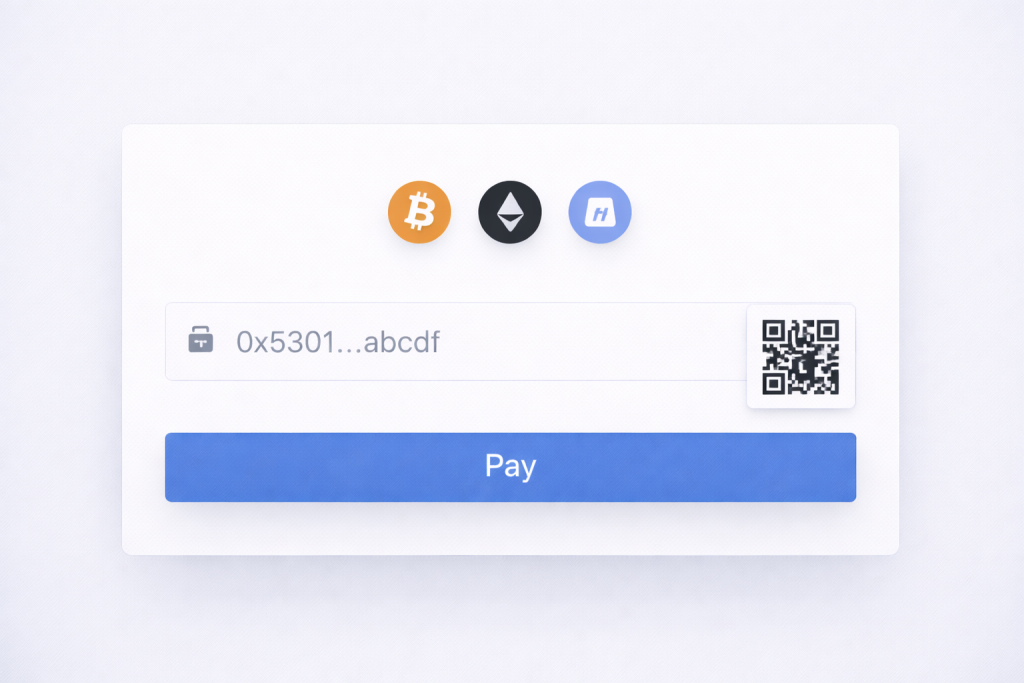
Integrating crypto payments rarely starts with code. It starts with deciding how money should move through your product. Once that’s clear, the technical flow becomes easier to design.
In a typical setup, the user begins on the frontend. They select a product, subscription, or service and click a payment action. At that moment, the frontend does not talk to the blockchain directly. Instead, it sends a request to your backend. This is where your business logic lives.
The backend uses a crypto payment API to create a payment request. Depending on the provider, this might mean generating a unique wallet address, issuing an invoice, or creating a time-limited payment intent. The API returns the details needed to display instructions to the user, such as the amount and destination address.
Once the user sends funds, the blockchain takes over. Transactions sit in a pending state until confirmations are reached. During this phase, your system doesn’t guess. It waits. The API monitors the blockchain and notifies your backend through webhooks when the transaction status changes.
Failed payments matter just as much as successful ones. Users may send the wrong amount, miss a deadline, or cancel halfway through. A solid integration accounts for all of this. Your backend decides whether to retry, expire, or flag the payment for review.
Bitcoin still plays a central role here. Even with stablecoins growing fast, many platforms rely on a Bitcoin payment API because BTC remains widely supported and familiar to users.
Frontend and backend responsibilities stay separate by design. The interface focuses on clarity. The backend handles validation, confirmation, and state changes. This separation keeps integrations stable across web and mobile apps.
Security, Compliance, and Real Risks
Once crypto payments are live, most issues don’t come from the blockchain itself. They come from how the integration is wired.
A crypto payment API gives you control, but it also shifts responsibility to your side of the system. The weakest points are usually predictable, and they tend to repeat across projects.
Here are the areas where teams most often run into trouble:
- API key handling
Keys that create invoices or request wallet addresses must stay on the server. Storing them in frontend code, mobile apps, or public repos leads to silent abuse. Proper setups use environment variables, restricted access roles, and regular key rotation. - Webhook verification
Every serious crypto payment gateway API sends transaction updates via webhooks. Those requests need signature checks, timestamps, and replay protection. Without verification, old payloads can be resent and accepted as new payments. - Confirmation logic
Blockchains don’t confirm instantly. Payments can arrive late, incomplete, or with too few confirmations. Systems that treat the first signal as final often mislabel orders and create accounting gaps. - Replay and spoofing attacks
Unprotected endpoints are easy targets. Attackers don’t need to break wallets if they can fake “paid” events and trigger order fulfillment. - Wallet custody choices
Provider-managed wallets simplify setup but concentrate risk. Self-managed wallets give control but require monitoring, backups, and alerting when balances move unexpectedly. - Compliance exposure
Accepting crypto doesn’t automatically remove regulatory obligations. In some regions, crypto-to-fiat flows trigger KYC or AML requirements. APIs can expose metadata, but enforcement stays on your side.
Security in crypto payments is operational work. It’s about making the system behave consistently when traffic spikes, users make mistakes, or something unexpected hits production.
Comparing DIY Integration vs Turnkey Development

At some point, teams face a choice: wire the integration themselves or hand it off to specialists. Both paths work, but they lead to very different outcomes.
Direct API integration usually starts with good intentions. A developer reads the docs, sets up endpoints, and gets payments flowing. For simple products, that can be enough. Problems appear later. Edge cases stack up. Webhook retries behave oddly. Confirmation logic grows fragile. What looked like a quick task slowly turns into a system that only one person fully understands.
Many teams underestimate scope. Payment logic touches billing, user access, notifications, refunds, and reporting. One missed condition can cause lost revenue or unhappy users. Fixing those issues later costs more than building it right from the start. Technical debt in payment systems is especially expensive because it affects trust.
Turnkey development shifts that burden. Instead of stitching pieces together, the integration is designed as part of the product architecture. Security, monitoring, and scaling are considered upfront. That doesn’t remove responsibility, but it spreads it across people who’ve already solved similar problems.
Here’s how the two approaches compare in practice:
| Aspect | Direct API Integration | Turnkey Custom Integration |
| Time to launch | Longer | Faster |
| Security responsibility | On your team | Shared |
| Custom logic | Limited by time | Fully tailored |
| Maintenance | Ongoing internal | Managed |
DIY works when payments are a small feature. Turnkey makes sense when payments are core to how the product earns money.
Turnkey Crypto Payment API Integration with Scrile
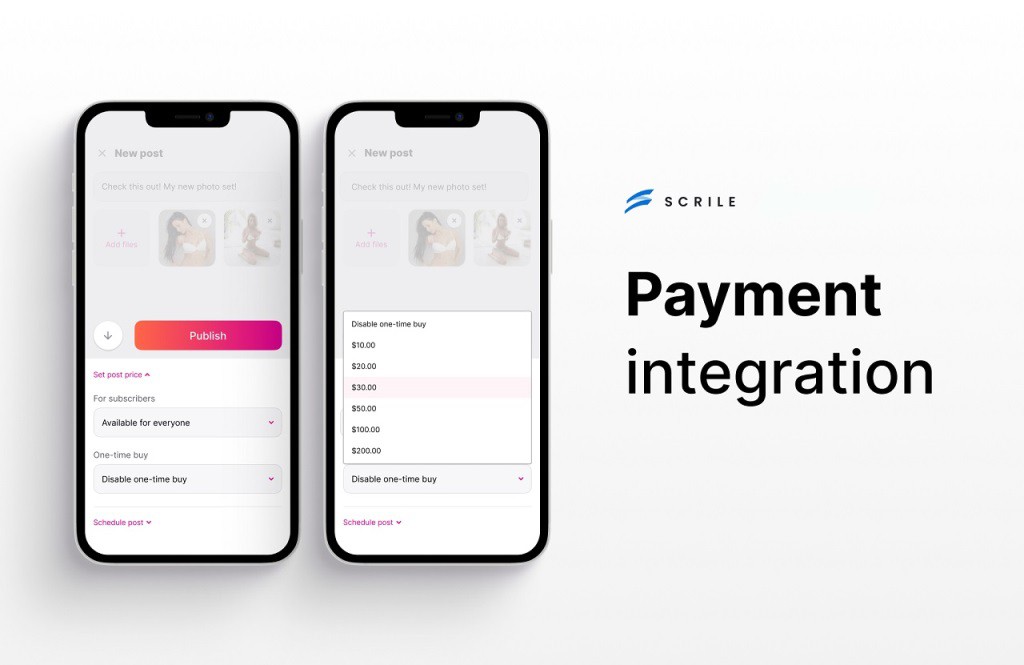
Scrile works as a custom development service, not a boxed product. The role here is to design and build payment infrastructure that fits a real business model, then carry it through launch and growth. That starts with understanding how money should move inside the product, not with picking a provider from a list.
Projects usually begin at the architecture level. Scrile helps define where payments sit in the system, how they interact with user accounts, subscriptions, and access rules, and how confirmations flow back into the product. From there, the team selects and integrates a crypto payment API that matches the technical and regional requirements. Some projects need stablecoins and fast settlement. Others prioritize wide coin support or local compliance constraints. The choice affects everything downstream.
Security is handled as part of the build, not added later. Webhook verification, key management, confirmation thresholds, and monitoring are designed into the backend. On the frontend, Scrile focuses on payment UX that feels native to the product. No redirects that break trust. No generic screens that confuse users at the final step.
Real use cases tend to look like this:
- Marketplaces that need escrow-style logic and delayed settlement
- Creator platforms handling subscriptions, tips, and payouts across regions
- SaaS products selling access by usage, time, or feature tier
- Web3 services that combine on-chain payments with off-chain logic
What Scrile Builds Around the API
The API itself is only one layer. Scrile builds the system around it so payments work reliably at scale:
- Custom checkout flows aligned with product logic and user roles
- Multi-currency handling with clear conversion and settlement rules
- Admin dashboards showing payment states, errors, and retries
- Webhooks with monitoring, alerts, and replay protection
- Scalability planning for traffic spikes and network delays
As products grow, requirements change. One-time payments turn into subscriptions. Regions with stricter rules come into scope. Reporting and auditing become essential. A second crypto payment API mention matters here because long-term ownership depends on how adaptable the integration is. Scrile builds systems that can evolve without rewrites.
This approach makes sense when payments are part of the core experience, not an add-on. It’s about control, resilience, and owning the infrastructure that supports revenue. That naturally leads into the final question: how to decide when a custom setup is the right move.
Conclusion
Crypto payments stop being interesting the moment they break. That’s why APIs in this space shouldn’t be treated as features you plug in and forget. They sit underneath pricing, access, subscriptions, payouts, and trust. When that layer is solid, everything above it works more smoothly.
Teams that succeed with crypto payments usually treat integration as part of the product’s foundation. Confirmation logic is addressed early in the build. Growth scenarios, edge cases, and regional rules are planned in advance. Payment flows are designed to fit the product naturally rather than feeling added later. That mindset matters more than the specific provider name.
This is where Scrile fits naturally. As a custom development service, Scrile helps teams design and build payment infrastructure that matches how their business actually works. From architecture and security to UX and scaling, the focus stays on long-term reliability rather than shortcuts.
If payments play a central role in your product, it’s worth getting this layer right from the start.
Contact Scrile Custom Development team to discuss a turnkey crypto payment API integration built for your use case.
