
Crypto Subscription & Recurring Payments Explained
Crypto subscriptions let businesses accept recurring payments through wallets instead of cards. Learn how crypto subscription models work, their use cases, risks, and how to launch recurring payments with Scrile Connect.


crypto subscription
More businesses are testing crypto subscription models for a simple reason: card payments don’t work everywhere, and they don’t work for everyone. Banks block regions. Cards expire. Chargebacks wipe out revenue overnight. For companies selling access over time, that friction adds up fast.
Crypto subscriptions take a different route. A user connects a wallet once and authorizes recurring payments directly. No bank approval. No surprise reversals. Memberships, paid communities, and ongoing services can run on clear rules instead of intermediaries. That’s appealing to global audiences, developers, creators, and Web3 users who already live in crypto.
This doesn’t mean crypto subscriptions are effortless. Automation needs careful design. Pricing must account for volatility. Some users still expect card-level simplicity. This article looks at where crypto subscriptions work well, where they struggle, and how businesses actually implement them today. The goal is practical understanding, not buzzwords.

What a Crypto Subscription Actually Is
A crypto subscription works differently from card billing, even if the result looks similar on the surface. With a card, the user gives permission once and the payment processor pulls money on a schedule. Banks sit in the middle. They approve, block, reverse, or delay transactions. Crypto removes that layer, which changes how subscriptions must be built.
At the core is wallet authorization. Instead of saving card details, the user connects a wallet and approves a rule. That rule defines how much can be charged, how often, and under what conditions. From that point on, payments can repeat automatically as long as the wallet has funds and the authorization remains valid.
There are two common technical approaches:
- On-chain logic, where a smart contract controls timing and execution. This is transparent and verifiable, but costs more in fees and requires careful contract design.
- Off-chain scheduling, where a backend system triggers payments using prior wallet approval. This is cheaper and more flexible, but shifts responsibility to the service provider.
This is where the difference between a one-time crypto payment and recurring crypto payments becomes obvious. One-time payments are simple. Send funds. Confirm transaction. Done. Subscriptions require memory, timing, retries, and failure handling. Missed payments, low balances, and cancellations all need logic.
Real-world examples already exist. Crypto.com allows merchants to charge users on a recurring basis through wallet approvals. Kraken runs Kraken+, a subscription product renewed automatically. Binance uses auto-subscribe features for earning products, showing how recurring logic works even when assets stay inside an account.
Automation is the hard part because crypto does not forgive mistakes. A poorly designed system fails silently or breaks trust fast. Subscriptions only work when rules are clear, transparent, and predictable for both sides.
Where Crypto Subscriptions Are Used Today
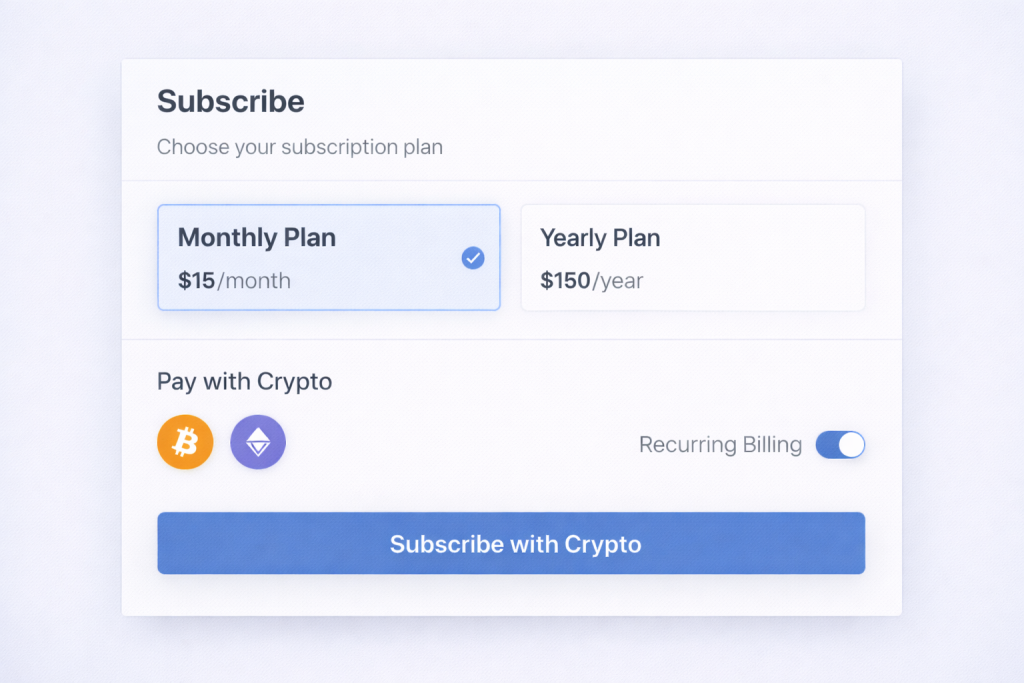
The crypto subscription model shows up first where traditional billing creates friction. These are businesses that sell access over time, serve global users, or operate in niches where banks slow things down. Instead of treating crypto as an experiment, they use it as infrastructure.
Several practical scenarios stand out:
- Content creators and gated communities
Creators offering premium articles, videos, private chats, or Discord-style communities use crypto subscriptions to manage access. A wallet connects once, and recurring payments unlock content automatically. This works well for global audiences and for creators who want predictable income without relying on platforms that can demonetize overnight. - SaaS products and developer tools
Smaller SaaS teams increasingly accept subscriptions in crypto, especially when serving developers or Web3-native users. Access to dashboards, APIs, analytics panels, or automation tools can be tied directly to subscription status. A crypto subscription service fits naturally here because users already manage wallets and expect programmatic access. - Donations and supporter memberships
Nonprofits, open-source projects, and independent creators use subscriptions for recurring support rather than one-off donations. Supporters opt into monthly contributions, often receiving updates, early access, or private streams in return. This model turns irregular donations into steady funding. - NFT and Web3 communities
Some communities use subscriptions to grant ongoing perks instead of one-time NFT purchases. Access to private channels, drops, events, or voting rights can depend on active payments rather than ownership alone.
One familiar early example is Bitcoin membership models, where users paid monthly in BTC to access forums, newsletters, or private research groups long before modern subscription tools existed.
Across all these cases, the logic is the same. The crypto subscription controls access. When payment stops, access updates automatically. That clarity is what makes subscriptions work in crypto, even when the use
Why Businesses Choose Crypto for Subscriptions

Companies rarely switch to crypto subscriptions because it sounds innovative. They do it after running into limits that card payments can’t solve cleanly. These limits show up fast once a product reaches users outside a single country or payment ecosystem.
Global reach is usually the first trigger. Card billing depends on banks, local rules, and issuer approvals. Entire regions get blocked without warning. A crypto wallet doesn’t care where the user lives. If the wallet works, the subscription works. For businesses selling digital access, that consistency matters more than speed or branding.
Control is another reason. Card subscriptions sit inside payment processors. Those processors can freeze accounts, delay payouts, or shut billing down entirely. Crypto subscriptions move the logic closer to the product itself. Payments follow rules the user approved, not policies that can change overnight.
User expectations also play a role. In crypto-native environments, people already manage wallets, permissions, and balances daily. Subscriptions feel like an extension of existing behavior, not a new hurdle.
In practice, teams point to a few concrete benefits once crypto is in place:
- Access without regional friction
Users don’t need a supported card, a compatible bank, or a billing address. A wallet is enough, which opens markets that cards quietly exclude. - Reduced payment disputes
There are no classic chargebacks. That lowers risk for memberships, SaaS access, and recurring services where reversals can cause abuse. - Clear payment rules
Subscription terms are explicit. Users see what they approve and when payments happen, which reduces confusion and support load. - Alignment with Web3 users
Developers, DAO members, and NFT communities already expect wallet-based interactions.
A practical way to run crypto subscriptions without relying on custodial processors
For many subscription businesses, the hardest part is not the membership logic itself. It is making recurring crypto payments work reliably in production. That is where a dedicated payment layer matters.
A solution like Zyrox can be used as the crypto billing infrastructure behind your product. It is a non-custodial payment gateway, which means funds go directly to your wallet instead of being held by a third-party processor. For businesses working with recurring access, subscriptions, and global users, that changes the risk profile in a very practical way.
In this model, Scrile Connect can handle the platform logic, user flows, access control, and subscription experience, while Zyrox handles the crypto payment layer itself. This gives businesses more ownership over both the product and the revenue flow.
Limits, Risks, and Security Considerations
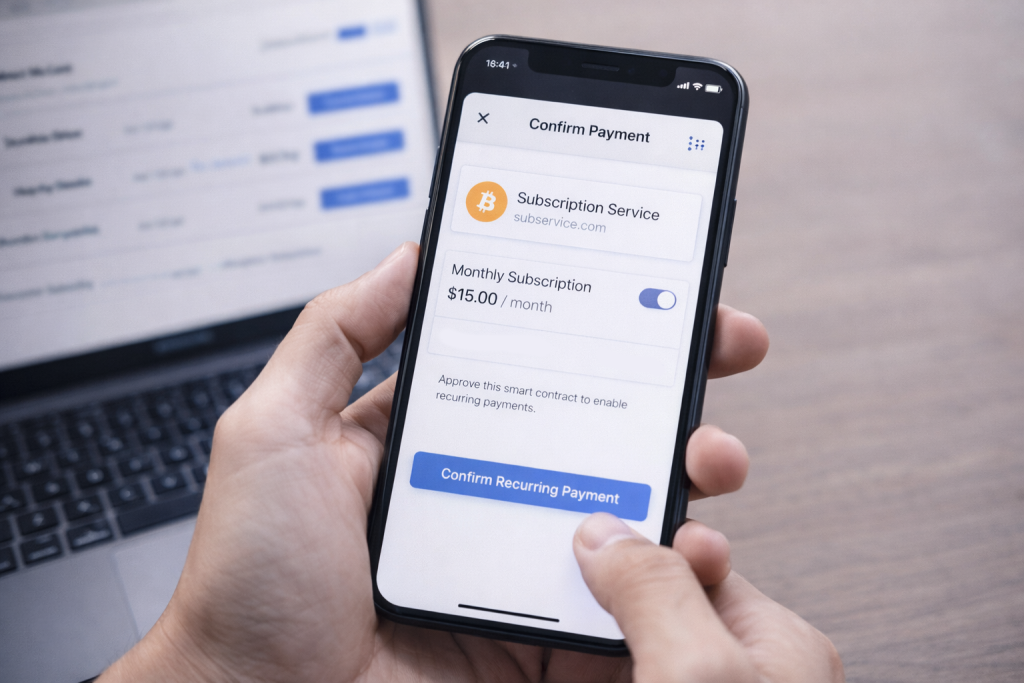
Crypto subscriptions work well when they are designed carefully. Most problems appear when teams assume they behave like card billing and skip the details. This is where things usually get complicated.
Price volatility is the first challenge. Crypto assets fluctuate. It is therefore possible for a subscription with a fixed token price to become distant from the original value through time. This is often addressed through the use of stablecoins or recalculations for every subscription period for a business.Both approaches work, but each requires clear rules and user communication.
Another thing is the wallet balance dependency. When it involves cards, the payment will fail silently and then try again. When it involves cryptocurrencies, the wallet has to have enough funds for the renewal at the precise moment. Otherwise, the payment process will fail if the wallet has insufficient funds.
However, the UX itself also has issues. Approvals in the wallet, confirmations, and fees all create friction. If the path to getting a subscription is confusing and unpredictable, users will abandon the process. For subscriptions to be a success, the process has to be reliable and understandable to non-technical users.
From a technical standpoint, risks usually fall into a few areas:
- Smart contract logic errors. Poorly written contracts can lock funds, misfire renewals, or expose exploits. Contracts handling subscriptions must be minimal, audited, and upgrade-aware.
- Custody and key management. Whether funds are user-held or temporarily custodied, private keys and permissions must be handled securely. Mistakes here are irreversible.
- Backend coordination. Access control, billing state, and payment status must stay in sync. If the backend loses track of subscription state, users either lose access unfairly or keep it without paying.
How Crypto Subscriptions Are Implemented Technically
At a technical level, crypto subscriptions are built around permission rather than stored payment details. Instead of saving a card, the user approves a wallet action that allows recurring charges under specific conditions. This approval defines limits, frequency, and scope. Once granted, the system can attempt renewals automatically without asking the user to sign every transaction again.
There are two main implementation paths. Some teams rely on on-chain smart contracts that execute renewals based on predefined logic. This approach is transparent and verifiable, but it comes with higher transaction costs and less flexibility when changes are needed. Other teams use off-chain schedulers. In this case, the backend tracks time, checks wallet balances, and triggers payments using previously approved permissions. This reduces fees and allows faster updates, but it places more responsibility on backend reliability.
Asset choice matters as well. Subscriptions priced in volatile assets like Bitcoin or Ethereum expose both sides to price swings. Many businesses avoid this by using stablecoins pegged to fiat value. Stablecoins simplify pricing, refunds, and accounting, while still keeping the payment crypto-native. Volatile assets are usually reserved for niche audiences that explicitly prefer them.
Renewals, failures, and cancellations require careful coordination. When a renewal fails due to insufficient balance or network issues, the system must decide whether to retry, pause access, or notify the user. Cancellations should immediately update access rights without touching funds already settled. None of this logic exists by default in crypto. It must be designed deliberately.
The difference between traditional and crypto subscriptions becomes clearer when compared side by side:
| Aspect | Traditional subscriptions | Crypto subscriptions |
| Authorization | Stored card details | Wallet-based approval |
| Renewals | Processor-managed | Contract or backend logic |
| Failures | Automatic retries | Custom retry rules |
| Chargebacks | Possible | Not applicable |
| Global access | Region-dependent | Wallet-based |
Where a crypto payment gateway fits into the stack
In practice, many businesses do not build the payment execution layer entirely from scratch. Instead, they combine custom product logic with a crypto payment gateway that handles invoice creation, transaction detection, subscription billing, and payment callbacks.
That is the role a gateway like Zyrox can play. It gives teams a ready payment layer for one-time and recurring crypto payments, while the business keeps control over the platform itself. This approach is often more realistic than building every subscription mechanism internally from day one, especially when speed, reliability, and direct wallet settlement matter.
For teams with existing billing flows, Zyrox also offers a Stripe-compatible API model, which can reduce implementation friction when adapting an existing subscription stack to crypto payments.
Launching Crypto Subscriptions with Scrile Connect
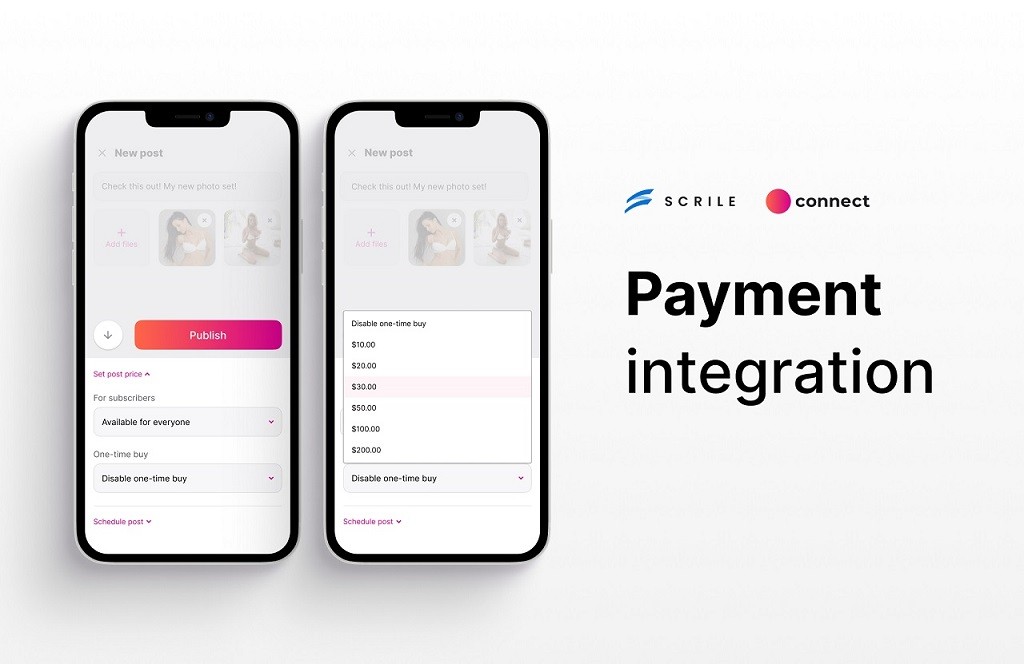
Scrile Connect is the product layer. It helps businesses build the subscription experience itself: membership logic, user roles, content access, gated communities, recurring offers, and custom account flows.
But for crypto subscriptions to work in production, businesses also need a reliable payment layer. That is where Zyrox fits into the stack.
Zyrox is a non-custodial crypto payment gateway that can be used to power one-time and recurring crypto payments behind a subscription product. Funds go directly to the business wallet instead of being held by a third party, which is especially valuable for projects that need more control over payouts, billing continuity, and high-risk payment scenarios.
Together, the two layers solve different parts of the same problem:
- Scrile Connect handles the subscription business logic
- Zyrox handles the crypto payment execution layer
- the business keeps more control over both access and revenue flow
This combination is especially useful for creator platforms, fan communities, subscription services, adult businesses, and digital products that need global reach without depending entirely on banks or traditional processors.
At the foundation, Scrile Connect can still define the critical business rules:
- custom subscription logic
- pricing models and access tiers
- membership and content permissions
- user account flows and retention mechanics
Meanwhile, Zyrox can support the crypto checkout and billing side through direct wallet payments, recurring billing flows, and integration options that reduce technical overhead for teams that want a faster path to launch.
Why Custom Development Changes the Outcome
Scalability is where custom development shows its value. Off-the-shelf tools often break once subscriptions grow, pricing evolves, or compliance rules change. With Scrile Connect, logic lives inside your product, not outside it. That makes updates predictable instead of disruptive.
This approach fits many real scenarios. Content platforms use subscriptions to unlock premium articles, videos, or private communities. SaaS tools gate dashboards, APIs, or analytics behind recurring access. Communities and DAOs manage member-only channels or voting rights. Donation-based projects turn irregular support into recurring funding.
In each case, Scrile Connect acts as the technical backbone, allowing businesses to run a crypto subscription system that adapts as the product grows, rather than limiting it.
Conclusion
Crypto subscriptions make sense when businesses need flexibility, ownership, and global access without depending on banks or rigid payment processors. They fit digital products, memberships, SaaS tools, and communities where access control matters more than frictionless cards. They are less effective for audiences that expect traditional billing or fixed pricing without volatility. The real advantage is control. When subscription logic belongs to the business, growth stays predictable. To build that foundation properly, Explore Scrile Connect solutions.
For businesses that want more than a theoretical crypto subscription model, the practical setup usually includes two layers: a platform that controls access and membership logic, and a payment infrastructure that actually executes recurring crypto billing. In that setup, Scrile Connect can power the product side, while Zyrox can power the crypto payment side.
FAQ
What is a crypto subscription?
A crypto subscription is a recurring payment model where users pay from a crypto wallet instead of a credit or debit card. The user approves a recurring charge once, and the system renews access automatically based on that approval. Functionally, it works like a card subscription, but payment execution and control are handled through wallets and blockchain-based logic.
What is a subscription in Binance?
In Binance, subscriptions appear in products like Auto-Subscribe and Simple Earn. These features allow users to automatically reinvest or renew positions using idle digital assets. While this is not a merchant subscription system, it demonstrates how recurring logic works inside crypto platforms using predefined rules.
Which crypto is best for daily earning?
Bitcoin and Ethereum are commonly used because they are liquid, widely supported, and trusted. However, their price volatility makes them risky for daily earning strategies. Most businesses prefer stablecoins for subscriptions, while volatile assets are used only when users understand the risk.
