
Fundraising Analytics Metrics to Measure Your Impact
Unlock the power of fundraising analytics to transform your nonprofit campaigns. Learn which metrics matter most, how to track donor behavior, and ways to optimize performance using actionable insights.


fundraising analytics
The Role of Fundraising Analytics in Modern Fundraising
Fundraising used to rely heavily on instinct. Teams launched campaigns, watched donations roll in, and hoped their message resonated. Today, that approach feels outdated. Organizations that consistently grow understand one thing: fundraising analytics is no longer optional. It’s a strategic advantage.
Fundraising analytics is the process of gathering and analyzing data on donations to inform decisions about how to best raise funds. By using data to assess patterns, identify trends, and make informed choices rather than making educated guesses about what donors want, nonprofits can make sound decisions.
Analytics can be thought of as your compass for fundraising campaigns. You may receive donations without knowing why something worked or didn’t. With the correct information and insights, teams can create more refined messaging, select the best available fundraising channels, or allocate their budgets appropriately.
Fundraising analytics is the habit of tracking a few key numbers (conversion, average gift, retention, recurring share) so you can repeat what works, fix what leaks, and grow predictable revenue instead of guessing.
From Raw Numbers to Strategic Insight
A lot of charities are collecting tons of data, and the problem is turning that data into actionable insight. That’s where fundraising data analytics come in. Fundraising data analytics can answer key questions that give charities the data they need to make informed decisions about their fundraising efforts.
- What types of campaigns pull in new donors?
- When do the people in each of our target populations have the highest likelihood to give?
- What dollar amount do most donors give at?
Having these answers helps charities minimize uncertainty, as they now have enough evidence to create desired outcomes rather than just responding after the fact to actual outcomes.
Why Fundraising Analytics Is Critical for Fundraising Success
Accidental success in fundraising is rare. Well-planned strategies with the correct fundraising analysis provide the foundation for any successful campaign. The teams that raise the highest amount of money are those that clearly identify and understand what influences donor behavior, allowing them to respond intentionally, not just reactively.
Historically, fundraising data analysis mostly focused on the total dollar amount raised. What this also gave the fundraiser insight into was the donor’s motivation for the timing, frequency, and amount of donation. With this added layer of insight into the donor’s behavior and in conjunction with assumptions about their behavior, fundraisers can now allocate their resources more effectively. Using objective data instead of subjective assumptions will help to direct your fundraisers towards increased success.
“Donor numbers have dropped by -4.5% year-over-year…”
Source: AFP / Fundraising Effectiveness Project summary
Better Decisions Start With Better Fundraising Data
Every campaign generates valuable signals: clicks, conversions, average gifts, repeat donations, and engagement trends. Strong teams treat this fundraising data as a decision engine rather than a historical record.
When you let data drive the conversation, here is what can happen:
- You will discover which campaigns convert into a loyal donor.
- You will see seasonal trends and be able to plan ahead.
- You can identify areas of friction in your donation process before they negatively impact your revenue.
- You will be focusing marketing dollars on your audiences that convert.
Although all of those are small improvements, they add up to create a predictable and steady growth profile, and predictability is pure gold in the fundraising world.
Another benefit of using modern analytics is speed. With modern analytics, there is no longer a need to wait until the campaign is actually complete to make timely adjustments to messaging, targeting, or donation tier suggestions.
Moving From Reactive to Strategic Fundraising Analysis
Organizations without structured fundraising analysis often fall into a reactive cycle. Donations dip, panic follows, and teams rush to launch another campaign. It’s exhausting and inefficient. Analysis changes that rhythm completely.
Reviewing performance on a regular basis reveals early signs of trends such as attrition among mid-level donors and a decline in conversion rates due to a redesigned landing page.
Metrics That Matter: What Fundraising Data to Track to Measure Success

If analytics is the engine behind modern fundraising, metrics are the dashboard. Without the right indicators, even the most sophisticated strategy turns into guesswork. Organizations that truly understand how to measure fundraising success focus on a small set of high-impact numbers rather than drowning in reports.
The objective is not to keep track of all of the data but rather to keep track of what helps you make better decisions. We will review which metrics need to be included as part of your permanent set of analytical tools.
Core Performance Metrics Every Team Should Monitor

Begin with the basics. These metrics can help to identify whether your advocacy efforts will create enduring movement or merely short bursts of activity.
| Metric | Description |
| Average donation value (AOV) | Provides an average value of donations received per transaction from your supporters. An increase in average order value indicates that messaging and suggested giving levels resonate with donors, while a decrease may indicate that they don’t know what their money is worth. |
| Conversion rate | The number of people who complete a donation is tracked. If there’s a high conversion rate, you have done a good job with storytelling and usability. |
| Donation volume | Gifts that are received by an organization in total provide useful information about how widely the work and the community are reached. They also show trends relating to the effectiveness of engagement with the donor and their awareness of the organization’s efforts. |
| Donor retention rate | Donors who have continued donating provide information about donors who are engaged over the longer term. Retaining existing donors is more cost-effective than finding and engaging new donors. |
These metrics form the backbone of reliable fundraising data analytics because they connect activity directly to revenue outcomes.
Donor Value Metrics That Predict Long-Term Growth

While small victories can seem satisfying in a short time frame, long-term security relies on the value of donors. Professional nonprofit organizations monitor various indicators over the entire course of time with the goal of securing lifetime giving amounts.
| Metric | Description |
| Lifetime value (LTV) | They measure how much income a single donor brings your organization over the course of their relationship. Having this information allows you to establish acquisition budget amounts based on confidence. |
| Cost per dollar raised | The measure of how efficiently your fundraising dollars are being used. If you are spending too much money to raise one dollar, increasing your fundraising campaigns can prove difficult. |
| Donor acquisition cost | They track the cost to acquire new donors. By comparing the cost of acquiring a donor with the lifetime value of that donor, it helps determine if a growth strategy is sustainable from a financial standpoint. |
Together, these numbers help leaders prioritize initiatives that build durable revenue rather than temporary boosts.
Advanced Indicators for Smarter Charity Analytics
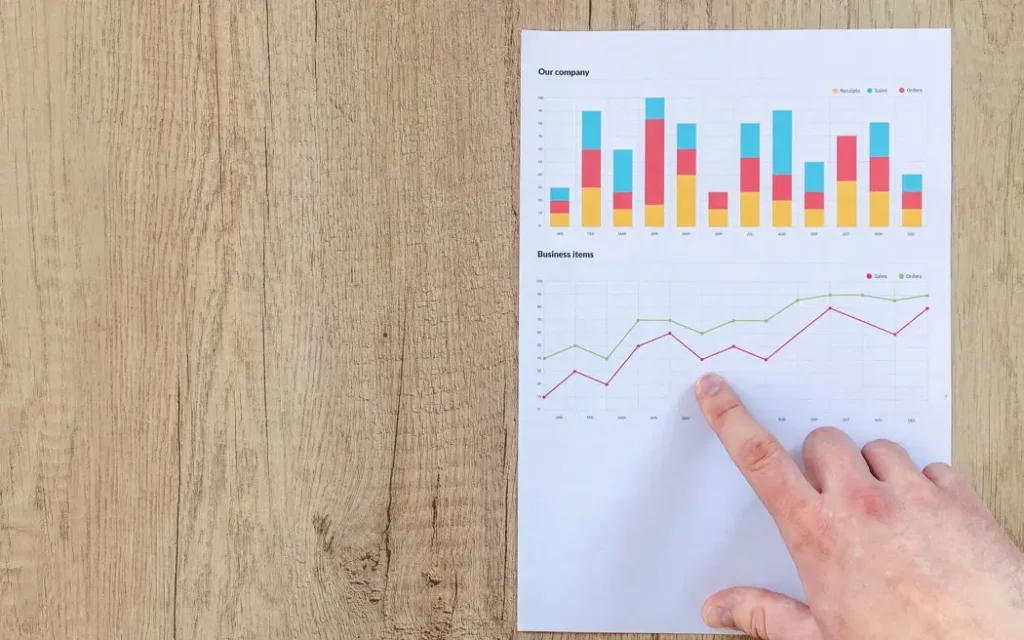
Once the basics are in place, advanced metrics unlock deeper insight. This is where charity analytics begins to shape strategy instead of simply reporting results.
Consider monitoring:
- Conversion rates from one-time to recurring donor.
- Engagement scores by campaign.
- Capture time against appeals.
- Segments-based performance (donor types).
- Percentage of recurring revenue.
Patterns found in these KPIs can often lead you to some of the best opportunities for growth. For example, if recurring donors comprise the bulk of your total revenue, then subscription-based giving may have a larger ROI than maintaining an equivalent level of donor acquisition via ongoing acquisition campaigns.
“Monthly giving accounted for 31% of all online revenue in 2024.”
Source: M+R Benchmarks (Fundraising charts)
Turning Metrics Into Decisions
Delving into metrics won’t increase your fundraising abilities—how those metrics are interpreted will. Always tie measurable performance back to your action steps when analyzing.
Examples of important questions that you should ask include:
- What campaigns generated high-dollar-value donors?
- At what point did prospective donors discontinue responding to your requests?
- What messaging led to higher dollar value contributions from donors?
Over time, this habit transforms raw fundraising data into a strategic asset rather than a reporting obligation.
Fundraising Analytics Tools for Smarter Campaign and Donor Decisions

Tracking the right metrics is only half the equation. To make sense of them, nonprofits rely on technology. The right tools turn complex fundraising analytics into clear, actionable insight that teams can actually use day to day.
The good news is that you don’t need an enterprise-sized budget to get started. What matters more is choosing tools that fit your fundraising model and data maturity.
Donor Management and CRM Platforms
The majority of nonprofits will typically use donor management systems or donor relationship management systems (CRM) as their initial data source for their operations. These platforms allow them to manage their supporters’ information together with their donation history and engagement data in one place.
Once you have established a good foundation with your CRM, you can use the data to do the following:
- Manage your donors’ personal information and behavior history.
- Monitor patterns of donations over time.
- Segment your supporters by behavior.
- Create a clean export of the datasets for further analysis
This centralized approach reduces data silos and makes fundraising analysis far more reliable.
Analytics and Reporting Dashboards
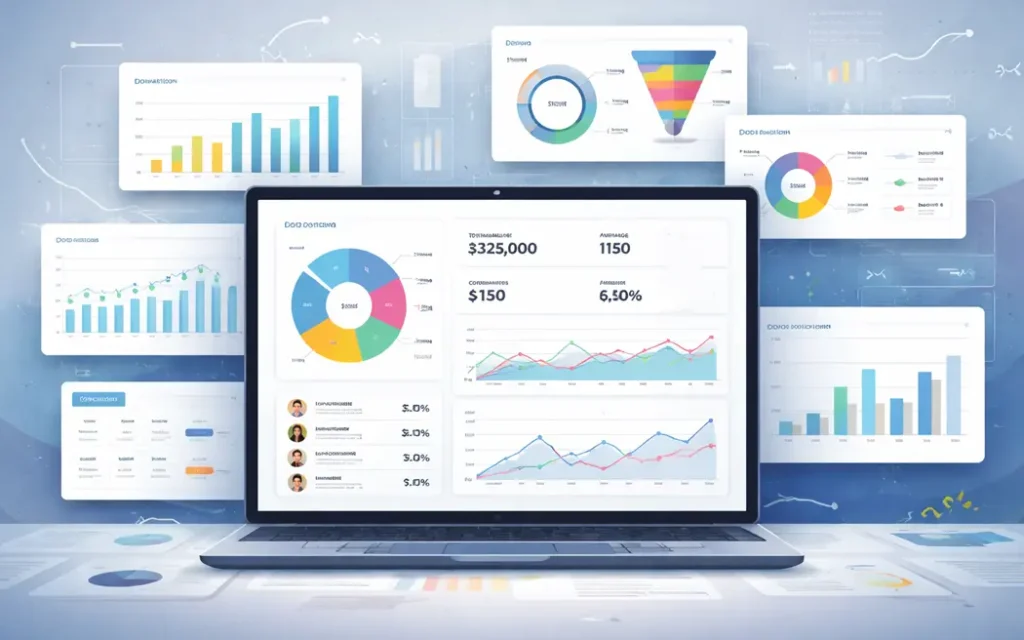
Dashboards provide an easy way to visually display data rather than going through spreadsheets manually to find a trend. Common features of a dashboard include:
- Overview of how the campaign is performing.
- How many prospects are converting through the funnel?
- Retention/churn statistics.
- Revenue predictions for next month/quarter/year
Effective visual dashboards are ideal for decision-makers because they allow for creating decisions based on actual results versus guessing or making decisions based on gut feeling.

Predictive and AI-Powered Fundraising Tools
More advanced organizations often layer predictive tools on top of their core systems. These solutions use historical fundraising data analytics to forecast donor behavior.
Predictive insights will allow organizations to forecast:
- Likelihood of repeat gifts.
- Potential for upgrades to current supporters.
- Risk of donor lapses.
- Best times to reach out.
Predictive insights will not replace human discretion but will complement those processes. Teams will have an increased understanding of where their efforts can achieve the highest yield.
Spreadsheets and Lightweight Tools Still Matter
There is no requirement that all nonprofits have an elaborate system to accomplish their work. A great number of successful nonprofit organizations continue to utilize a combination of spreadsheets and very simple analytics applications.
When used thoughtfully, these tools support early-stage charity analytics without overwhelming staff. The key is consistency, standardized reporting, and regular reviews.
To sum up, tools should eliminate unnecessary work, not add to it. The better tools should help staff make better decisions while being used with very little maintenance.
Nevertheless, using analytics on your fundraising platform is a great step forward.
Fundraising analytics dashboard (the only metrics most teams actually need weekly)
| Metric | What it tells you | How to calculate (simple) | “Healthy” starting point (benchmark or practical target) | What to do if it’s low |
|---|---|---|---|---|
| Conversion rate | Whether your donation flow + offer works | Donations ÷ landing page visits | Start by improving week-over-week | Simplify form, improve CTA, test suggested amounts |
| Average gift (AOV) | Whether your ask ladder matches donor intent | Total $ ÷ # of gifts | Track by channel + campaign | Add giving tiers, anchor with mid-tier, show impact per level |
| Donation volume | Reach + campaign momentum | # of gifts in period | Compare to last campaign / same season | Increase distribution, add partners, refresh creative |
| Donor retention rate | Whether donors come back (true sustainability) | Repeat donors this year ÷ donors last year | Sector average around ~45% (use as reality check) (Nonprofit Tech for Good) | Build thank-you + impact cadence, segment lapsed donors |
| New donor share | How much growth comes from acquisition | New donors ÷ total donors | Useful split by channel | Improve targeting, referral loops, peer-to-peer |
| Recurring revenue % (monthly giving share) | How predictable your revenue is | Monthly $ ÷ online $ | 31% of online revenue in 2024 (M+R Benchmarks) (M+R Benchmarks 2025) | Add monthly default, upgrade prompts, better onboarding |
| One-time → monthly conversion | Whether you can turn spikes into baseline | New monthly donors ÷ one-time donors | Trend metric (aim up, not perfect) | Add “make it monthly” step after donation + email follow-up |
| Cost per dollar raised | Efficiency of spend | Total fundraising cost ÷ total raised | Must decline over time | Cut low-ROI channels, improve LTV before scaling acquisition |
| LTV (donor lifetime value) | How much you can afford to acquire donors | Avg annual giving × years retained | Track by segment | Build retention loops, upgrades, recurring programs |
Scrile Connect Fundraising: Use Fundraising Analytics on Your Own Platform

So far, it has been established that to have an impact, insights must be actionable. A significant number of nonprofit organizations gather data through alternative, disconnected sources, which prevent efficiency in decision-making and restrict visibility into their operations.
Using analytics directly on your donation platform will positively affect your organization’s ability to make use of insights. Scrile Connect is designed for organizations that want full control over their fundraising experience while still relying on strong fundraising analytics.
What Is Scrile Connect Fundraising?

Scrile Connect is a custom fundraising platform that allows nonprofits to build their own branded donation and engagement ecosystem. Instead of relying solely on third-party marketplaces, organizations run fundraising campaigns on their own domain, with their own rules. From an analytics perspective, this approach changes everything.
Because campaigns, content, and donor actions live in one environment, teams gain cleaner, more reliable insight. Every click, conversion, and recurring contribution feeds directly into your fundraising data.
Explore Scrile Connect to see how owning your platform and your data can unlock better decisions and stronger long-term performance. Contact our team to learn more about our ready-made solution.
Quick recap (numbers worth remembering):
- In 2024, U.S. charitable giving reached $592.50B (Giving USA 2025).
- For the average nonprofit, online revenue increased by 2% in 2024; monthly giving rose 5% and reached 31% of online revenue.
- Sector headwind: donor counts fell ~4.5% year-over-year (FEP Q4 2024 summary).
Takeaway: The winning analytics habit is simple: watch conversion + AOV + retention + recurring share every week, and treat every campaign as an experiment you can repeat or fix.
FAQ

What is fundraising analytics?
The process of analyzing, collecting data, and interpreting data on donation trends or campaign performance helps organizations make better decisions. Fundraising analytics provides the opportunity to understand more than just total revenue from your last campaign. Through access to quality fundraising data analytics tools and processes, organizations can define patterns and track donor engagement to optimize campaigns for greater conversion and retention in future campaigns. Thus, it’s easy to predict what types of messages work best, when donors are most likely to contribute, and how nonprofits can increase their overall effectiveness.
What is the 80/20 rule in fundraising?
The 80/20 rule, or Pareto principle, is something that many fundraisers follow. Approximately 20% of all donors provide 80% of total donations. Therefore, identifying this trend allows nonprofit organizations to concentrate their resources on the supporters that can have the greatest effect on their cause. Data analytic tools allow nonprofits to identify who their top 20% of donors are, understand what motivates them, and know how they can be nurtured to sustain future support. Combining donor segmentation with fundraising analytics enables nonprofits to identify high-value relationships while effectively engaging new supporters.
What is a KPI in fundraising?
An essential Key Performance Indicator (KPI) within the realm of fundraising for determining how well a nonprofit is working towards its goal is a measured quantity. From overall donations, donor retention, average donation amount, and conversion rate, a KPI may assist you in determining how well you’ve performed at fundraising operations. KPIs can also provide you with valuable information about turning your raw data into meaningful insight. Utilizing KPIs will allow your team to identify several things, such as which campaigns have performed best or which segments of donors require additional resources or attention.
Related guides
Cost per dollar raised is brutal but necessary. It forced us to cut two ‘tradition’ campaigns that looked busy but weren’t profitable.
Retention improved only after we built a 30-day welcome sequence: thank-you, impact proof, and a soft upgrade ask.
Recurring share was our biggest lever. A tiny ‘make it monthly’ step after checkout moved the needle more than new ads.
We tracked 20 metrics and still felt blind. Once we narrowed to conversion, AOV, retention, and recurring %, decisions got easy