
How Do Chatbots Qualify Leads? Best Techniques 2026
Discover how chatbots can qualify your leads and improve your sales funnel. In this article, we will discuss how businesses identify high-quality prospects faster using chatbots and outline methods, flows, and real-world examples of successful lead qualification using chatbots. Learn how AI or rule-based chatbots help you avoid common mistakes.

How do chatbots qualify leads
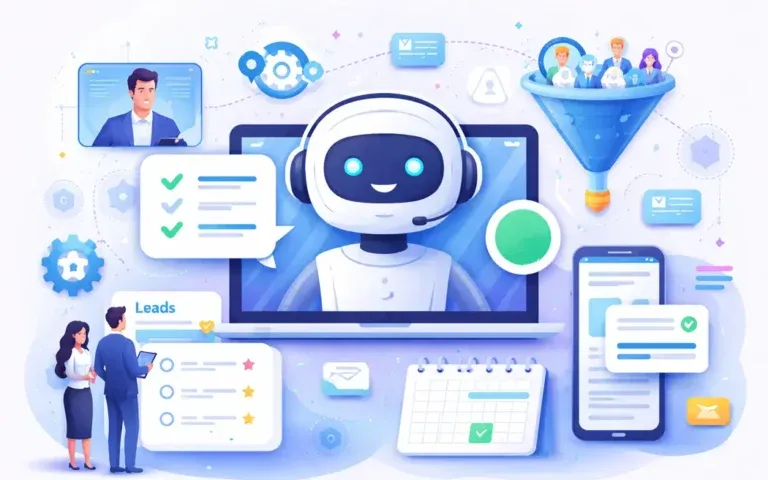
Chatbots qualify leads by collecting fit + intent signals in a natural conversation (role, company size, use case, urgency), then scoring and routing the lead to sales, self-serve, or nurture—instantly and 24/7.
What Does “Lead Qualification” Mean in Modern Sales Funnels?
The purpose of lead qualification is to determine if it would be appropriate for your sales team to spend time with leads in a selling situation. Lead qualification allows you to differentiate between leads who have expressed casual interest in your products or services from those that are serious about purchasing. So, how do chatbots qualify leads in a modern funnel? They step in at the very first touchpoint and ask the right questions at the right time. Instead of overwhelming visitors with long forms, chatbots collect information gradually through conversation. They can identify use cases, company size, budget range, or urgency within seconds, while the visitor is still engaged.
Many CRM-driven teams already recognize this logic from familiar systems. If you’ve worked with marketing automation platforms, you’ve probably seen how do chatbots qualify leads HubSpot-style: by mapping questions to lifecycle stages, scoring answers, and routing qualified prospects automatically. Chatbots simply bring that same structured thinking into a real-time, conversational format.
To understand why this works so well, it helps to zoom out and look at how do chatbots work in general. Chatbots are programmed with rules and use artificial intelligence to provide users with pathways to come to a decision. In terms of qualifying leads, these pathways mimic the questions that good sales representatives would ask. They are simply executed quicker, in a more standardized manner, and at scale.
“A marketing qualified lead (MQL) is a lead that the marketing team has deemed more likely to become a customer compared to others.”
Source: HubSpot — Marketing Qualified Lead definition.
Chatbot lead qualification signals (what to ask, what it means, what to do next)
| Signal category | What the bot collects | Example questions / triggers | What it means | Best automated action |
|---|---|---|---|---|
| Fit (ICP) | Role, company type, team size, industry | “What’s your role?” “How big is your team?” | Are they a real match for your offer? | Route to correct segment (SMB/Enterprise) + personalize pitch |
| Use case | The job-to-be-done | “What are you trying to achieve?” “Which workflow is broken?” | What they’ll buy for | Send tailored solution path + recommended plan |
| Intent | Buying signals and seriousness | Pricing page visit, “book a demo,” feature questions | How close they are to talking to sales | High intent → offer calendar + fast handoff |
| Urgency / timeline | Time-to-need | “When do you want to launch?” (today/this month/this quarter) | Priority and follow-up speed | Hot leads → immediate routing + notifications |
| Authority | Decision influence | “Are you the decision maker?” “Who else is involved?” | Can this become a deal soon? | If not, capture stakeholders + nurture sequence |
| Budget range | Price fit | “Do you have a budget range in mind?” | Avoid wasted sales calls | If under budget → self-serve plan or nurture |
| Contactability | Email + preferred channel | “Where should we send the details?” | Can sales actually follow up? | Create CRM lead + assign owner + next step |
How Do Chatbots Work: From First Message to Qualified Lead

To really understand their value, we need to break down how do chatbots work in practice, not in theory. A chatbot isn’t magic, and it’s not just a floating widget that asks random questions. It’s a structured system designed to guide users through a conversation with a clear business goal behind it.
A chatbot responds based on user input, whether it’s by messaging, clicking buttons, or visiting pages. So, user input provides a chatbot with an idea of how to respond next. A chatbot can use either set of rules or AI models that “read” a user’s intent in order to determine what message will be sent next in the conversation. When done correctly, a chatbot should be able to qualify leads for you.
The Core Building Blocks of a Chatbot
All chatbots have some common components. Chatbots have an interface that is what a user sees when interacting with the bot, whether through a website, landing page, or app. The interface should be designed so that it does not take away from the user’s experience while they are using the chatbot.
Next comes the conversation logic. This is where many people get confused about how does a chatbot work behind the scenes. Logic defines the flow: which question comes next, when to branch, and when to stop. In lead qualification, this logic mirrors a sales script but in a more flexible form.
Lastly, integration. A chatbot that doesn’t integrate with your CRM or sales tool is really just a talking box. The true value is realized when the responses are recorded, scored, and automatically sent to the correct system.
How Does Chatbot Actually Work During a Conversation?
From a user perspective, using a chatbot seems fairly easy. You answer a question and then get asked another question. However, behind the scenes, every time a user provides an answer to a question, the chatbot has updated its knowledge of the user. It may have tagged you “high intent,” assigned you a score, or triggered rules that will help route users based on these tags and scores.
At this point, context matters a great deal when developing a chatbot. A well-designed chatbot will remember your previous responses and will adjust its responses so that it doesn’t continue to ask you about things that are no longer relevant or make sense to you. The way that a chatbot maintains the continuity of the conversation is the biggest factor distinguishing a human-to-human conversation as compared to a robot-to-human conversation.
Why This Matters for Lead Qualification
When the mechanics behind a chatbot are used correctly, chatbots are able to act as powerful filters. They qualify leads quickly, quietly, and efficiently, without adding friction to the user experience. Clean data is provided to the sales teams, while users feel as if they are being guided through a process, not interrogated. This balance between lead qualification and user experience is what has made chatbots a critical component of the modern-day sales process.
How Do Chatbots Qualify Leads: Core Methods and Qualification Flows
Now we get to the heart of the topic. Understanding how do chatbots qualify leads means understanding the methods they use to turn casual conversations into structured sales data. A good chatbot doesn’t just ask questions. It follows a clear qualification strategy, similar to what an experienced sales manager would design.
Most successful qualification processes use a combination of routing, scoring, and progressive profiling. The best way to achieve this success is to make routing, scoring, and progressive profiling feel seamless to the user. The user should feel as though they are having an organic conversation, even though the flow of the conversation has been intentionally structured to relate to the outcome you want.
Routing: Sending Leads Down the Right Path
It is typically the first qualification method in a chatbot. The robot will identify who the user is and what the user wants before sending them to the most appropriate flow for them. An enterprise user may be sent to the sales department, while a small team may be directed towards self-service content. And an existing customer will be routed to customer service.
By using simple questions about the user’s role, the size of their company, and the user’s primary goal, the chatbot can quickly identify what the user’s intent is and more easily transfer the user to the appropriate funnel. By doing this, you will prevent unqualified leads from entering into your funnel and provide everyone with a more enjoyable experience.
Lead Scoring Through Conversation
As users provide answers to the chatbot, they will either raise or lower their lead score based on the type of information they provide. Chatbots do not need to ask for all of this information at the same time; rather, they will be able to draw upon their past interactions with the user to help determine whether the user is “ready” to purchase from them.
This approach is similar to the way a sales team manually evaluates each lead, but it is much more consistent. All leads are evaluated using consistent criteria. There is no guessing, and there is no bias.
Progressive Profiling Without Friction
One of the biggest errors made in the qualification process is that the business asks the user too many questions too quickly. Progressive profiling mitigates this error by spreading questions out over multiple interactions with the user. The chatbot will begin asking very high-level qualifiers and will begin collecting more detail if the user chooses to interact with it for a longer period of time.
This works particularly well for repeat users since the chatbot will be able to slowly build an entire user profile for them without causing them to feel overwhelmed. The process will feel helpful rather than intrusive.
HubSpot-Style Playbooks in Chatbot Form
If you’ve ever worked with structured CRM funnels, this logic will feel familiar. Many teams model their chatbot flows on proven frameworks, similar to how do chatbots qualify leads HubSpot-style. Each question aligns with a lifecycle stage, and each answer triggers a specific action.
The result is a clean handoff between marketing automation, chatbots, and sales. When done right, the chatbot doesn’t replace your process. It reinforces it.
How Chatbots Help Sales Teams Convert More Leads

“The odds of qualifying a lead if called in 5 minutes versus 30 minutes drop 21 times.”
Source: InsideSales.com / MIT Lead Response Management study (PDF).
Faster Response Times and 24/7 Coverage
Chatbots’ ability to communicate with potential customers at any time of day or night can effectively boost the number of qualified leads your sales team can generate. When a chatbot engages with a lead, they’re qualifying them immediately. When the salesperson engages with that same lead, there’s already context for continued interaction.
Pre-Qualification Before Human Contact
Chatbots can reduce expenses by filtering the sales representatives by separating lead-focused sales calls vs. non-lead-focused sales calls, thereby providing a buffer. This will increase morale for all salespeople and ultimately produce better results. Most employees’ time will now be dedicated to generating revenue instead of filtering out unqualified leads.
Cleaner Data and Better Sales Conversations
Chatbots provide structured information, making CRM records much more useful. Sales reps no longer have to guess what the lead wants. They will have this information before their first call with the lead. Personalized conversations will also happen because the rep knows the lead’s goals, budget, and time frame before they ever speak to the lead.
How Chatbot Can Help You Reduce Sales Costs
Efficiency equals real savings. Fewer manual tasks, fewer unqualified calls, and faster sales all amount to real savings as well. For growing teams, efficiency means growing revenue without adding headcount at the same rate.
Examples of Chatbot Lead Qualification Dialogues and Scenarios

| Scenario | Chatbot approach | Qualification steps | Key notes |
| B2B SaaS website | An open-ended way to ask the person what they want or what their problems are. | 1. Identify use case. 2. Ask about company size or team structure. 3. Score lead based on answers. 4. Suggest a demo or connect to sales. | Pacing is essential; questions seem logical, not rushed, because of the pacing process. High-intent leads go to the next step quickly. |
| E-commerce / marketplace | The focus is on the person’s goals, budget, and intent—not just on corporate info. | 1. Ask what type of product the user is looking for. 2. Determine if the user is browsing or ready to buy. 3. Recommend products or filters. 4. Escalate high-value leads to humans. | Even simple questions show signs of interest in buying, and asking at the right time shows engagement and relevance to the lead. |
| Service business / agency | This approach focuses on gathering deeper information to develop custom solutions. | 1. Ask about project type. 2. Ask about the timeline. 3. Ask about approximate budget. 4. Route to the right specialist or schedule a consultation. | When a question is framed as a helpful suggestion, it allows for a comfortable environment for users. Leads will automatically go to the right team member based on what team they matched up with. |
| Common patterns across all scenarios | Using both broad and specific questioning to find out what solution to provide. | 1. Start with general questions. 2. Narrow based on responses. 3. Guide next steps based on answers. | Users feel assisted rather than interrogated. The conversational flow is consistent and easy for users to navigate through. |
AI vs. Rule-Based Chatbots for Lead Qualification

Different chatbots have different functions when qualifying potential customers and different logic they use to do so. Some chatbots are strictly rule-based in their approach, while others use artificial intelligence to determine user intent. Both methods result in the same end goal, but they each address different challenges; by using one method over the other, you may have limited results or an increase in flexibility.
Rule-Based Chatbots: Predictable and Controlled
A rule-based chatbot works off an established flow so that you will always know what the user is going to select or respond with in response to your questions. This provides you with control over the conversation as well as a simple way to test the bot because the flow will not change during the test time. The rule-based chatbot has many scenarios for reliably qualifying users with its established flow.
AI-Powered Chatbots: Flexible and Adaptive
AI chatbots add a layer of interpretation. Instead of relying only on buttons, they can understand free-text input and detect intent. This is where many people start to see how does chatbot actually work in a more human-like way.
AI-driven qualification adapts to how users speak. It allows follow-up questions that feel natural and relevant. This is especially useful for complex products or diverse audiences.
When a Hybrid Approach Makes Sense
Most successful teams use a blend of both types of approaches. The rules are for prescriptive structure, which provides accountability and reliability; the AI is to deal with the variances in conversation and provide the flexibility to change directions on the fly. A hybrid approach allows for the guiding structure while making the conversation feel natural.
The most important factor is to choose the best technology for your funnel’s complexity. Simple funnels do not require much AI, and complicated funnels usually do.
Launch a Smart Chatbot for Conversions

To elevate the lead qualification process, launch a well-designed smart chatbot. A smart chatbot collects information via interactions, uses well-designed chatbots to transition users into conversion stages, and uses a chatbot to free the sales team to focus on more high-value interactions.
The chatbot’s thoughtful design will allow it to feel like an intelligent and helpful support assistant, not like a form pop-up. Each question should be designed logically to ensure that the visitor is able to flow logically between their previous answer and their next answer, resulting in collecting all of the required information without overwhelming the visitor or causing frustration or irritation.
Launching a smart chatbot as a sales tool does not have to be difficult. Utilizing the right tools and strategy will allow you to use chatbots as one of your most effective conversion changes. Scrile AI and Scrile Connect are great examples of integrated smart chatbot platforms and tools, and the combined rental chatbots with integration help businesses qualify leads quickly and efficiently.
Scrile AI and Scrile Connect for Lead Qualification at Scale
Turning conversations with chatbots into actual sales is a complete solution with Scrile AI and Scrile Connect. The tools are designed to handle the intelligent qualifications of leads, therefore allowing the user to convert high-value leads rather than chase unqualified leads.
Scrile AI: Intelligent Chatbots That Qualify Leads
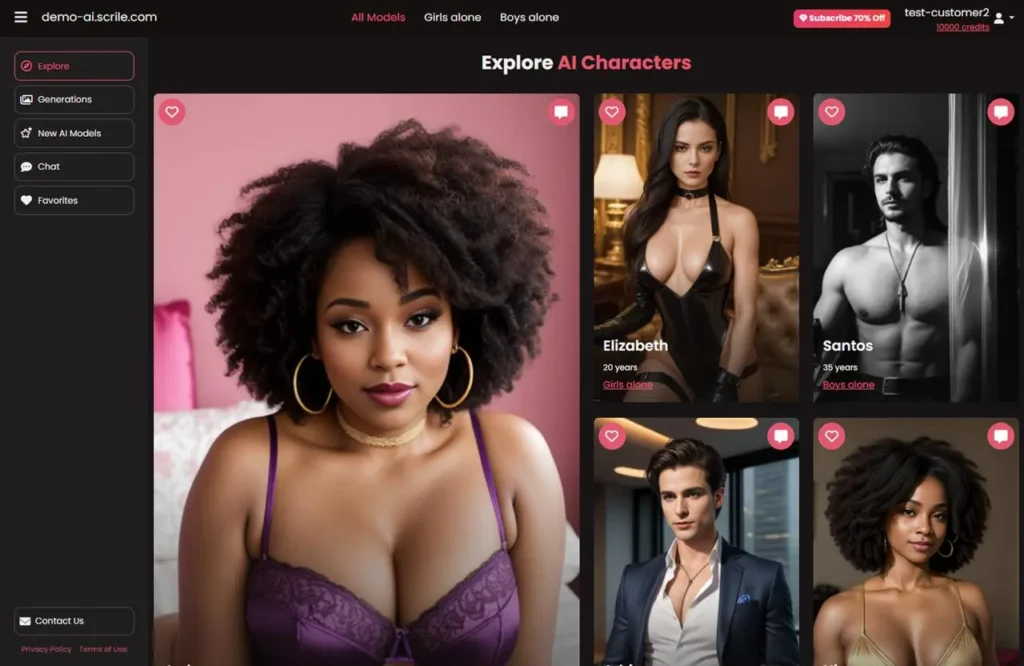
Scrile AI uses artificial intelligence and natural language processing (NLP) and qualifying logic to help people interact with each other in real time in a way that’s easy to understand. No matter how someone comes into the Scrile system, their interaction will always have some sort of purpose and be relevant, as well as allow any new visitors to have the opportunity to see all potential prospects.
Key benefits include:
- AI-driven conversation flows that feel natural.
- Automatic scoring of leads based on answers and behavior.
- Smart routing to sales or support teams.
- Integration with existing CRMs and analytics tools.
Scrile Connect: Omnichannel Communication Infrastructure
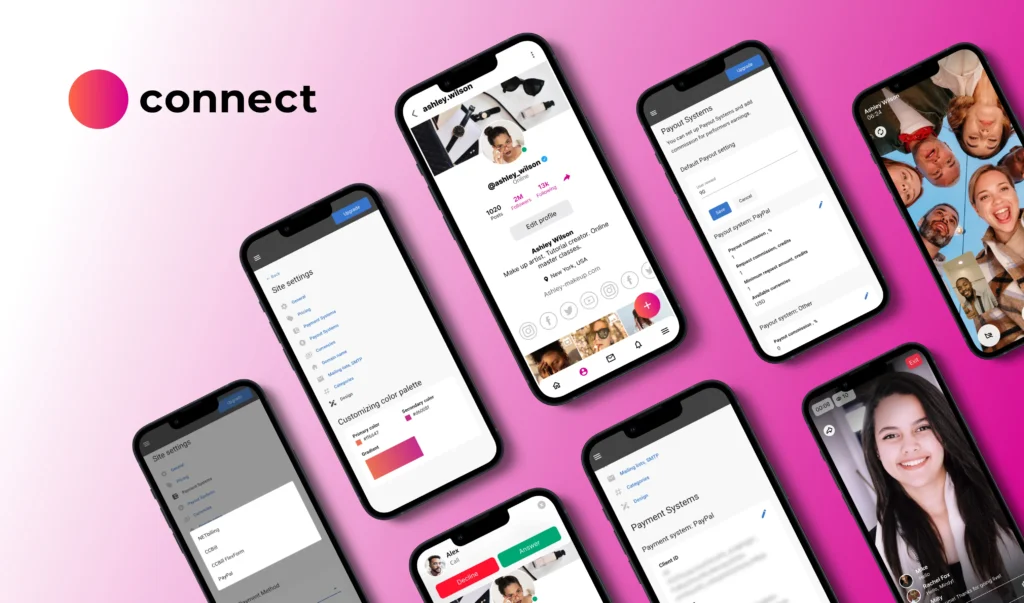
Scrile Connect serves as the hub for your messaging and chatbot activities. It combines communication efforts across all channels, thus ensuring you don’t lose any leads. Real-time lead routing, preservation of lead context, and the ability to communicate with the same lead from multiple channels allow you to easily manage all of your leads in one location.
Benefits of Scrile Connect:
- Seamless multi-channel messaging.
- Centralized management for sales and support teams.
- Scalable infrastructure to handle growing traffic.
- Automatic updates to connected CRMs.
Quick recap (numbers worth remembering):
- Responding fast is not “nice to have”: the MIT/InsideSales study found the odds of qualifying a lead drop 21× when response time goes from 5 minutes to 30 minutes.
- The same study found that waiting just 1 hour can reduce the odds of qualifying a lead by 6×.
- Operational reality is brutal: an InsideSales/XANT infographic states over 30% of leads are never contacted at all.
Takeaway: The best qualification bots don’t “ask more questions.” They capture fit + intent quickly, route instantly, and keep data clean for sales.
FAQ
How do chatbots qualify leads in HubSpot?
Chatbots can qualify potential clients via CRM, moving them from being passive to engaged by asking the visitor targeted questions to help determine the types of roles the visitors have. Additionally, they score the prospect based on the responses and route the qualified lead to the sales department. A chatbot can assist 24 hours a day, 7 days per week as an inside sales assistant and easily integrate with your CRM.
What is an AI chatbot for lead qualification?
An AI-based lead qualification chatbot is not just a form but rather can serve as an interactive platform for engaging prospects and evaluating and qualifying leads immediately. It also contains a natural language processing engine that allows the chatbot to understand free-form responses, detect the intent of the respondents, and provide users with tailored conversational experiences. This is in contrast to conventional forms, where users only provide data at the end of the process without interacting at all.
How to use AI to qualify leads?
Artificial intelligence allows for scale and accuracy for qualifying leads. Identifying your ideal customer profiles (ICPs) comes first by looking through historical data. You can then enter new leads into ICPs automatically, which will also allow for tailoring a conversation based on profile type.
Related guides
