
Local Fundraising Ideas to Engage Your Community
Local fundraising ideas work best when community energy meets the right tools. This guide covers proven local fundraiser formats, real examples from schools and neighborhoods, and shows how Scrile Connect helps organize, manage, and scale local fundraising campaigns online.

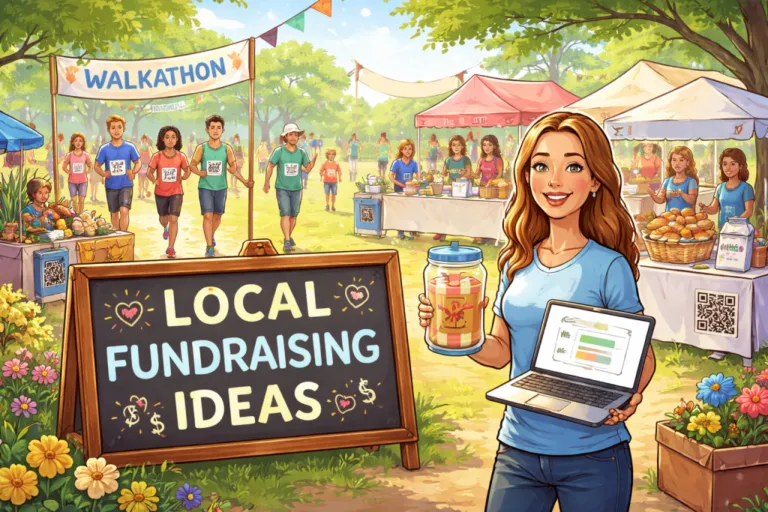
local fundraising ideas
People give more easily when they know who they’re helping. A school down the street, a familiar sports club, a neighbor organizing a cause — these connections matter. That’s why local fundraising ideas continue to outperform large, distant campaigns, even in a world full of online donation links.
When donors recognize faces and places, giving feels personal rather than transactional. A contribution to a neighborhood effort carries a sense of shared responsibility. You’re not sending money into the void. You’re supporting something you might see next week at the park or the local school.
Trust plays a big role here. Local initiatives are visible. People can see who’s organizing them, how funds are collected, and where results show up. There’s also a quiet social effect at work. When friends, parents, or colleagues take part, others follow. Participation becomes normal instead of exceptional.
Big national campaigns rely on reach. Local efforts rely on relationships. That difference changes how people respond, how quickly funds come in, and how often donors return.
This is why successful fundraising often starts small. Once attention and trust are there, choosing the right formats becomes much easier — and far more effective.
Local fundraising works best when you combine visible community participation (people show up, share, volunteer) with simple online tools (a donation page, peer-to-peer links, and quick payments) so supporters can help instantly—whether they’re at the event or watching from home.
What Makes a Local Fundraiser Successful
Scale rarely wins at the neighborhood level. What matters more is participation. A local fundraiser works when people feel invited to take part, not just asked to donate. Volunteers, parents, club members, and small business owners all add energy that money alone can’t replace.
Clarity is the next piece. Donors want to know exactly why funds are being raised and what changes when the goal is met. A clear purpose makes giving feel rational and emotional at the same time. When the impact is visible, even modest contributions feel meaningful. This is where local fundraising tends to shine. Results are easier to see, measure, and talk about.
Simplicity also matters more than people expect. Overproduced events often drain time and budget before the first donation arrives. Straightforward formats usually perform better because they’re easier to explain and easier to join. Less setup means more focus on people.
Strong community fundraisers usually share a few traits:
- A goal people understand in one sentence and can repeat without notes
- A format that fits local habits, schedules, and spaces
- Organizers who stay visible before, during, and after the event
- A clear way for supporters to help beyond donating
When these pieces come together, momentum builds naturally. From there, moving into specific ideas feels practical rather than theoretical, and planning becomes much easier.
Popular local fundraising formats compared (effort vs payoff vs what to sell online)
| Format | Effort level | Revenue potential | Best for | What to run online alongside it | One lever that usually boosts results |
|---|---|---|---|---|---|
| Picnic / community day | Low | Medium | Families, schools, neighborhoods | Donation page + raffle tickets + sponsor shoutouts | Partner with 1–2 local businesses (food/discounts) |
| Bake sale / garage sale / market | Low | Low–Medium | Small teams, fast wins | QR donations + pre-orders + “bundle packs” | Clear pricing + mobile payments (no cash friction) |
| Walkathon / fun run | Medium | High | Schools, clubs, youth programs | Peer-to-peer pages per participant + leaderboard | Team captains + weekly progress updates |
| Benefit concert / community show | Medium–High | High | Arts groups, youth orgs, local performers | Ticketing + livestream donations + merch | Pre-sell tickets online before committing to costs |
| Auction dinner / small gala | High | Very high | Established groups, sponsor-heavy campaigns | Online bidding preview + sponsor packages + donor wall | Secure sponsors first so you don’t depend on ticket sales alone |
| Online peer-to-peer drive | Medium | Medium–High | Distributed communities | Personal fundraising links + templates + progress bar | Make sharing effortless (copy/paste messages + images) |
| Hybrid event (offline + livestream) | Medium | High | Anything with a strong local story | Live updates + donate link pinned + post-event page stays open | Keep the page open 7–14 days after (second wave of giving) |
Offline Fundraising Ideas That Bring People Together
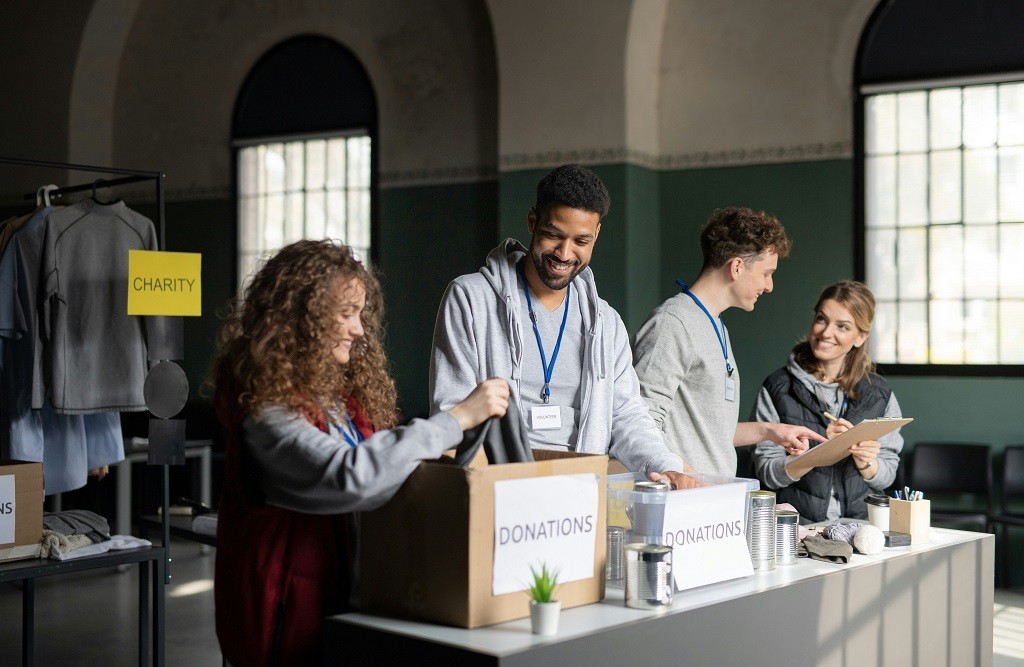
Offline events still sit at the heart of many successful community campaigns. They create shared experiences, not just transactions, which is why local fundraising ideas often work best when people can show up, talk, and participate together.
Community Events That People Actually Attend
Some formats succeed because they fit naturally into everyday life. Picnic fundraising is a good example. It’s informal, family-friendly, and easy to organize in a park or school yard. Food, small games, and simple donation mechanics are usually enough to make it work.
Garage sales, bake sales, and rummage markets follow the same logic. People understand them instantly. Donors feel comfortable because they’re buying something tangible while supporting a cause. Schools and neighborhood groups rely on these formats for a reason: setup costs stay low, and participation stays high.
Walkathons and fun runs also perform well, especially for schools, sports clubs, and nonprofits tied to health or youth programs. They combine light competition with social visibility. Supporters who can’t attend still contribute by sponsoring participants, which extends reach beyond the event itself.
These local fundraisers ideas succeed because they don’t feel forced. They align with how communities already gather and spend time.
High-Effort Events That Raise More Money
Other offline events demand more work but tend to deliver larger totals. Auction dinners, small galas, and benefit evenings fall into this category. They require venues, sponsors, and careful coordination, yet they often attract higher-value donations and repeat supporters.
Benefit concerts built around local performers work well when the audience already exists. Fans show up for the music and stay for the cause. The same applies to golf tournaments and organized sports days. These events create space for sponsorships, ticket sales, and premium contributions.
According to common nonprofit benchmarks referenced in fundraising guides, formats like auctions, galas, walkathons, and tournaments consistently raise the most money. The tradeoff is planning effort. These events only pay off when roles, timelines, and promotion are handled carefully.
Choosing between simple gatherings and complex events comes down to capacity. Strong local fundraising ideas balance ambition with realism, ensuring the team doesn’t burn out before donations start coming in.
Online and Hybrid Fundraising Ideas for Local Groups
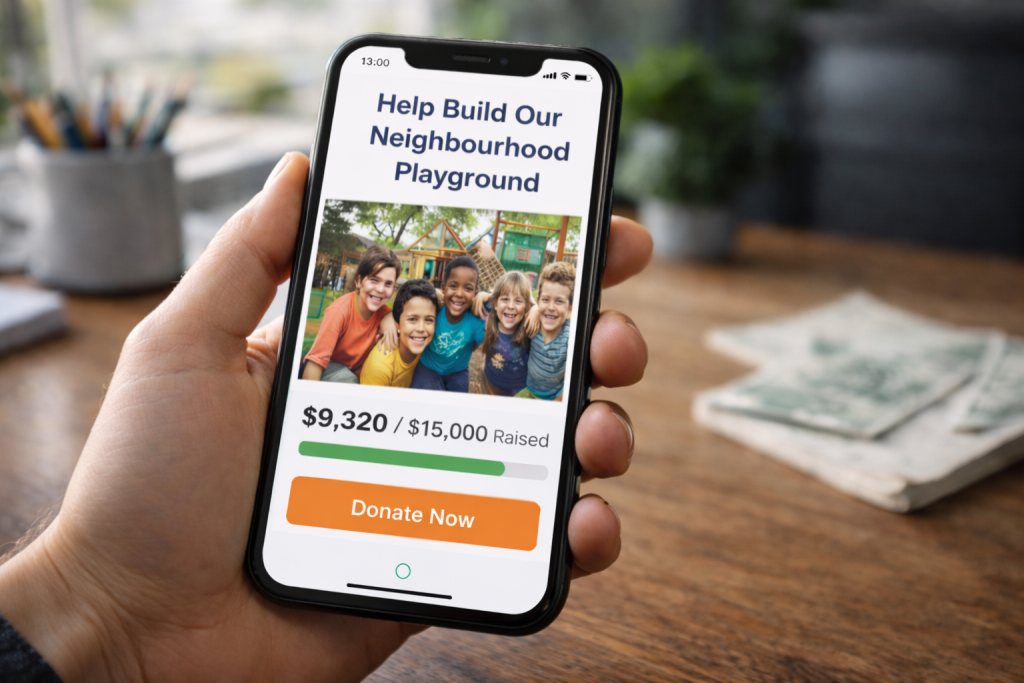
Online tools didn’t replace community fundraising. They expanded it. When used well, digital formats help local groups reach more supporters without losing the personal connection that makes local fundraising ideas work in the first place.
America’s top 30 peer-to-peer fundraising programs raised $1.17 billion in 2025…”
Source: Nonprofit Pro (reporting P2P Professional Forum Top 30 survey).
Virtual Fundraisers That Still Feel Local
Virtual fundraising works best when it stays anchored to real people and places. The goal isn’t to copy large national campaigns, but to give local supporters an easy way to participate from anywhere.
- Livestream events tied to a physical community work when viewers recognize the faces on screen. School concerts, charity workouts, town hall discussions, or live bingo nights feel familiar, even when watched from home. Donations rise when people feel they’re “showing up,” not just clicking a link.
- Online donation pages linked to real activities perform better than generic appeals. A page that explains why a class is running a marathon or how a neighborhood cleanup needs funding gives context that motivates giving.
- Peer-to-peer campaigns run by parents, students, or volunteers often outperform central appeals. When individuals share their own fundraising links, supporters respond to personal stories rather than institutional messaging.
These formats turn digital tools into extensions of community life, which is where local good fundraising gains its strength.
Combining Offline Events with Online Reach
Hybrid fundraising connects momentum before, during, and after an event. It stretches impact without stretching the team too thin.
- Selling tickets, merchandise, or donation packages online before an event helps gauge interest early. Groups can adjust scale, reduce waste, and secure baseline funding before anyone sets up a table or stage.
- Accepting donations online during live events removes friction. Supporters don’t need cash, and remote donors can contribute while watching updates or livestreams.
- Keeping donation pages open after the event captures late support. Photos, short recap videos, and thank-you posts often trigger a second wave of giving from people who couldn’t attend.
Data from nonprofit campaigns consistently shows that hybrid formats outperform offline-only efforts. They combine urgency with convenience, which is why many modern local fundraising ideas now start offline and finish online.
“Monthly giving accounted for 31% of all online revenue in 2024.”
Source: M+R Benchmarks (Fundraising charts / key findings).
As campaigns grow more complex, coordination becomes just as important as creativity. That’s where organization, tools, and structure begin to matter as much as the idea itself.
Real Case Examples from Schools, Clubs, and Neighborhoods
The difference between an average fundraiser and a strong one usually comes down to coordination. The idea matters, but how people move through it matters more.
A school walkathon shows this clearly. One primary school organized a simple laps-around-the-field event, but paired it with online donation links shared by parents a week in advance. Students collected pledges before the day, teachers posted progress updates during the walk, and the donation page stayed open for several days after. The result wasn’t just higher totals, but fewer awkward follow-ups asking people to “remember to donate.”
A local sports club took a different route. Instead of relying only on membership fees, they created a short sponsorship drive around new training gear. Supporters could buy branded hoodies online, sponsor a player, or contribute directly. Merchandise orders covered upfront costs, while sponsorships funded travel expenses. Because everything was tracked in one place, the club knew exactly which option worked best and reused it the next season.
A neighborhood community group ran a weekend picnic in a public park. Food stalls and games brought people in, but the real boost came from a simple livestream. Volunteers streamed short interviews, kids’ performances, and donation reminders. Friends and former residents joined online, contributing even though they couldn’t attend. Donations continued the following week as photos and clips circulated.
Across all three cases, success wasn’t about flashy ideas. It came from linking offline energy with online follow-through. When coordination is clear, people participate easily, and results scale without burning out the organizers.
Promotion Tips That Actually Increase Participation
Promotion works when it feels personal and close to home. The most effective local campaigns rely on a few practical moves rather than broad marketing tactics.
- Use social media where your community already talks. Neighborhood Facebook groups, school chats, and local Telegram or WhatsApp threads outperform public pages. Posts showing real preparation, familiar faces, or quick updates get more attention than polished visuals.
- Lean on people, not pages. Parents, volunteers, and team members sharing the fundraiser in their own words bring in donors who would ignore an official announcement. Personal context makes the ask feel genuine.
- Partner with nearby businesses. A local café, gym, or shop promoting your fundraiser adds trust instantly. Simple support works well, such as a flyer at the counter, a shared post, or a small percentage of sales donated.
- Keep messages short and clear. Emails and direct messages should explain three things only: what the fundraiser supports, how to take part, and when it happens. Long explanations reduce sharing.
- Make peer-to-peer easy. Provide simple links or templates so supporters can invite others without thinking. This approach scales naturally and fits well with local fundraising efforts.
- Add light sponsorship options. Small sponsors help cover costs and attract attention, even if they cannot attend the event themselves.
Popular Local Fundraising Formats Compared
Below is a quick comparison of formats often used in local fundraising ideas, showing effort versus payoff.
| Format | Effort Level | Typical Revenue | Best For |
| Picnic fundraising | Low | Medium | Families, schools |
| Walkathon | Medium | High | Schools, clubs |
| Auction dinner | High | Very high | Established groups |
| Online peer-to-peer | Medium | Medium–High | Distributed communities |
Organizing Local Fundraising Online with Scrile Connect
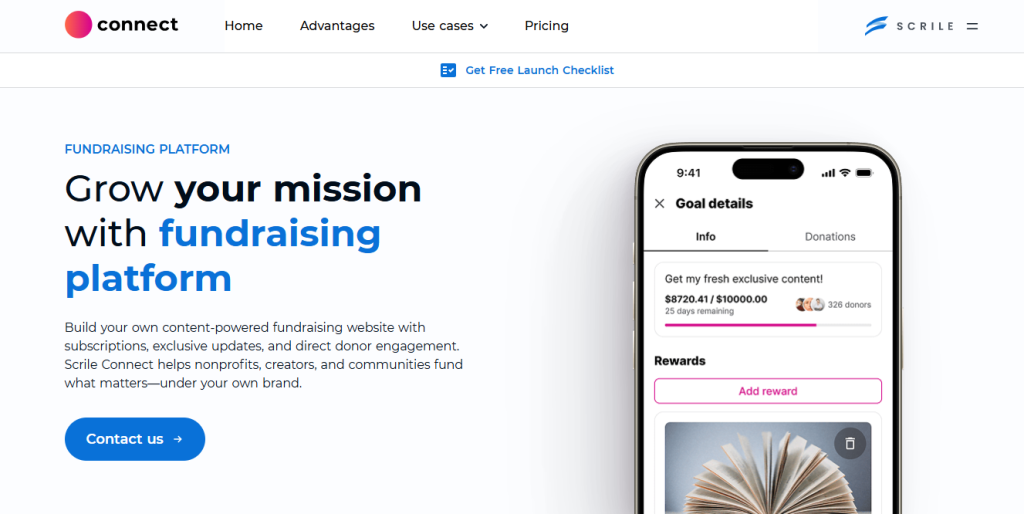
Great ideas raise attention. Structure turns that attention into real donations. Many local groups discover this once their fundraiser grows beyond a single event or donation jar. At that point, organization matters as much as enthusiasm.
This is where Scrile Connect comes in. Scrile Connect is a custom development service, not a ready-made fundraising platform you have to adapt to. Instead of forcing your campaign into fixed templates, the system is built around how your local fundraiser actually works.
For schools, clubs, and community groups, Scrile Connect makes it possible to connect offline activity with a clear online flow. A picnic, walkathon, or auction no longer lives only on the day it happens. Donations, sharing, and follow-ups continue before and after the event through branded digital touchpoints.
Scrile Connect supports local fundraising by enabling groups to:
- Create branded donation pages that reflect the identity of the school, club, or neighborhood rather than a generic third-party site. Familiar branding builds trust fast.
- Run peer-to-peer fundraising where parents, volunteers, or team members collect donations under the same campaign, each with their own link and progress tracking.
- Manage payments and access in one place, including one-time donations, recurring contributions, and controlled access for organizers.
- Track results clearly with reporting that shows where donations come from and which activities perform best.
- Combine offline and online fundraising so physical events, livestreams, and digital campaigns support each other instead of competing for attention.
Because Scrile Connect is developed specifically for each project, local fundraisers keep ownership of their data, their audience, and their growth path. Campaigns can start small and scale without switching tools midstream.
For communities that want flexibility without losing control, this approach turns local fundraising into a sustainable system rather than a one-time effort.
Conclusion
Local fundraising ideas succeed because they grow out of real relationships. People are far more willing to contribute when they recognize the cause, the faces behind it, and the impact their support will have. Offline events build trust and momentum inside the community, while online tools help those efforts live longer and reach further than a single afternoon or venue. When planning, participation, and structure come together, fundraising becomes predictable instead of stressful. If your organization wants to run local fundraising in a more organized, scalable way, it’s time to explore Scrile Connect.
Get in touch with the Scrile Connect team to build a custom fundraising solution designed around your community, not someone else’s platform.
Quick recap (numbers worth remembering):
- Giving is huge, but competition is real: U.S. charitable giving reached $592.50B in 2024.
- Donor counts are under pressure: the Fundraising Effectiveness Project reported donor count down about -4.5% through Q4 2024 (the “donors down” reality makes participation-driven local fundraising even more important).
- Online fundraising isn’t dead — it’s shifting: online revenue +2% in 2024, driven by monthly giving +5%, and monthly giving now makes up 31% of online revenue.
- Peer-to-peer still moves serious money: Top 30 U.S. peer-to-peer programs raised $1.17B in 2025 with participation around 2.63M people.
Takeaway: The best local fundraisers feel human and visible offline—but they convert and scale online with a donation page, peer-to-peer links, and a monthly option that turns one great event into predictable support.
FAQ
What type of fundraiser raises the most money?
Events that combine participation and experience tend to perform best. Auction dinners, galas, walkathons, golf tournaments, and benefit concerts require more planning, but they often generate higher donations and sponsorship support.
What is the best way to raise funds?
Successful campaigns usually mix several channels. Social media promotion, virtual fundraisers, partnerships with local businesses, peer-to-peer fundraising, donation letters, merchandise sales, corporate sponsorships, and crowdfunding all play a role.
What are good easy fundraisers?
Low-effort options include board game nights, bake sales, simple donation pages, and photo contests. These formats are quick to launch and help teams raise funds without burning out volunteers.
