
Online Community Platforms: Best Tools, Features & Examples for 2026
In this guide, you’ll learn how to choose the right online community platform based on your goals, explore the most important features, and compare leading solutions. You’ll also discover how to launch, grow, and monetize your own community.


online community platform
Why Every Creator and Brand Needs an Online Community Platform Today
An online community platform is a digital system that allows people to build, manage, and engage with a private or branded online community. It generally provides tools to support onboarding new users, sharing content, creating discussions, and moderating those conversations.
Unlike social media, where algorithms may determine your visibility and reach, such platforms allow you to directly control how your audience interacts with you. Moreover, online community platforms provide monetization options to engage with the audience as well as create sustainable digital products.
The best online community platform depends on your goals and growth stage.
- For beginners, free online community platforms are a quick way to validate ideas.
- For creators, all-in-one tools with built-in monetization work best.
- For businesses, scalable and customizable platforms deliver long-term value.
The most important features are ownership, monetization, and user experience. So, if you’re serious about growth, choose a platform that lets you scale—not just start.
What Is an Online Community Platform and How It Works

At its core, an online community platform is a digital space where people gather around a shared interest, product, or goal. Unlike traditional forums, modern social community platforms combine several layers of functionality. You’re not just hosting conversations—you’re creating an ecosystem. A single platform allows its users to access content, engage in discussions, participate in events, and pay for access.
This is the general flow of activities on that platform:
- Users create profiles and join groups to use the platform.
- Content may be published through posts, courses, or updates.
- Discussions may happen in threads, feeds, or chat rooms.
- Admins will control access, manage moderation, and monetize their content.
The real shift happened when platforms evolved into full-fledged products. Today, a strong community platform app is expected to deliver a seamless mobile experience. People want to engage on the go, not just from a desktop dashboard.
Key Features That Define a Great Online Community Platform

Essential Features
- Discussion spaces: threads, feeds, or chat-based conversations.
- Content hosting: posts, courses, or exclusive materials.
- User profiles: identity and personalization.
- Events and live sessions: webinars, streams, group calls.
- Monetization tools: subscriptions, gated access, one-time payments.
Advanced Features That Drive Growth
- Automation: onboarding paths, email responses based on user.
- Gamification: create points, levels and badges.
- Integrations: CRM systems, email marketing, analytics tools.
- Moderation tools: roles, permissions, content control.
- Analytics dashboards: track engagement, retention, and revenue.
These features are where many community platforms examples start to diverge. Some focus on simplicity, while others prioritize flexibility and scale.
“The rise of Community-as-a-Service signals a shift in how businesses think about value.” – TechRound
Types of Platforms: From Forums to All-in-One Ecosystems

1. Forum-Based Platforms
These are the classic solutions. Platforms like Discourse fall into this group. Many tech companies continue to use these platforms as a way of providing and maintaining support communities.
Pros:
- High scalability.
- Moderation tools.
- Open source.
Cons:
- Limited ways to make money.
- Outdated User Experience for many groups of people.
These are the best options when discussions are your top priority, rather than generating revenue.
2. All-in-One Platforms
This is where tools like the Circle community platform and Mighty Networks stand out. They combine content, community, and payments into a single product.
Instead of connecting a bunch of separate tools together, you will have one place to do everything. This greatly benefits instructors and content creators.
Pros:
- Ability to monetize.
- Clean user interface.
- Fast setup.
Cons:
- Very little customization.
- Cost per month.
If you are developing a paid community or a product that provides monthly membership(s), this category is usually the quickest way to get it to market.
3. Custom & White-Label Platforms
This is the most flexible option. A Swarm community platform approach, for example, focuses on building a fully branded experience tailored to your business.
The tool adapts itself to you rather than the other way around.
Pros:
- Complete control of the components and the UX.
- No dependencies on third-party platforms.
- Ability to scale over the long term.
Cons:
- Much greater initial investment.
- Typically a much longer development time.
If your community is critical to your business and not just a secondary resource, this option makes sense.
Best Free Community Platforms and Paid Alternatives

Let’s address the big question: should you start free or go straight to a paid solution? The answer depends on your goals. Free online community platforms are attractive because they remove friction at the beginning. You can launch quickly and test your idea without risk.
However, the limitations become obvious as you grow. Many of the best free community platforms lack advanced monetization, branding, and analytics. That can slow you down when it’s time to scale.
Free vs. Paid Community Platforms Comparison
| Platform type | Cost | Monetization | Customization | Best for |
| Free online community platforms | $0 | Very limited | Low | Testing ideas |
| Open-source forums | Low (hosting) | Medium | High | Tech-savvy teams |
| SaaS platforms | Subscription | High | Medium | Creators and coaches |
| Custom platforms | High upfront | Full control | Full | Businesses and startups |
Community Platforms Examples You Should Know
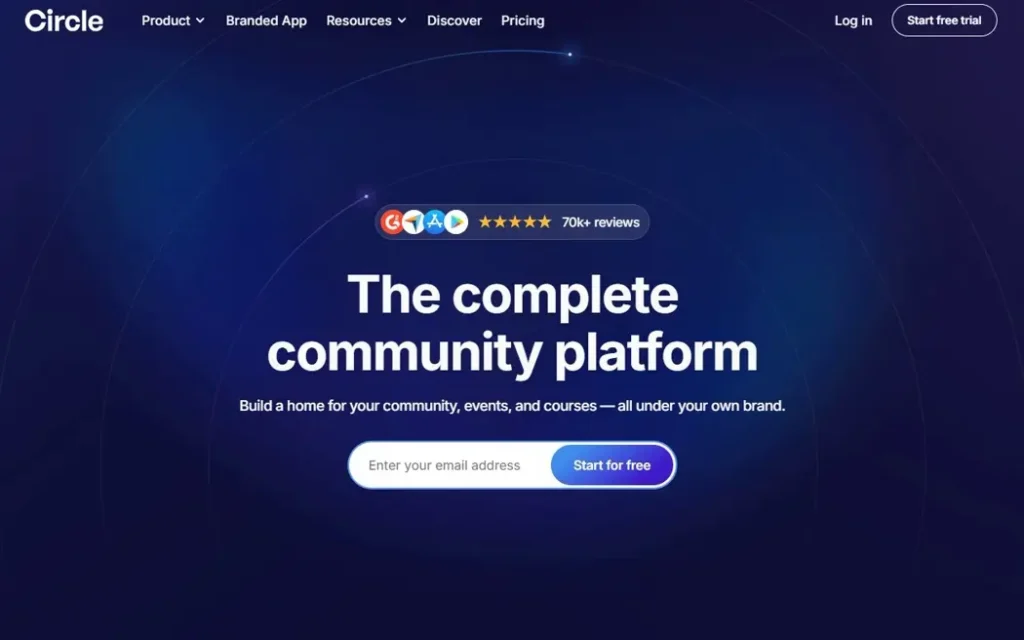
Circle
The Circle community platform is often the go-to choose for creators who want a clean, distraction-free experience. It focuses heavily on user interface and structured discussions.
Technical overhead can be eliminated by utilizing the spaces to provide content, host events, and monetizing those spaces. The key strength of this platform is simplicity.
Best for: Content creators, coaching, and education.
Limitation: Limited ability to customize deeply.
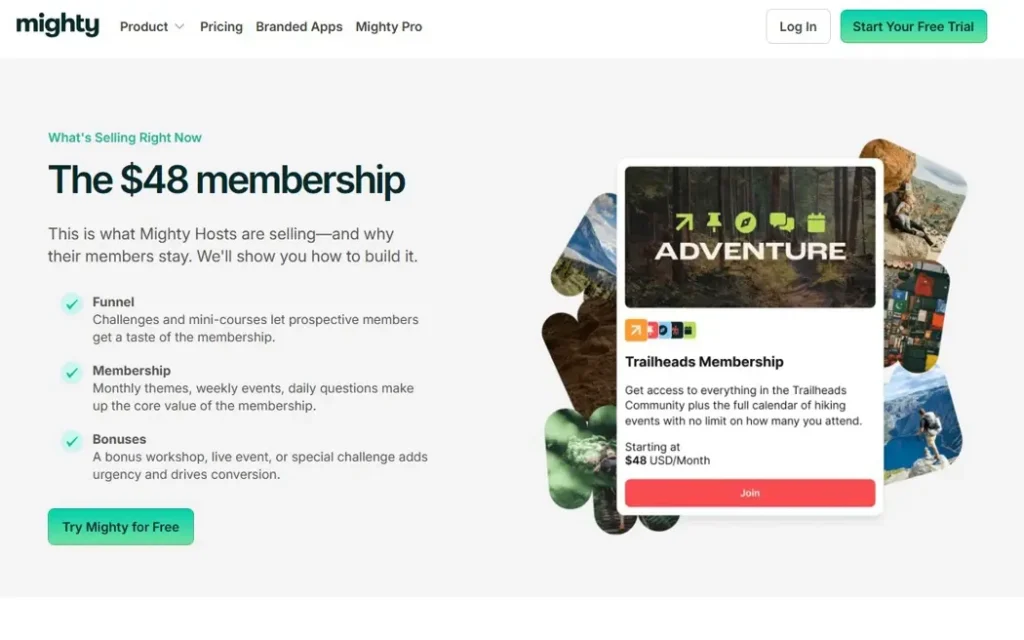
Mighty Networks
Unlike other platforms, this one has a unique approach that puts an emphasis on mobile engagement. It resembles more of a social network than a standard app.
It is also a unified ecosystem that includes courses, community, and a content feed. Therefore, it is great for people (content creators) who are building their lifestyle- or interest-based communities.
Best for: Influencers and/or content-driven businesses
Limitation: Limited ability to structure complex communities.
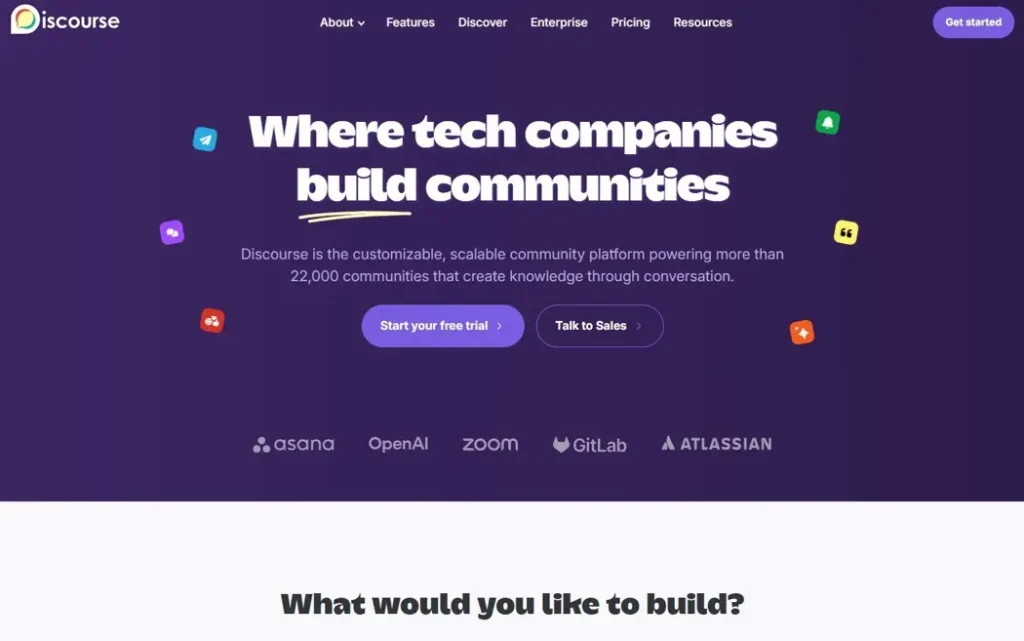
Discourse
It is an amazing open-source platform that has been widely adopted by tech businesses or developer communities due to its scalability and moderation capabilities. However, Discourse is not created to be a monetization-centered application.
Best for: Forums, support communities, knowledge bases.
Limitation: Requires Setup and maintenance.

Other Notable Tools
In addition to the main players in your industry, there exist the following:
- Discord communities (quick and casual engagement).
- Slack communities (professional niche).
- New niche tools with unique functionality.
All have a role to play, but you must make sure that each platform fits within your business model, rather than simply follow the latest trends in social media usage.
How to Start an Online Community Step-by-Step

Step 1: Define Your Niche and Value
Be straightforward. What’s the target market for your community? What issues will the community solve? A lackadaisical audience is going to negatively impact engagement; on the other hand, a specific niche will create integrity and loyalty.
Step 2: Choose the Right Platform
Find the right platform to meet your objectives.
- Testing an idea → use free tools.
- Monetizing → all-in-one platforms.
- Expanding your business → get custom solutions.
Your platform must support your overall business strategy. It should not restrict it.
Step 3: Seed Content and Engagement
An empty community will never develop; therefore, it is important to start with some momentum.
- Give away valuable content.
- Begin discussions on your own.
- Reach out to your early adopters and power users.
Initially you will have to be the primary source of engagement.
Step 4: Monetize and Scale
After engagement levels become stable, the monetization process can begin by using of the following strategies:
- Monthly subscription model.
- Premium content for which users will pay an extra fee.
- Making certain levels of access available only to paying customers via an exclusive tiering system.
Striking the right balance between proactive and retroactive means is also an important aspect of the monetary process. Going too early in terms of the monetization strategy will likely scare off people who would otherwise use the service; going too late will result in potential revenue loss.
Mini Calculation: Community Monetization Example

Let’s make this practical.
Imagine you have:
- 500 active members.
- $10 monthly subscription.
That gives you:
500 × $10 = $5,000 per month.
Take into account the platform fee.
- A SaaS platform has a 10% fee, resulting in a loss of $500 per month to the business or $6,000 in total for the year.
- The custom solution has no monthly fees to the business (aside from the infrastructure), so the business will keep the $6,000 annually.
Thus, the choice of platforms is not just a technical one; it is also a financial one.
How to Choose the Best Online Community Platform

At this point, the market probably feels crowded. And honestly, it is. But choosing the right online community platform becomes much easier when you filter options through your actual business needs, not hype. The impact of your community on your future endeavors may depend on the type of community to which you belong.
Is it just a way to buy or sell things? If this is the case, any medium will suffice to fulfill your needs. But if it is a major source of revenue or goods, then it may be worthwhile to think strategically about how to use it.
Key Criteria to Evaluate
When making a decision, keep these key points in mind:
- Monetization options: subscription/usage/tiers.
- User experience: intuitive/engaging product.
- Scalability: can the platform grow without disrupting our processes?
- Customization: will the tool fit with our brand/business logic?
- Data ownership: do I own my users/data/analytics?
Due to this oversight, most start-up founders will fail in 10 years or less. Overall, owning your data is very important in the long term.
Platform Selection Criteria
| Criteria | What to look for | Why it matters |
| Monetization | Subscriptions, paywalls, upsells | Direct revenue generation |
| UX/UI | Clean navigation, mobile-friendly | Higher engagement & retention |
| Integrations | CRM, email, analytics | Automation & scalability |
| Customization | Branding, feature flexibility | Unique positioning |
| Ownership | Access to user data | Long-term control |
Common Mistakes to Avoid

Many seasoned teams make mistakes when choosing platforms. Typically, this is because they are not thinking long-term.
- Picking based solely on cost.
- Ignoring scalability.
- Overlooking mobile experience.
- Relying heavily on hackers and third-party plugin developers.
A good platform will evolve with your project, while a bad one will lead to having to move your project down the road, never a pleasant thing to experience.
Summing Up: What’s the Best Option for You?

Let’s simplify everything into a quick decision framework.
- Just starting out? Use free online community platforms to validate your idea quickly.
- Creator or coach? Go with tools like Circle or Mighty Networks for fast monetization.
- Tech-savvy team? Consider open-source platforms like Discourse for flexibility.
- Building a scalable business? Invest in a customizable, white-label solution from the start.
There’s no universal “best” platform. There’s only the best fit for your current stage and future goals.
The key is to think beyond launch. Focus on where you want your community to be in 12–24 months.
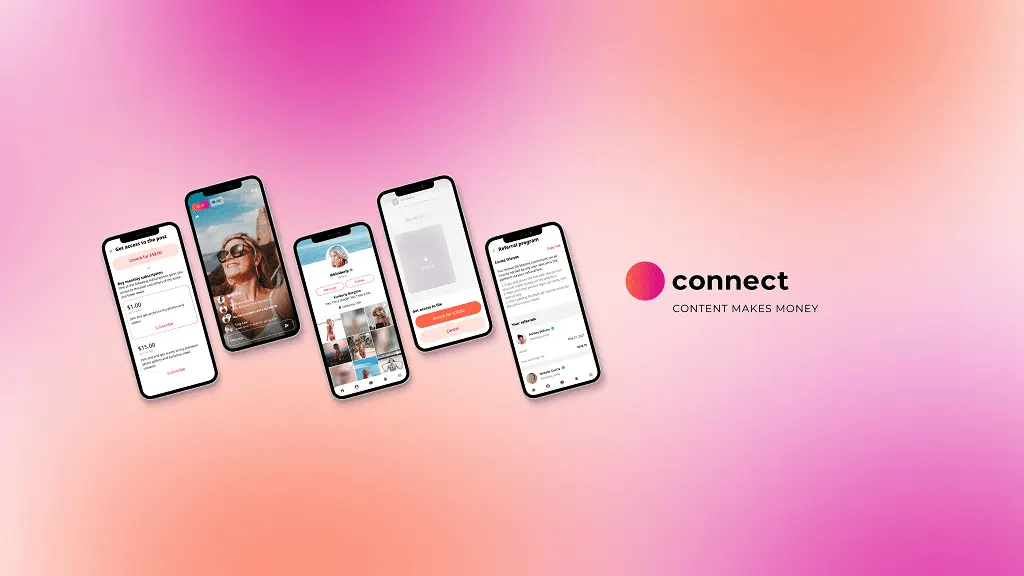
Build Your Own Community With Scrile Connect
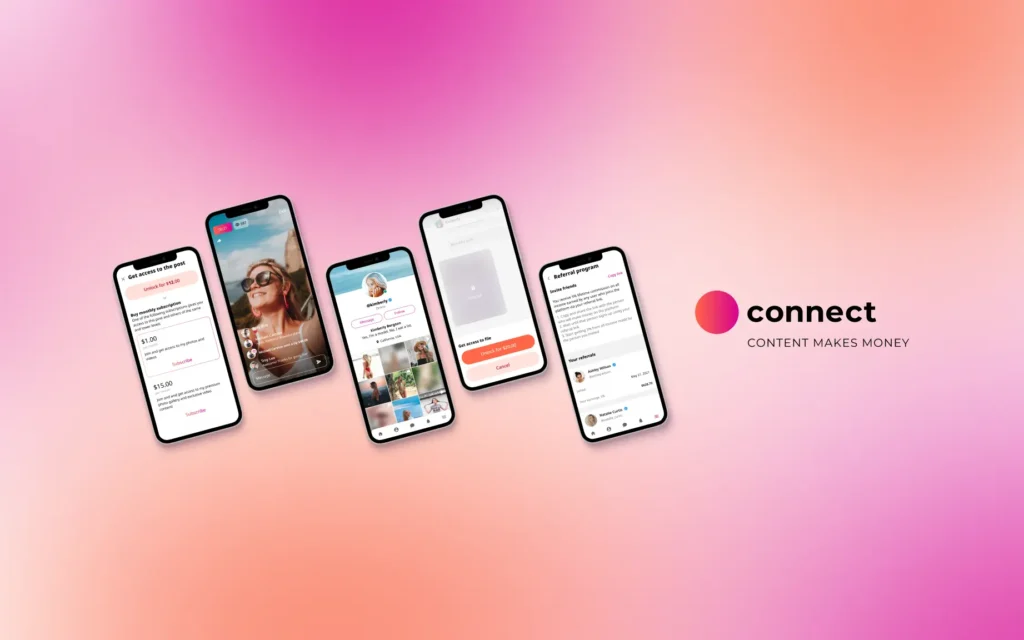
If you’re thinking about making your community a part of your core strategy, soon enough you’re going to reach the limitations of plug-and-play tools. This is where custom solutions come into play, which is exactly how Scrile Connect is different from the competition.
Scrile provides a fully customizable platform that has been engineered to work best for companies looking for something more than basic functionality. You aren’t restricted by pre-defined features or rigid structures; rather, you’ll have a system specific to your unique model.
Why Scrile Connect Stands Out
- Full customization.
- Advanced monetization.
- Scalable architecture.
- Data ownership.
If you’re ready to move from experimentation to building a real community-driven business, it’s worth exploring what Scrile can offer.
FAQ: Online Community Platforms Explained
What is the best platform to build an online community?
Because everyone’s goal is different, there isn’t necessarily one perfect option. An individual’s objective will determine the product solution that is the best fit. For instance, the Circle community platform tends to appeal more towards educators and course creators because of the precise structure of the platform, along with its good monetization features. On the other hand, Mighty Networks is often ideal for lifestyle, wellness, and coaching businesses. This platform combines both content and social interaction all within one application.
In contrast, if you are going to develop a network of former students or alumni affiliated with a university or college, you should consider using one of the Hivebrite options instead. However, if you are looking to create a smaller group of influencer-led networks, potentially, Disciple could work out as a suitable platform for your community.
What is a community platform app?
The definition of a community platform app refers to any application that allows users to connect in a digital environment with each other. They differ from traditional online forums by providing features such as messaging, content sharing, and payment functions. Many of today’s platforms have a similar look and functionality as typical social networks. However, they have been tailored to provide greater control for the creator or business over how content is presented and shared. Most have built-in notification systems for ongoing engagement, live events, and membership options that create more consistent and personalized experiences for users.
How do free online community platforms work?
Most free online community platforms provide the ability to create a community at no cost upfront. You can invite members, publish content, and facilitate discussions with relative ease. However, most free platforms have limitations in branding, monetization, or analytics.
Most importantly, platforms like these are typically intended to help you “test the waters” before building a true community through any given online community platform. An upgraded or custom-built solution will often be required once your community reaches a certain size.
Can I scale a community platform app into a business?
Yes, but only if the platform supports monetization and user ownership. Many creators start with a basic community platform app but later realize they need subscriptions, gated content, or analytics.
Scaling requires:
• Monetization opportunities.
• Engagement opportunities.
• Data control.
• Infrastructure flexibility.
Without these things, scaling becomes costly or problematic to execute.
What is the role of online community platforms in business growth?
Modern companies have started using an online community platform as a means of increasing customer retention, developing loyalty, and generating repeat revenue. Instead of only relying upon advertisements or funnels, businesses will leverage communities to:
• Increase customer lifetime value.
• Lower attrition.
• Establish direct relationships with customers.
In a lot of cases, the community has turned into a product of its own, rather than merely serving as a marketing channel.
