
Paystack Payment Pages for Creators: Simple Checkout Without a Full Website
Learn how Paystack payment pages help creators accept simple online payments, sell content, test offers, and collect revenue without a full website.


Wide view of a Lagos fashion atelier where tailors work as a customer makes a card payment for a finished garment at the counter.
Quick answer
Use Paystack payment pages when you need a no-code checkout link for a donation, fixed-price offer, event reservation, simple product, or recurring charge whose access you can manage separately. Choose a website or creator platform when buyers need accounts, protected content, automatic fulfillment, membership status, upsells, richer analytics, or a branded relationship after payment. The decisive question is not whether the page can collect money; it is what must happen next.
When Paystack payment pages are enough
Paystack payment pages are sufficient when the offer is clear before checkout and delivery does not depend on a customer account. A creator makes a one-time, subscription, or product page and shares its link. The page collects payment; it does not define the surrounding customer experience.
The boundary is plain. If a buyer can understand one offer, pay, and receive it through a process you control, a standalone page may be the leanest choice. That fits tips, donations, a deposit, small-event admission, or one digital item sent after confirmation. It can also test demand before you commission a larger system. Accept payments without website infrastructure first; earn the complexity later.
Consider a hypothetical photographer named Amara. She promotes a live lighting workshop through social posts and messages, using a fixed-price payment page. The offer has one date, venue, and admission type. After payment, she adds the buyer to her attendee sheet and sends details herself. Checkout is the missing piece; accounts would decorate a transaction that does not need them.
| Need | Standalone payment page | Better decision |
|---|---|---|
| One clear offer and manual delivery | Good fit | Start with the page |
| Optional donation or tip amount | Good fit | Use a flexible one-time page |
| Recurring charge with manually managed benefits | Possible, but operationally fragile | Define renewal and cancellation handling first |
| Automatic file or ticket delivery | Checkout is only part of the flow | Connect fulfillment or use a selling platform |
| Protected posts, video, or community access | Not enough on its own | Use accounts and access controls |
| Upsells, segments, and customer history | Limited business context | Use an integrated website or platform |
| Distinct brand journey after checkout | Page-led experience | Move checkout into an owned customer journey |

A creator comparing ways to accept payments online Nigeria should separate checkout from delivery, records, refunds, and support. A payment link removes the need to build checkout; it does not remove the need to run the offer. That truth keeps a simple launch from becoming an improvised back office.
Match the page to the promise, not just the price
Choose the page type only after stating what the buyer receives and how it will arrive. Donations and variable tips need a flexible amount; a defined service, event, or product needs a fixed offer; an ongoing promise may justify recurring collection only if continued access and cancellations have an owner.
- Donations and tips: let supporters choose an amount, then make clear whether they receive anything beyond a receipt and thank-you.
- One-time services: name the deliverable, booking conditions, and what the customer should do after paying.
- Event access: state the date, location or joining method, capacity process, and how admission will be verified.
- Digital products: identify the file or resource, the delivery channel, and who handles a failed or duplicate delivery.
- Simple creator offers: use one page per clearly distinguishable promise so buyers do not have to decode a menu inside checkout.
- Recurring support: define the ongoing benefit, renewal communication, cancellation route, and the system that grants or removes access.
A recurring payment page can initiate a subscription, but a charge schedule is not a membership operation. A person or system must recognize the active supporter, provide the benefit, respond to payment-status changes, and stop restricted access when appropriate. If those actions live in memory and scattered messages, each subscriber adds administrative debt with excellent punctuality.
A payment page can make a download purchase easy, but confirmation still needs a reliable delivery step. A creator who wants to sell digital products online must decide whether delivery is manual, connected through another tool, or managed by a storefront. That choice shapes the support burden more than the elegance of the pay button.
Amara's first workshop validates the lean model. Then she adds a replay, a monthly critique, and early access to future workshops. The original page did not fail; the offer changed. She now needs to know which buyer owns each benefit, whether recurring support is active, and which follow-up belongs to each group. More links would hide that problem, not solve it.
A no-code setup flow that includes what happens after payment
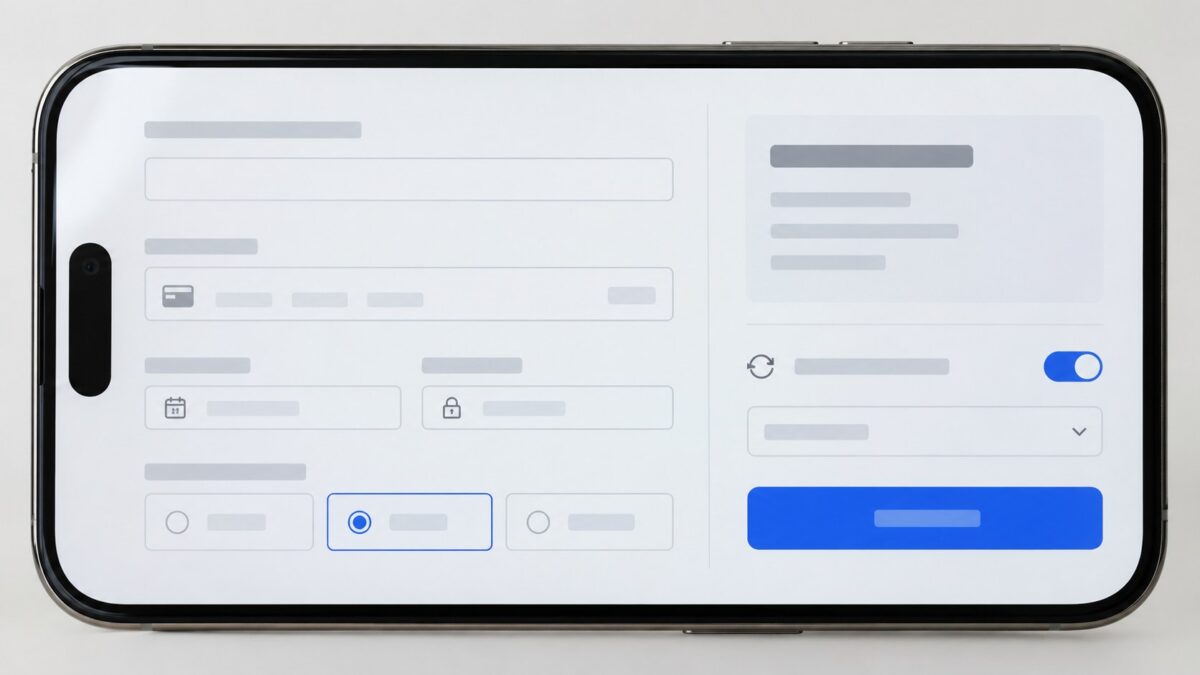
Set up checkout from fulfillment backward. Define the promise, choose the page, collect only information you will use, test the buyer route, and document fulfillment, exceptions, and reconciliation before sharing the link.
- Write one sentence stating who pays, what they receive, and how it is delivered.
- Choose a one-time, subscription, or product page according to that promise.
- Request only the customer details needed to identify, fulfill, and support the order.
- Add clear delivery, contact, cancellation, and refund information where the configuration permits.
- Test the route from shared link through checkout to confirmation and your internal record.
- Decide how to handle a missing confirmation, duplicate order, delivery failure, cancellation, or refund request.
- Assign fulfillment and reconciliation, then publish the link where you explain the offer.
Test the whole promise, not merely whether checkout loads. Inspect the page on relevant devices, complete the available test process, verify that the internal record is understandable, and rehearse delivery. Also follow the route a confused buyer will take. If support lives in a social inbox, put that constraint in the operating plan before launch.
Keep a reconciliation record connecting the payment reference, needed buyer identity, offer, fulfillment status, and any exception. It is the minimum bridge between money received and promise delivered, not a homemade database to maintain forever. When the bridge becomes a recurring job, the workflow needs integration.
Audit access, data, branding, and compliance before scaling
Before sending more traffic, audit what a payment page does not settle: access, fulfillment, customer history, segmentation, analytics, support, refunds, privacy, and whether the offer is permitted. A successful charge proves payment, not the operating model.
Start with entitlement: what becomes available after payment, and what changes after cancellation, refund, or an unsuccessful renewal? Manual handling can be reasonable for a bounded event. It becomes risky when protected posts, private messages, live sessions, or a growing archive depend on accurate status. A proper membership website connects identity, payment state, and access so the customer does not have to keep proving the purchase in direct messages.
Can you see what a returning buyer purchased, deliver relevant follow-up, and distinguish a donor from an attendee without assembling clues across exports and chats? Checkout captures transaction details, but segmentation requires a structured customer journey. A guide to website analytics for creators matters when decisions depend on the path from interest to purchase and retention, not only the fact that money arrived.
Compliance is part of offer design. Confirm that your business category, content, country, identity, settlement setup, and sales model meet the provider's current requirements. Describe the offer truthfully, provide contact and fulfillment information, set cancellation and refund terms appropriate to the sale, and handle personal data deliberately. For restricted or higher-risk models, do not disguise the activity; review suitable payment processing for creator platforms and obtain qualified advice where needed.

Amara's spreadsheet can record workshop admission, but it is poor access control for an evolving library and live benefits. A missed update could admit someone without current access or block an active supporter. She should keep the simple page for occasional events while moving membership into a system built around accounts and entitlements.
The trigger for moving from a payment link to a creator website
Move when work after checkout requires persistent identity and rules, not when the page merely looks simple. Repeated manual coordination across access, delivery, renewals, support, segmentation, or content is the trigger. Keep payment pages for standalone offers.
Use a short trigger test. Must the buyer sign in later? Must payment status grant or remove something? Do purchases unlock different material? Should the next offer depend on purchase history? Do content, fans, earnings, and interaction need one home? A yes means checkout now belongs in a larger product. Payment is becoming state, not merely an event.
At that point, compare creator monetization platforms by the operating model they support: ownership of domain and brand, account and content controls, monetization formats, audience records, analytics, moderation, and payment compatibility. Do not migrate merely to acquire prettier pages. Migrate to remove a specific manual handoff or unlock a customer experience that the link-only model cannot reliably provide.
Amara can retain a one-time page for a guest workshop checked at the door while her recurring critique community lives behind accounts. Each offer gets infrastructure proportionate to its promise. This hybrid is cleaner than forcing every sale through one elaborate funnel or pretending every recurring charge is a membership. Architecture follows the obligation created by the purchase.

The final decision is therefore operational. Launch a Paystack payment page when payment completes a simple offer and you can confidently own the few steps around it. Choose an integrated creator website when payment starts an ongoing relationship that needs protected content, multiple paid interactions, persistent customer status, and consistent management. The page is a very good door. It becomes awkward only when asked to impersonate the entire building.
Choose the smallest system that can keep the promise
For a single, self-contained offer, start with Paystack and let the payment page do its narrow job. When the offer grows into subscriptions, paid content, tips, private messages, live streams, or one-to-one video calls, Scrile Connect Solo provides a brandable creator website with your own domain, audience, policies, management dashboard, and no platform commissions.
Frequently asked questions
What is a Paystack Payment Page?
It is a hosted payment form that a business can configure and share by link. Depending on the page type, it can collect a one-time payment, initiate recurring collection, or support the sale of a product without requiring the creator to build a checkout page.
Can I use Paystack payment pages without a website?
Yes. You can share the page link through channels such as messages, email, or social posts. You still need a clear offer, a fulfillment process, customer support, and records that connect each successful payment to what you promised.
Can a Paystack Payment Page collect recurring payments?
A subscription payment page can initiate recurring collection. Treat that as the billing component, not a complete membership system: ongoing benefits, access changes, cancellations, support, and customer status still need to be managed.
Can I sell a digital product with a Paystack Payment Page?
A product page can collect the payment for a simple item, but you must plan delivery. If a file or access credential should arrive automatically, connect an appropriate fulfillment workflow or use a platform that manages purchase and delivery together.
Are Paystack payment pages suitable for event tickets?
They can suit a straightforward event when you have a separate way to cap attendance, identify buyers, send joining details, and verify admission. More complex ticket types, transfers, or automated capacity rules call for additional event tooling.
What information should a creator collect at checkout?
Collect only what is needed to identify the buyer, fulfill the specific offer, and provide support. Every requested field should have a defined operational use, and personal information should be handled according to the applicable privacy and business requirements.
When should I replace a payment link with a creator website?
Move when buyers need accounts, protected content, automatic entitlement changes, purchase history, tailored follow-up, multiple monetization formats, or a consistent branded journey. Repeated manual work after every payment is the clearest practical signal.
Can I keep using payment pages after launching a website?
Yes, if a page still fits a genuinely standalone offer such as a special event or optional contribution. Use the website for purchases that create ongoing access or customer state, and keep each page's fulfillment and support route explicit.
