
What Is Vibe Coding? Meaning, Principles and Real-World Examples
This article breaks down the meaning behind vibe coding, how AI turns plain language into working software, and real-world examples of startups and creators building apps through prompts. Learn where rapid experimentation ends and production reality begins — and discover how Scrile AI helps transform AI-generated prototypes into scalable, user-ready AI services with payments, authentication, and custom logic built for growth.

what is vibe coding
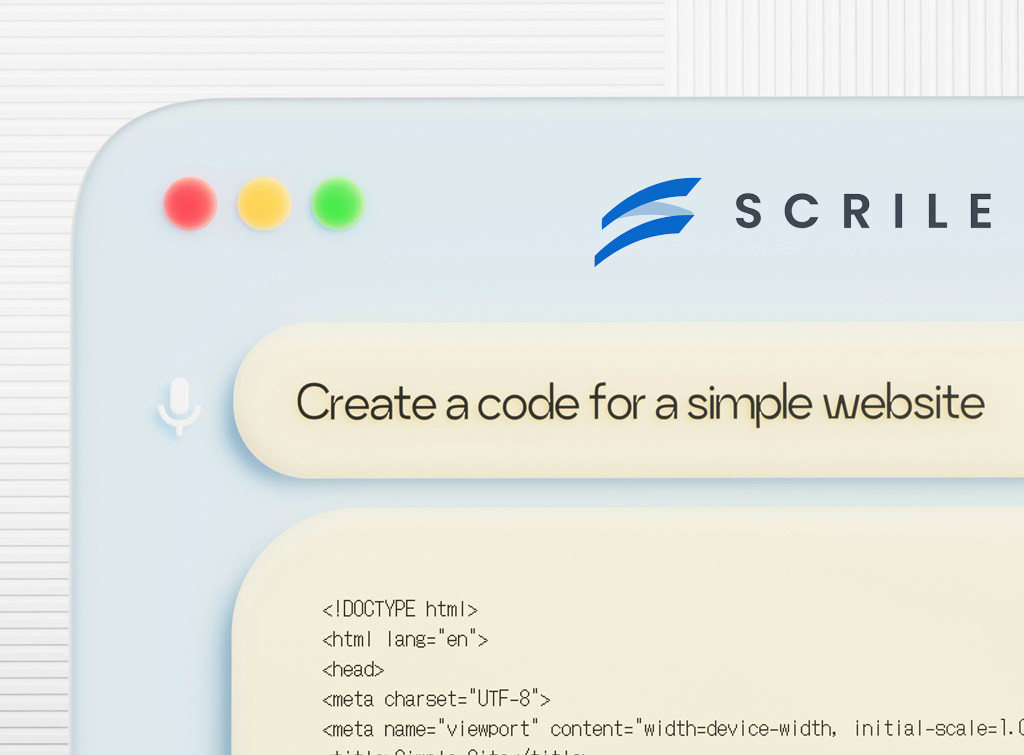
A developer types a sentence instead of writing ten functions: “Build a simple booking system with user login and payments.” The AI responds with structured, runnable code. Not a mockup. Something that actually works. This way of building software now has a name. It’s called vibe coding, a new term, and more people keep hearing it and wondering what is vibe coding.
The idea is simple. You describe what you want in plain language. A generative model turns that description into code. Instead of focusing on syntax, you guide direction and refine the output. The phrase reflects a broader vibe meaning: steering the process by intent and iteration while the machine handles the mechanics.
Why “Vibing” with Code Is More Than Hype
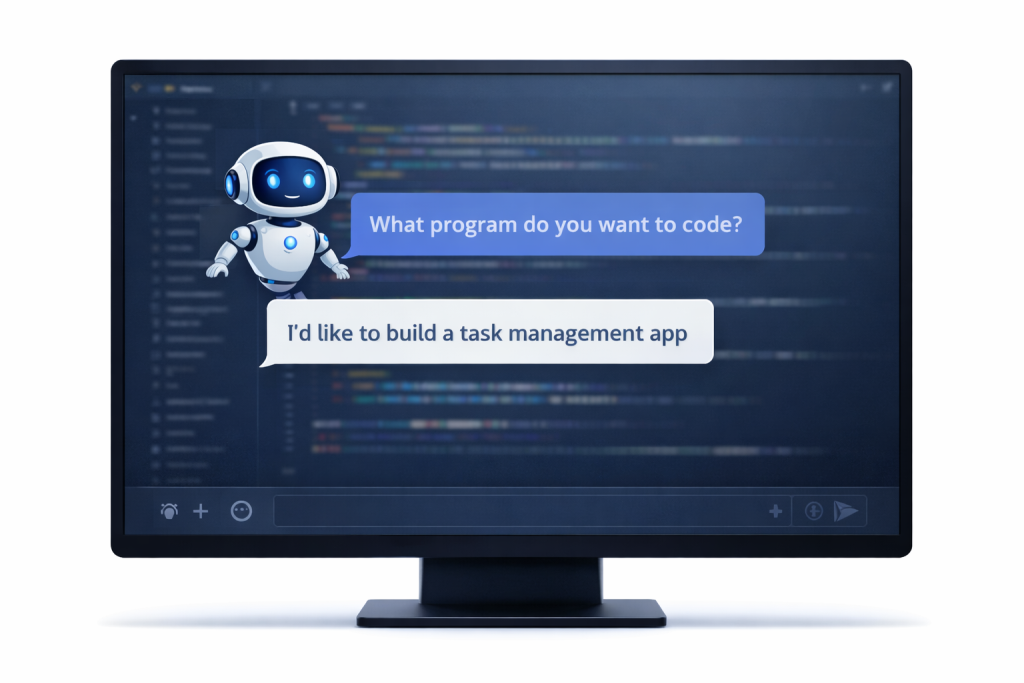
At first glance, vibing with an AI sounds loose, almost chaotic. In practice, it follows a clear pattern. Once people understand what is vibe coding, they see it is less about randomness and more about structured guidance. The broader vibing meaning here is not “doing whatever feels right.” It is directing a system through intention and feedback. That is why the concept keeps spreading.
For beginners, this lowers the barrier dramatically. Someone who barely understands syntax can still build small tools, landing pages, or scripts by describing what they want. They learn by observing generated code and adjusting prompts. It turns confusion into experimentation instead of frustration.
The Mechanics Behind Vibe Coding
Under the hood, large language models analyze plain language and map it to programming patterns. You write “create a REST API with authentication,” and the system assembles controllers, routes, and sample logic. Tools like GitHub Copilot, ChatGPT, and Claude are common environments where vibe coding happens daily.
The key shift is control through intent. You are not typing every bracket. You are steering the output.
From Intuition to Functional Output
The vibe coding meaning becomes clearer after the first attempt fails. AI rarely delivers perfect architecture immediately. You describe, review, refine. That loop replaces the old compile-error cycle. Creative flow still exists, but debugging now happens through conversation. Over time, rough fragments turn into working features.
Traditional Programming vs. Vibe Coding
For years, “writing code” meant sitting inside an editor and sweating details. You choose a stack, wire up files, type syntax, run the build, watch tests fail, then chase the bug. The work is steady and manual. You are responsible for every bracket, import, and edge case.
With vibe coding, the first draft arrives differently. You start with intent. You describe the feature in plain language, ask for a working slice, then inspect what you got. The job shifts toward prompting, testing, and editing. That is why people keep circling back to what is vibe coding when they see how fast a rough prototype can appear. Ask for a login screen and you may get three files, a database table, and a brittle password flow. You fix it before it ships anywhere.
This does not erase traditional skills. It puts them to work later in the process. Real products still need code review, version control hygiene, and predictable releases. Someone has to add types, write tests that fail for the right reasons, and wire CI so changes do not silently break things. Security checks still apply.
Here is the practical tradeoff most teams feel:
- Speed vs. control: you get output fast, then you spend time tightening it.
- Learning curve: beginners can build sooner, seniors can explore ideas quicker.
- Ownership of code: you still maintain it, refactor it, and support it in production.
Think of it as a new entry point. The discipline stays. The starting line moves.
Key Differences
| Aspect | Traditional Programming | Vibe Coding |
| First Draft | Written manually, line by line. | Generated by AI based on prompts. |
| Role of Developer | Builder and syntax author. | Director, reviewer, and prompt iterater. |
| Speed of Initial Output | Slower, controlled build process. | Very fast prototype generation. |
| Error Handling | Compile → test → debug cycle. | Prompt → generate → inspect → refine loop. |
| Architecture Control | Designed deliberately from the start. | Often needs restructuring after generation. |
| Long-Term Maintenance | Fully owned from first line. | Requires cleanup, refactoring, and hardening before scaling. |
Typical Scenarios You’ll See Vibe Coding In
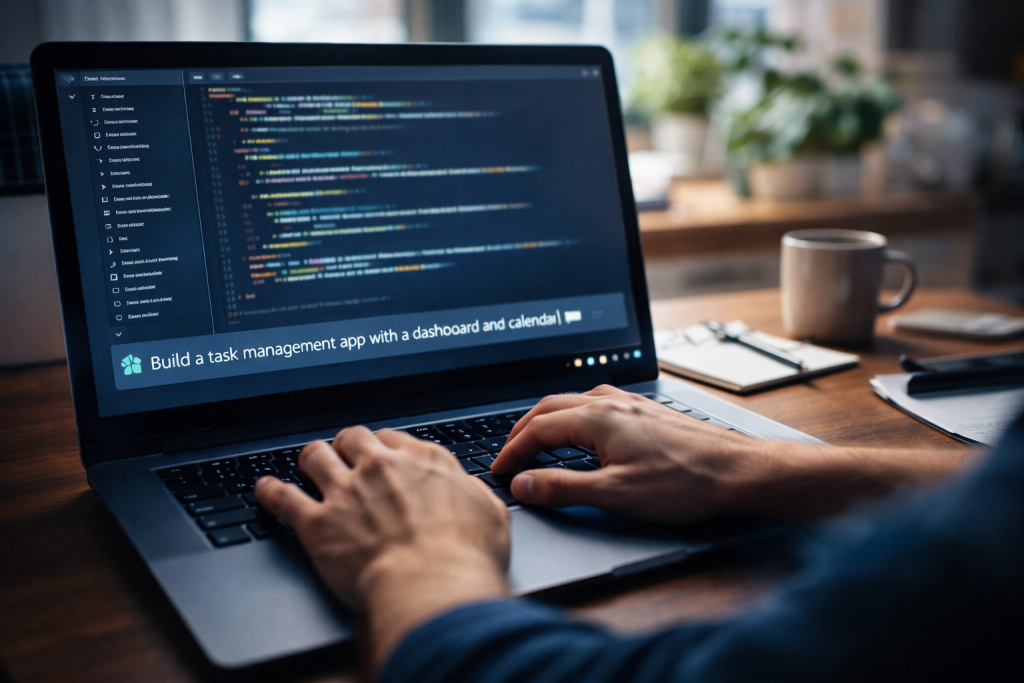
Once you understand what is vibe coding, the use cases stop sounding abstract. You can see it in small teams, early-stage startups, and even hobby projects. The pattern is similar. Someone describes a goal in plain language. An AI turns that description into working structure. The output is imperfect, but it exists fast. That speed changes behavior.
Rapid Prototyping
A sales manager asks ChatGPT to “create a dashboard that tracks weekly revenue by region using CSV uploads.” Within minutes, the model generates a basic Python Flask app, sample routes, and a simple HTML template with chart placeholders. Developers refine the queries and connect a real database.
Tools like GitHub Copilot inside VS Code now autocomplete entire controller files when prompted with short comments. Internal admin panels, reporting scripts, and CRUD interfaces appear in hours instead of days. The result is usable for internal teams, even if the code still needs cleanup.
Minimum Viable Products
Startup founders are using Claude, ChatGPT, and Replit’s AI coding assistant to scaffold full MVPs. In 2025, Y Combinator partners publicly noted that around 25 percent of some batches had codebases largely generated with AI assistance. That does not mean zero engineers. It means the first version shipped faster.
A founder can request authentication flow, payment integration outline, and basic UI components before hiring a full team.
Personal and Pet Projects
People with limited technical background now build landing pages, small SaaS tools, or Telegram bots by describing features step by step. Many Reddit threads under the term vibecoding show users sharing small web apps built almost entirely through prompt iteration.
Still, generated code varies in quality. Complex distributed systems, security-sensitive platforms, and high-scale services require structured engineering beyond the first draft.
Real-World Projects Built with Vibe Coding
People aren’t just talking about this paradigm. They’re shipping working tools and apps with it, using real AI systems and live workflows developed over the past year.
- A small business owner used Zapier Agents to create a resume scoring assistant that analyzes job descriptions and ranks incoming applications automatically. The tool connects to email and spreadsheet systems without a single line of hand-written code.
- A freelance designer built a portfolio website using Lovable by describing the layout, sections, and even a chatbot that answers visitor questions. This kind of site often takes days by hand, but the initial version was ready in just hours.
- Developers prototyped a Supabase admin tool called “Dreambase” by moving between Lovable, v0, and Cursor to refine UI and logic. What began as a prompt evolved into a multi-screen interface with database views.
These examples show that “vibe coding” is not just theoretical. Real creators use prompt-driven workflows and AI tools to go from sketch to working product.
Beyond Functions: Whole Products From Prompts
At first, AI-assisted coding looked like a faster autocomplete tool. Then people started building entire applications through iterative conversation. That shift expanded the vibing definition inside development circles. It no longer meant generating a single helper function. It meant shaping full systems through structured prompting.
Take a concrete example. A founder opens Claude or ChatGPT and writes: “Build a full-stack task management app with user authentication, a PostgreSQL database, and a simple React frontend.” The first response often includes backend routes, database schema suggestions, and a basic UI scaffold. The next prompts refine it: add JWT authentication, implement role-based permissions, connect Stripe test payments. Within a few hours, the prototype runs locally.
The key is iteration. You rarely accept the first output. You inspect, rewrite, ask for improvements, request tests, restructure endpoints. Over time, rough scaffolding becomes a working MVP.
Still, limits appear quickly:
- Security gaps are common. Generated authentication logic may lack proper validation, rate limiting, or safe password storage practices, which can create real vulnerabilities if deployed without review.
- Maintainability becomes an issue when AI outputs inconsistent patterns across files, forcing developers to refactor heavily before scaling.
- Architectural depth is shallow by default. Complex microservices, distributed systems, and performance-critical platforms require deliberate design beyond prompt iteration.
Whole products can emerge from prompts. Production-ready systems demand more discipline.
From Prototype to Product: Reality Check
A working demo feels exciting. A live product feels different. Once a prototype proves that users care, the focus shifts from generating features to building infrastructure. Understanding what is vibe coding helps at the beginning. Scaling requires additional layers.
You now need stable user management, proper authentication flows, payment processing, and clear data storage policies. Early AI-generated code often assumes ideal conditions. Real users behave unpredictably. Production systems must handle that.
After the first version shows traction, teams usually move into structured hardening:
- A full security review that checks authentication logic, access control, and data exposure risks.
- A defined system architecture that separates frontend, backend, and database responsibilities cleanly.
- A scalable backend capable of handling traffic spikes without collapsing.
- Monitoring, logging, and maintenance routines that track failures and performance issues over time.
Another trend is emerging quietly. Some companies now hire specialists to refactor AI-generated codebases. These “vibe code cleanup” roles focus on reorganizing messy structures and aligning them with long-term engineering standards.
Scrile AI: Build Beyond the Prototype
Early experimentation with AI-generated code can move fast. You validate an idea, test flows, and sometimes even attract early users. Then the priorities shift. Stability matters. Payments must work. User data must be protected. AI logic must behave consistently under load.
If you’ve outgrown experiments and want to turn your vibe-coding prototypes into a real service with users, payments, and AI-driven logic, it is more logical not to rebuild everything from scratch. It makes more sense to build the product on Scrile AI, a ready-made foundation for launching your own AI services.
Scrile AI is not a template or a chatbot tool. It is a custom development service built around your business model. Instead of trying to patch AI-generated fragments into production shape alone, you work with engineers who design the system properly from the start.
The transition includes:
- Architecture aligned with your niche and revenue model.
- Secure user management and payment integration.
- Refined AI behavior logic and scalable backend infrastructure.
Moving from prototype to product requires structure. Scrile AI provides that structure while keeping your original idea intact.
Conclusion
In practical terms, vibe coding means building software by describing intent and refining AI-generated output instead of starting from an empty file. It gives founders, developers, and even non-technical creators a faster way to test ideas and shape early versions of products.
The speed is real. So is the responsibility that comes once users arrive. Stable systems require architecture, security planning, and experienced engineering judgment.
If you want to move beyond experiments and launch a reliable AI-driven service, explore Scrile AI solutions. A structured transition from prototype to production can define whether your idea stays a demo or becomes a real product.
Related guides
- AI Avatar Generator in 2026: Use Cases & Tips
- AI Character Creator: Build a Persona That Scales in 2026
- How to Promote Your AI Companion Website in 2026
- How Creators Use AI to Sell More Content and Engage Fans
FAQ
What is a vibe code?
A vibe code is software generated through natural language prompts. Instead of writing every function manually, you describe features and refine AI output into working logic.
Is vibe coding a job?
New roles are appearing around AI-assisted development. Some specialists focus on refining prompts, while others clean and restructure AI-generated codebases for production use.
How real is vibe coding?
It produces functional applications and prototypes. At the same time, security, maintainability, and architectural depth still require human oversight and engineering discipline.
