
WordPress Cryptocurrency Plugins: Best Options in 2026
Compare the best WordPress cryptocurrency plugins for 2026. Learn how crypto payment plugins work with WooCommerce, when plugins are enough, and when a custom crypto gateway with Scrile Connect makes more sense.


wordpress cryptocurrency
More site owners are actively searching for WordPress cryptocurrency plugins because crypto payments have moved past the testing phase. For many WordPress sites, accepting crypto now solves real problems rather than creating new ones. Cards still work, but they come with limits: regional blocks, high fees, frozen accounts, and payment disputes that hit small businesses hardest.
Crypto offers a practical alternative. It fits especially well for ecommerce stores selling digital goods, subscription-based memberships, online services, and donation-driven projects. These sites care less about chargeback protection and more about fast settlement, global reach, and predictable access control. WordPress, with its plugin ecosystem and WooCommerce flexibility, makes crypto integration relatively straightforward.
This shift isn’t about chasing trends. It’s about responding to user demand and payment friction. Some audiences already expect to pay with crypto. Others simply want an option that works when cards don’t. This article focuses on real plugins, real trade-offs, and real decisions — and later shows when plugins are enough, and when a custom solution like Scrile Connect becomes the more reliable path.

Why Website Owners Want to Accept Crypto
The decision to accept crypto usually starts with reach. Card payments look universal on paper, yet many users cannot pass bank checks, complete verification, or even use cards in certain regions. Crypto bypasses those limits. A wallet works the same way whether the user is in Berlin, São Paulo, or Jakarta. For WordPress site owners selling digital access, that consistency opens markets that cards quietly exclude.
Another motivation is independence from payment processors. Traditional gateways sit between the business and the customer. They approve transactions, hold funds, and sometimes shut accounts down with little warning. Crypto payments remove part of that chain. Funds move directly from the user to the merchant, which lowers reliance on third parties and reduces the risk of sudden interruptions.
Settlement speed also matters, especially for digital products. When a user buys a download, a license, or access to a private area, waiting days for confirmation makes little sense. Crypto transactions settle quickly and predictably. Disputes are rare because there are no classic chargebacks. For businesses selling non-refundable digital goods, that stability is valuable.
There is also a cultural shift. Many WordPress sites already serve crypto-native audiences: developers, traders, Web3 founders, online communities, and global creators. For them, crypto is not exotic. It is familiar. Offering crypto alongside cards feels normal rather than experimental.
This is where WordPress cryptocurrency becomes a practical business use case instead of a technical curiosity. Plugins make integration accessible, WooCommerce handles orders, and site owners gain another payment option without rebuilding their stack. The motivation is simple. Accept what your audience already uses, and remove friction where it costs the most.
How Crypto Plugins Work in WordPress and WooCommerce
Most WordPress cryptocurrency plugins do one job well: they translate blockchain events into actions your site understands. When someone pays, the site needs to know who paid, how much arrived, and whether access should unlock. A crypto payment plugin sits between the wallet and WordPress to make that translation reliable.
On a typical WordPress site, crypto payments appear in two familiar ways. Some plugins add a simple payment button. The visitor clicks, sends funds, and waits for confirmation. This approach is common for donations, single downloads, or fixed-price services. Other plugins integrate crypto into the checkout itself, so users select crypto the same way they would a card. The difference is not visual. It’s about how tightly the payment is tied to orders and users.
What Happens During a Crypto Checkout
Once a payment option is selected, plugins usually follow one of two flows:
- Wallet-based flows, where the user sends funds directly to a generated address and the plugin monitors the blockchain for that transaction.
- Invoice-based flows, where the plugin creates a time-limited payment request with a fixed amount and address, then closes the order when funds arrive.
Both approaches end with the same result: WordPress receives confirmation and updates content access, downloads, or order status.
WooCommerce adds another layer. WooCommerce crypto payment plugins hook into the order system so crypto payments behave like native methods. When an order is created, the plugin attaches a payment request and waits for confirmations before completing it. This is also where plugins trigger callbacks, handle partial confirmations, and sync payment state with inventory or digital delivery.
In real setups, WooCommerce crypto plugins typically manage:
- Order status changes based on blockchain confirmations
- Payment callbacks from gateways or nodes
- Access rules for digital products and memberships
Some merchants look for a WooCommerce bitcoin plugin specifically, while others need multi-currency support. In both cases, WordPress cryptocurrency plugins focus on consistency: turning decentralized payments into predictable site behavior without forcing users to learn new workflows.
Top WordPress Cryptocurrency Plugins in 2026
Not all WordPress cryptocurrency plugins solve the same problem. Some focus on speed and coin coverage. Others prioritize control and WooCommerce depth. Custody models, scalability, and how closely a plugin integrates with WordPress all affect long-term use. Below are the most relevant options in 2026, reviewed from a practical business perspective.
NOWPayments
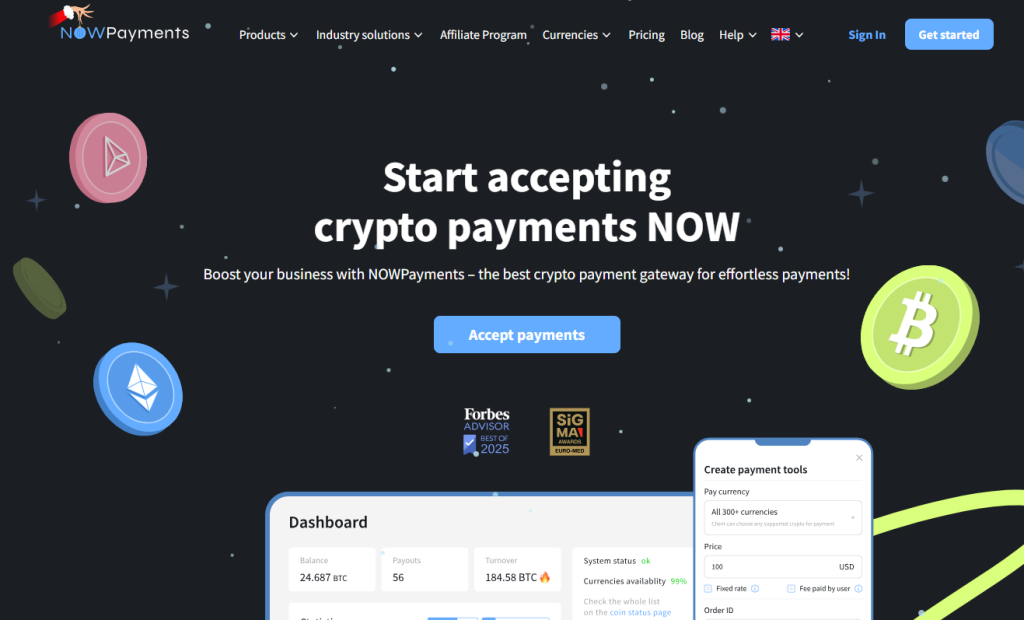
NOWPayments is often chosen by site owners who want to accept many cryptocurrencies without complex setup. It works as a hosted gateway and integrates with WooCommerce through an official plugin, making it one of the most accessible options in this category.
Pros
- Supports a very large number of coins and stablecoins
- Quick WooCommerce integration with minimal configuration
- Handles exchange rates and confirmations automatically
Cons
- Custodial model means funds pass through a third party
- Limited native support for recurring or subscription logic
- Less control over payment flow and settlement timing
Best for: Stores that want fast deployment and broad currency coverage without managing wallets or nodes themselves.
CryptoWoo
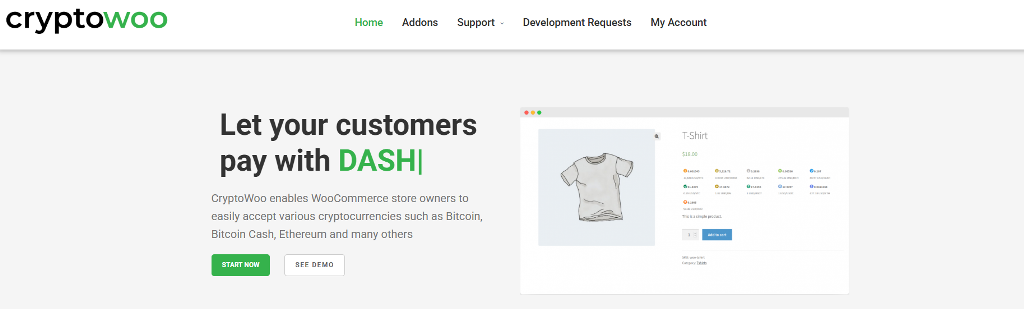
CryptoWoo takes a different approach. It is designed as a WooCommerce-native solution and sends payments directly to the merchant’s wallet. For businesses that value ownership and transparency, this plugin feels closer to the WordPress ecosystem.
Pros
- Non-custodial payments sent directly to your wallet
- Deep WooCommerce integration with orders and emails
- Strong fit as a WooCommerce Bitcoin plugin
Cons
- Advanced features require paid add-ons
- Multi-currency setups need additional configuration
- Less suitable for non-WooCommerce sites
Best for: WooCommerce stores that want strong control over payments and prefer fewer intermediaries.
Blockonomics
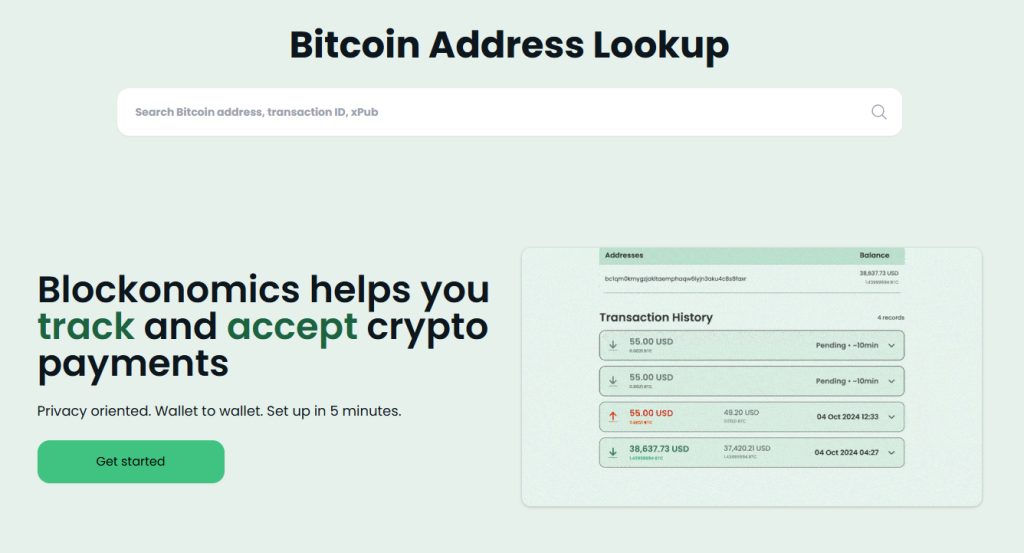
Blockonomics is a focused solution built around Bitcoin payments. It avoids gateways and intermediaries, connecting payments directly to the merchant’s wallet while still supporting WooCommerce.
Pros
- Fully non-custodial, payments go straight to your Bitcoin wallet
- Simple setup with minimal moving parts
- Clear blockchain tracking without third-party custody
Cons
- Bitcoin-only support limits flexibility
- No built-in subscription or recurring payment logic
- Less suitable for stores needing multiple currencies
Best for: Merchants who want a clean, direct WooCommerce bitcoin plugin with no gateways and no custody risks.
BTCPay Server
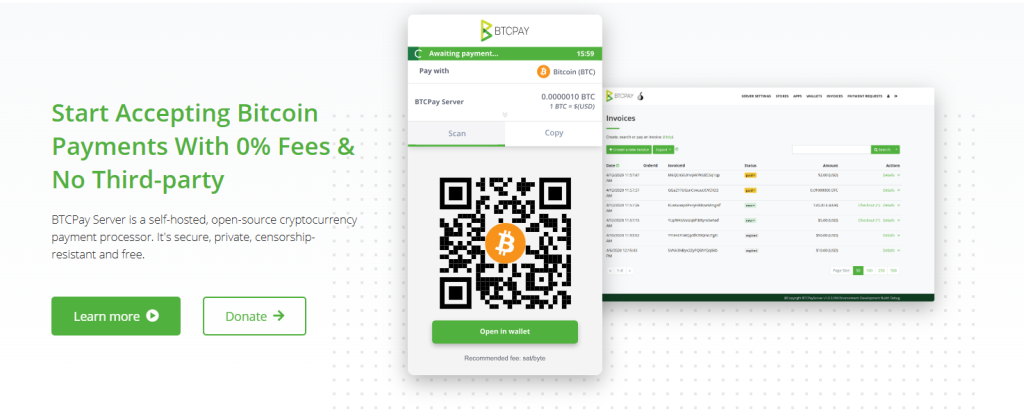
BTCPay Server is the most infrastructure-heavy option on this list. It’s open source, self-hosted, and designed for businesses that want full control over payments, data, and processing.
Pros
- Fully non-custodial and self-hosted
- Strong WooCommerce integration with advanced control
- Supports Bitcoin and Lightning payments
Cons
- Requires technical setup and ongoing maintenance
- No out-of-the-box subscription features without customization
- Higher operational complexity than plugin-based gateways
Best for: Businesses that prioritize ownership, privacy, and scalability and have technical resources to manage their own stack.
CoinPayments
CoinPayments is one of the older players in the crypto payments space and still appears in many WordPress setups due to its wide currency support and familiarity.
Pros
- Supports a broad range of cryptocurrencies
- WooCommerce plugin available
- Handles conversions and confirmations internally
Cons
- Custodial model adds dependency on a third party
- Limited flexibility for custom payment logic
- Subscription handling remains partial and external
Best for: Legacy sites that want wide coin support with minimal changes to existing checkout flows.
Comparison Table
Below is a concise comparison to help anchor the differences discussed above.
| Plugin | Supported currencies | WooCommerce support | Custodial / non-custodial | Subscription / recurring support | Best use case |
| NOWPayments | 100+ coins, stablecoins | Yes | Custodial | Limited / external | Multi-currency stores |
| CryptoWoo | Bitcoin + selected altcoins | Deep native support | Non-custodial | Via add-ons | WooCommerce-first stores |
| Blockonomics | Bitcoin only | Yes | Non-custodial | No | Direct BTC checkout |
| BTCPay Server | Bitcoin, Lightning | Yes | Non-custodial | Custom logic | Full-control setups |
| CoinPayments | Many coins | Yes | Custodial | Partial | Legacy multi-coin sites |
How to Choose the Right Plugin for Your Business

Choosing between WordPress cryptocurrency plugins starts with understanding what your site actually sells and how payments fit into that flow. Many problems appear when a plugin is selected for its features instead of its fit.
For classic ecommerce, where users buy physical or digital products once, most crypto plugins work well. WooCommerce handles orders, the plugin confirms payment, and the transaction ends there. Digital downloads behave similarly, with the added requirement that access unlocks immediately after confirmation. In both cases, simplicity matters more than flexibility.
Things change when subscriptions enter the picture. One-time payments are easy for any plugin. Recurring access, memberships, or renewals require additional logic. Some plugins support this partially through add-ons, others rely on external systems. This is where the gap between accepting crypto and managing it long term becomes visible.
Donations and memberships also differ in intent. Donations are voluntary and irregular. Memberships imply continuity, access control, and user accounts. A plugin that works for donations may struggle when payments need to map to user roles or gated content.
Before choosing, site owners usually evaluate a few practical factors:
- Business model alignment
Ecommerce, downloads, subscriptions, and communities all stress plugins in different ways. Matching the plugin to the revenue model avoids workarounds later. - Operational complexity
Some plugins are install-and-go. Others require wallet management, node setup, or manual monitoring. Your technical comfort level matters. - Growth expectations
A plugin that works today can become a bottleneck once orders, users, or pricing rules grow.
This is why discussions about the best WordPress cryptocurrency plugins often miss the point. The right plugin is the one that fits your current model without blocking the next step. When payment logic stays simple, plugins are enough but when it starts shaping the product itself, their limits quietly surface.
When Plugins Are Not Enough: Turnkey Crypto Gateway with Scrile Connect
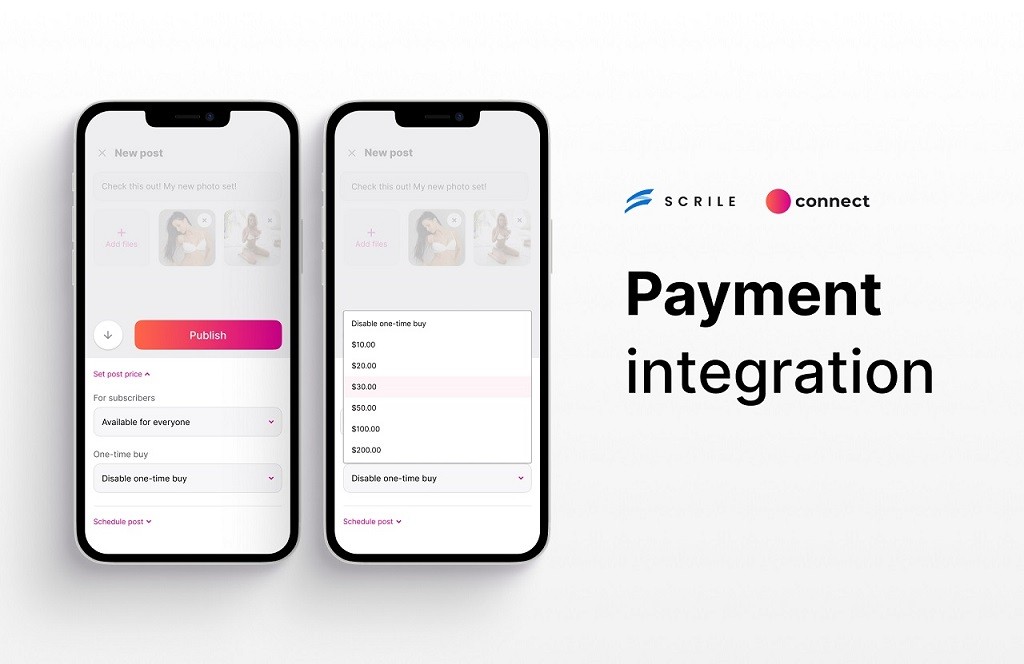
Sometimes plugins are enough. They let a WordPress site accept crypto, process orders, and move on. Problems usually start later. As the business grows, payment logic stops being just a checkout detail and starts shaping how the product works. Subscriptions need rules. Access needs to update instantly. Pricing becomes more complex. This is the point where plugins quietly get in the way. That’s where Scrile Connect steps in.
Scrile Connect is not a WordPress plugin and not a hosted payment platform. It is a custom development service designed to build turnkey crypto gateways tailored to how a business actually operates. Instead of adapting your product to plugin limitations, the payment logic is built around your product.
What Scrile Connect enables goes beyond basic acceptance of crypto:
- Custom crypto gateways
Payments are designed specifically for your flow. Supported assets, confirmation rules, retry logic, and settlement behavior are defined at the business level, not inherited from a plugin. - WooCommerce or standalone integration
Crypto payments can live inside WooCommerce or run independently on a custom checkout, membership site, or SaaS product. You are not locked into a single CMS workflow. - Advanced logic for real products
Subscriptions, memberships, user roles, gated content, usage limits, and renewals are handled as part of the system, not bolted on through add-ons.
Why Growing Businesses Outgrow Plugins
As traffic and revenue increase, edge cases multiply. Plugins struggle with complex pricing, recurring access, and user state synchronization. Scrile Connect removes those constraints by treating payments as core infrastructure rather than an extension.
This approach fits a wide range of businesses. Ecommerce stores gain more control over settlement and pricing. SaaS products tie access directly to payment state. Content platforms manage memberships without platform lock-in. Donation-driven projects move from irregular payments to structured support models.
For teams that start with WordPress cryptocurrency plugins and later need more control, Scrile Connect becomes the bridge from simple acceptance to a scalable crypto payment system built to last.
Conclusion
WordPress cryptocurrency plugins work well when payments stay simple. One-time purchases, basic donations, and standard WooCommerce checkouts fit their scope. As soon as payments start driving access rules, subscriptions, or user logic, plugins begin to limit growth. Custom development makes more sense at that stage because it puts payment flow, data, and scaling under your control. Ownership brings flexibility and long-term stability. If your project is moving beyond basic crypto acceptance, contact the Scrile Connect team today. Crypto gateway integration is available upon request, built around your business rather than plugin constraints.
