
LLM Agent Frameworks: Tools, Patterns, Traps
Compare LLM agent frameworks, orchestration patterns, production risks, and evaluation criteria before choosing an architecture for your AI product.


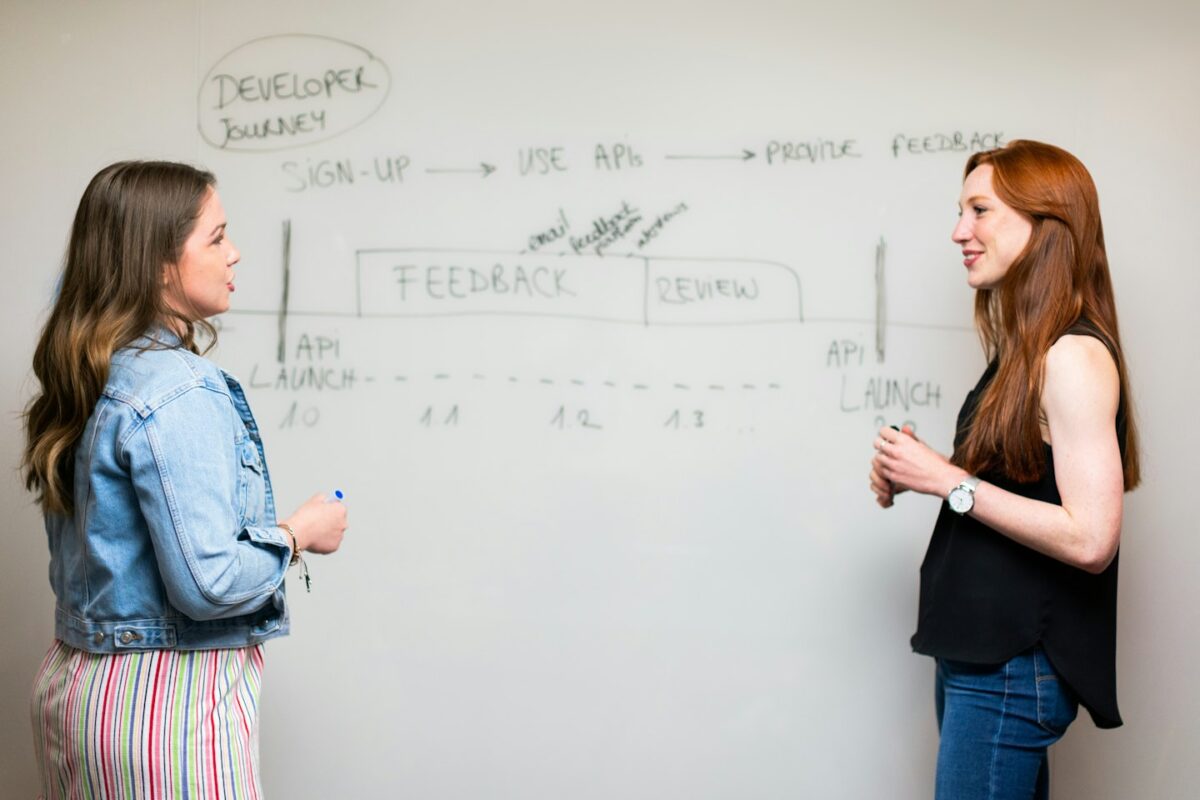
A developer testing an automation workflow on a workstation beside a physical process board with unlabelled cards
Quick answer
An LLM agent framework provides the control layer around a language model: tool routing, workflow state, memory, retries, logging, and evaluation. Choose one only when your product needs several conditional actions or durable workflows. For a simple assistant, direct model calls may be safer. For a commercial AI companion, the larger decision also includes identity, content, payments, subscriptions, and ownership.
What an LLM agent framework actually does
An LLM agent framework turns model output into controlled application behavior. It coordinates when a model should respond, call a tool, update state, retry an action, stop, or ask a person for help.
The useful unit of comparison is the production loop: trigger, model decision, tool action, state update, recovery, logging, and evaluation. A framework earns its place when it makes this loop easier to inspect and constrain. Memory alone does not make an agent; neither does a dramatic system prompt. The defining capability is controlled action across several steps while preserving enough state to know what happened.
- Trigger: accept a message, event, schedule, or system signal.
- Action: select an approved model, retrieval source, or external tool.
- State: retain task progress separately from conversational context.
- Recovery: handle invalid output, unavailable tools, and partial completion.
- Logging and evaluation: reconstruct each decision and test whether the final result met the product goal.
A customer-support bot that answers from approved documents may need retrieval and escalation, not an autonomous planner. An ai tutoring system may need stronger lesson state, source controls, and human oversight. Start with the required loop and risk boundary; adopt an agent abstraction only if those requirements exceed an ordinary application workflow.

Which tools fit which production loop?
Choose among LLM agent frameworks by orchestration shape, not popularity. Graph runtimes suit explicit branching; modular Python libraries suit custom pipelines; retrieval frameworks suit knowledge-heavy products; multi-agent tools suit genuinely separable specialist work.
| Category | Best fit | Primary caution |
|---|---|---|
| Graph or state-machine runtime | Long-lived workflows with branches, checkpoints, and human approval | More state modeling and migration work |
| Modular LLM frameworks in Python | Custom tools, retrieval, prompts, and provider integrations | Convenient abstractions can hide latency and errors |
| Retrieval-centered frameworks | Document search, grounded answers, and data connectors | Retrieval quality still requires independent evaluation |
| Multi-agent orchestration | Specialists with distinct tools, permissions, or review duties | Extra handoffs increase cost and failure paths |
| Visual or managed builders | Fast workflow assembly and operational handoff | Portability and deep customization may be limited |
Teams searching for llm frameworks python should inspect execution semantics before connector counts. Ask whether runs are resumable, state is serializable, tool inputs are typed, model providers can be replaced, and traces can be exported. A large llm list is useful for discovery, but it is not an architecture decision. Prototype the most failure-prone path before committing.
Use direct model calls when one request produces one bounded answer, perhaps with retrieval or a single validated tool. Introduce a framework when branching, durable state, retries, approvals, or several tools become first-class requirements. The threshold is operational complexity, not whether the demo looks agentic.
Business patterns: from one assistant to a multi-agent system
A single agent should be the default. Use a multi-agent system only when separate roles need different context, tools, permissions, or acceptance tests; otherwise, several agents merely distribute uncertainty across more prompts.
A practical llm agent architecture usually follows one of three patterns. A router sends requests to deterministic workflows. A planner selects tools inside a bounded loop. A supervisor delegates to specialists and validates their outputs. The third pattern is justified when specialization creates enforceable boundaries—for example, one agent retrieves account facts while another drafts a response that cannot access account-writing tools.
Worked example: a paid AI character receives a request for a personalized image. The trigger is the user message. A policy step checks eligibility and request boundaries. The chat component extracts approved creative parameters. The generation tool returns content or an error. The platform updates conversation and entitlement state, then delivers the result or a recoverable response. Logs connect the request, decisions, tool result, and delivery outcome. This is one observable workflow, not a committee of digital interns.
In companion products, orchestration sits inside a wider creator platform business model: character experiences must connect coherently with generated content, paid access, and retention. Teams evaluating generative AI avatars should therefore test identity consistency and content workflows alongside the agent loop, rather than treating generation as an isolated technical feature.

A multi agent llm design becomes defensible when each handoff has a contract: allowed input, available tools, expected output, timeout behavior, and acceptance check. Suppose a research specialist may read sources but cannot publish, while an editor may rewrite supplied evidence but cannot browse. Their separation constrains authority. If both agents see the same context, call the same tools, and judge each other with another open-ended prompt, merge them. Fewer transitions usually mean easier debugging and a clearer owner when the workflow fails.
Why agent demos fail in production
Production failures usually come from uncontrolled state, permissions, latency, and silent partial completion—not from an inability to generate fluent text. Evaluate the complete run, including recovery, rather than admiring the final answer.
- State drift: conversation history, workflow status, and business records disagree.
- Tool risk: broad credentials let a plausible but incorrect decision change real data.
- Latency: planning and handoffs multiply model calls before the user receives value.
- Partial completion: one action succeeds, the next fails, and a retry duplicates work.
- Observability gaps: logs show prompts but not state transitions, permissions, or tool effects.
- Evaluation leakage: test cases reward polished wording while ignoring task correctness.
Build evaluations around business outcomes. Record the initial state, allowed actions, expected state transition, prohibited actions, recovery behavior, and final user-visible result. Replay representative runs after changing a prompt, model, tool schema, or framework version. For subscription products, connect technical traces with subscription analytics so teams can distinguish model trouble from entitlement, delivery, or retention problems.
Keep authorization, billing rules, consent, quotas, and irreversible writes outside free-form model reasoning. Require idempotency keys for repeatable actions and explicit approval for high-impact operations. An agent may recommend; deterministic services should enforce.

Build a custom framework or use a product platform?
Build custom orchestration when agent behavior is your defensible product logic and your team can own its reliability. Use a managed product foundation when differentiation lies in the customer experience, brand, characters, content, and monetization.
The decision has three layers. Own the business layer: brand, customer relationships, pricing, character design, and data policy. Decide whether to own the orchestration layer: prompts, tools, state transitions, evaluation, and recovery. Rent commodity infrastructure where switching risk is acceptable. This separation prevents a framework choice from quietly becoming a business-model choice.
- Choose direct calls for bounded conversational features with limited tool use.
- Choose an agent framework for proprietary workflows requiring branching and durable state.
- Choose a product platform when launch requirements include customer-facing chat, generated content, paid access, subscriptions, and branded customization.
- Combine approaches when a platform covers the commercial foundation but custom workflows still create differentiation.
For an AI companion, AI character, virtual influencer, or fan engagement business, the production scope extends beyond orchestration. Scrile AI – AI Companion Platform supports AI chat, character experiences, content generation, paid access, subscriptions, and branded customization. It is relevant when founders want to launch and monetize the experience without turning framework plumbing into the entire company.

Choose the layer worth owning
An AI business does not win because it assembled the most fashionable orchestration stack. It wins by delivering a coherent experience, controlling important customer and product assets, and recovering predictably when automation fails.
For companion and character products that need chat, generated content, paid access, subscriptions, and branded customization, evaluate Scrile AI as the commercial foundation while reserving custom engineering for the workflows that truly differentiate the business.
Frequently asked questions
What is an LLM agent framework?
It is a library, runtime, or platform that coordinates model decisions, tools, workflow state, recovery, logging, and evaluation.
When should a team use direct LLM calls instead?
Use direct calls when a request needs one bounded response or a small deterministic workflow without durable branching, autonomous retries, or many tools.
Which LLM agent framework is best for Python?
There is no universal winner. Compare Python options by typed tools, state persistence, resumability, provider portability, tracing, testing support, and fit with the required workflow.
What is the difference between an agent framework and a chatbot platform?
An agent framework primarily supplies orchestration primitives. A chatbot or product platform also covers customer-facing experience and may include commercial capabilities such as access and subscriptions.
When does a multi-agent system make sense?
Use one when specialists require genuinely different context, tools, permissions, or acceptance tests. If roles share everything, a single workflow is usually simpler.
How should LLM agents be evaluated?
Test expected state transitions, allowed and prohibited actions, tool correctness, recovery behavior, latency, and the final business outcome using replayable cases.
What are the main production risks of LLM agents?
The major risks are state drift, excessive permissions, duplicated actions, partial completion, latency, weak observability, and evaluations that reward fluency instead of correctness.
Should an AI companion business build its own agent framework?
Build it when orchestration is proprietary differentiation and the team can operate it. Otherwise, a product platform may provide a stronger foundation for experience, content, monetization, and branding.
