
Local fundraising ideas work better with one clear donation page
Planning fitness app development? Explore core features, monetization options, timelines, and launch tips for coaching and wellness products.

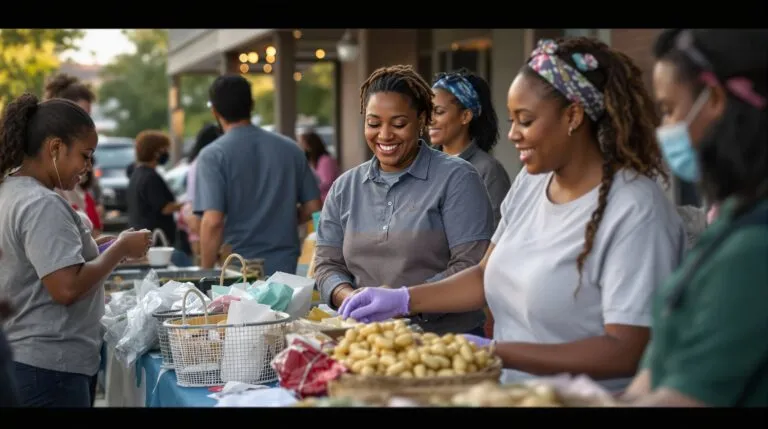
Community members at a local fundraiser event with tables, donations, and a neighborhood atmosphere
Quick answer
The best local fundraising ideas are not the flashiest ones. They are the ones your group can actually run in your hall, park, school, or parish without getting stuck on permits, weather, or volunteer burnout. Use the table below to match the format to your space, then pick the idea that survives a small team, a local sponsor, and a realistic event day.
For neutral context, this guide cross-checks the topic against Cryptocurrency. So the recommendation is grounded in external market signals rather than only product claims.
Local fundraising ideas fail for a simple reason: organizers choose the event name before they choose the setting. A school can run a bake sale in a hallway because the space, the people, and the cleanup flow are already familiar. A neighborhood group trying the same format in a park may need tables, storage, payment handling, and a weather backup before the first tray is sold. The label looks the same. The operational reality is not.
That is why this page is not a generic idea dump. It is a chooser. You are not just looking for something “popular”; you are trying to match a format to your venue, volunteer count, sponsor access, and local calendar. In practice, that means a small parish team may need a compact dinner or raffle while a school PTA can usually support a fair, read-a-thon, or family fun day. The right choice saves time, prevents rework, and makes the event easier to repeat later.
One more thing matters in local fundraising: the giving path needs to be simple. If people can buy, donate, or RSVP in one place, the event stays easier to manage after the room is packed up. A clear donation flow also helps you collect sponsor gifts and follow-up contacts without turning the fundraiser into a pile of cash, notes, and text messages.
In other words, local fundraising works when the cause is visible And The logistics are boring. That is the real advantage: familiar people, familiar spaces, and a setup that does not collapse the week before launch. Once you see the event through that lens, the good ideas become easier to separate from the merely familiar.

What makes a local fundraiser work in real life
A fundraiser at neighborhood scale does not need to feel large. It needs to feel possible. The strongest local fundraising ideas usually do three things at once: they are easy to explain, easy to attend, and easy to help with. If one of those fails, the event starts losing energy before anyone donates.
Clarity beats spectacle
People respond faster when the ask is simple: what the money is for, where it is happening, and how they can take part. A community dinner, a walkathon, or a garage sale does not need a long pitch because the format already tells the story. A donor can see the table, the route, or the auction list and understand the purpose within seconds.
By contrast, a complex event can waste attention before it raises a cent. If the plan needs several explanations, a registration flow, and a printed program just to make sense, the group will spend too much time on setup and not enough on participation. That is why “simple” is not a soft word here. It is a planning constraint.
Participation is part of the product
Local fundraising works best when supporters do more than open their wallets. Parents help in the kitchen, club members help set up the field, small business owners contribute raffle items, and neighbors bring a tray or a folding table. The event becomes a shared action instead of a request for money.
That shared action is what makes local campaigns sticky. A person who volunteers for one hour is more likely to attend next time, share the link, or donate again. The event creates a social memory, not just a transaction.
Visible results keep the group motivated
A fundraiser that shows progress in public tends to hold attention longer than one that disappears after a single weekend. School groups often see this when they post progress on the wall or on the campaign page; parish groups see it when they announce the amount raised at the next service; neighborhood groups see it when the new benches, sports kits, or repairs show up in the place people already use.
That visible result matters because it reduces doubt. People are more willing to come back when they can see where the effort went, and they are less likely to treat the event as a one-time favor.
Choose local fundraising ideas by local conditions
Start with geography, not with enthusiasm. The same idea can work in one place and fail in another because the local conditions are different. A downtown area may give you foot traffic and sponsor access. A rural area may give you stronger trust and a deeper volunteer pool but fewer casual passersby. A suburb may sit between those two patterns and depend more on timing than on spontaneous attendance.
That is the first selection rule: if the event depends on strangers wandering in, you need a location that already has traffic. If it depends on known families or members, you need a place people already trust and can find easily. Ignoring that difference is how groups end up with a good idea in a bad location.
Urban, suburban, and rural settings are not interchangeable
Urban groups usually have easier access to halls, cafes, local sponsors, and short-notice attendees. That makes pop-up sales, benefit evenings, small auctions, and school-gym events more realistic. The tradeoff is competition: there are more events, more noise, and more reasons for people to skip if the ask is not obvious.
Suburban groups often have the strongest parent network, but turnout depends heavily on timing. If the event lands on a sports weekend, a school test window, or a holiday run-up, attendance can drop fast. The venue may be fine; the calendar is what breaks the event.
Rural groups often win on trust. People know one another, and a parish dinner, community breakfast, or team drive can move quickly because the network is tight. What rural groups lack is casual drop-in traffic, so events work best when they are anchored to a known institution rather than a “come if you happen to be nearby” setup.
For this reason, the best local fundraising ideas in one community can be the wrong fit in another. A garage sale may be effortless in a street with parking and storage, but it becomes a headache if the neighborhood has rules about curb use or if the weather is unpredictable. A benefit concert may be ideal when a venue already has sound support; it becomes a time sink if every speaker and cable must be borrowed.
Indoor vs outdoor fundraising changes the whole job
Indoor events are more controllable. A school gym, church hall, clubhouse, or cafe back room gives you tables, clear entry points, and a place to keep supplies dry. That makes counting money, handling tickets, and managing volunteers much easier. It also makes the event less dependent on the forecast.
Outdoor events look easy until the real costs show up. You need weather cover, route control, signs, storage, a payment plan, and often a fallback if the crowd stays smaller than expected. If your event relies on people lingering, browsing, or moving between stations, outdoor conditions can cut the buying time in half.
A good shortcut is this: if the idea needs order, keep it indoors; if it needs atmosphere, make sure the weather and permits are already under control. That simple rule prevents a lot of last-minute damage.
Season, weather, and permits can kill a good idea
Spring fairs and fall fun runs sound strong because they are familiar, not because they are always safe. Rain, wind, heat, and conflicting local events can shrink turnout quickly. A picnic that looks perfect in the planning thread can turn into a delivery problem the day before.
Public-space events also bring a slower problem: permissions. A street sale, park walk, neighborhood race, or amplified event may need approval paths that take longer than the volunteer schedule. If the route, noise, parking, or safety plan is unclear, the fundraiser is not ready yet.
That is where a local team should be strict. If the idea depends on public ground, ask who secures the permit, who carries the insurance, who handles the signs, and what happens if the weather shifts. If those answers are vague, the format is too fragile for a small group.
For teams that want a practical model for digital support around a local event, how to create a fundraising page shows how to keep the giving path clean without turning the campaign into a software project.
Local fundraising ideas by effort, budget, and setup
Use effort as a filter, not as a status symbol. A small committee with four active volunteers does not need the most ambitious idea; it needs the idea that finishes. The wrong choice is expensive in a hidden way because it burns hours, creates delays, and often forces the group to shrink the event after everyone has already committed.
In practice, there are three workable tiers. Low-cost ideas are best when the team is thin and the venue is simple. Medium-setup ideas work when the group can coordinate one strong event day. Higher-effort events only make sense when sponsor support, venue support, and volunteer depth are already in place.
Low-cost ideas for small volunteer teams
Bake sales, garage sales, book swaps, simple donation drives, class-item raffles, and community yard sales fit this tier. They work because everyone understands the format immediately. There is no long explanation, no special equipment, and no need to teach people how to participate.
These ideas are especially useful when your group needs a quick win rather than a perfect plan. A small school committee can run a table sale after pickup, a parish group can attach the sale to an existing gathering, and a neighborhood association can use the same setup for a morning or weekend window. The point is not to look impressive. The point is to get a result without exhausting the team.
They also repeat well. That matters more than people think. A clean monthly sale, drive, or table event can outperform one grand effort that never comes back because the team cannot rebuild it.
Medium-setup community events
Walkathons, fun runs, trivia nights, benefit concerts, school fairs, and sports-day fundraisers sit in the middle. These formats need a stronger plan, but they also give you more room for ticket sales, sponsor slots, and visible participation. They work well when the community already has a reason to gather and the event does not need to invent an audience from scratch.
The main risk is role confusion. A trivia night with no host feels flat. A fun run with no route owner turns into a safety issue. A school fair with no cleanup plan keeps a busy parent group on site long after the crowd has gone home. None of those problems are creative; they are structural.
If your group can hold roles steady for a few weeks and the venue is already familiar, this tier often gives the best balance of effort and payoff. You get enough scale to matter without drifting into months of planning.
Higher-effort events with sponsors
Auctions, gala dinners, community banquets, golf-style sponsorship events, and premium benefit evenings can raise more money, but they ask for a real operations plan. You need venue support, guest management, sponsor outreach, donation items, and someone who can keep the room moving. These are not casual events dressed up as local fundraising ideas.
They are a good fit only when the group already has a donor base or a warm business network. A local sponsor list changes the math because it reduces the money the team must spend up front and increases the chance that the event feels full rather than forced. Without that network, the planning burden often outruns the benefit.
If you need a practical platform layer for follow-up after a high-effort event, Scrile Connect – Fundraising Platform fits the part that usually gets patched together after the room closes: campaign pages, recurring support, and supporter management. That is useful when a local fundraiser is no longer a one-night event but a repeatable donor flow.

Where local sponsors and merchants fit in
Local sponsors are often the difference between a fragile idea and a workable one. They do not just supply money. They provide trays of food, gift cards, printing, venue discounts, raffle items, sound equipment, and credibility. When a neighborhood café or hardware store helps, the event becomes easier to explain because people can see the local support behind it.
That support also trims hidden costs. A donated table, a set of reusable cups, or a printed banner can save more than the obvious cash amount because it removes errands, purchases, and delivery time from the volunteer list. For a small group, that is often what keeps the event on the calendar instead of slipping into “next month.”
In-kind donations are often easier to ask for than cash
If you want to start with the easiest ask, ask for what the group would otherwise buy. Food, paper goods, prizes, signage, and venue extras are often more realistic than direct sponsorship checks. Merchants can say yes to a visible item more easily than to a vague donation request.
The exchange can be simple. Their name appears on the flyer, the poster, the event page, or the thank-you note, and the group avoids a purchase. That is why local fundraising ideas work especially well when the sponsor gets a practical benefit instead of an abstract promise.
Venue support can be worth more than a cheaper room
A church hall, school gym, clubhouse, or local cafe is not just a place to stand. It can also be a distribution channel. If the venue already has parents, members, or regulars, the event gets promotion that a blank rented room cannot provide. A slightly more expensive venue may still be the better choice if it brings its own audience.
This is where many groups make a quiet mistake. They compare room prices and ignore what the room can do for attendance. If the venue is the only thing people know and trust, it is already helping the fundraiser before the first table is set.
Small-business promotion exchanges make sponsorship easier
Some sponsors will never give a cash gift first, but they will trade visibility for support. A logo on the banner, a shout-out at the event, or a named prize can be enough to secure a gift card, service voucher, or in-kind donation. The key is to make the exchange concrete. People respond faster when they know exactly what they get back.
For a neighborhood group, that can close the gap between a good idea and a fundable one. The event gets lower costs, the sponsor gets local visibility, and the group gains a contact it can use again next season.
Best local fundraising ideas by group type
Organization type matters because people already have habits attached to the group. Parents expect one kind of event at school, parish members expect another kind at church, and sports families expect something different again. Matching the fundraiser to the social pattern is often more important than matching it to the cause.
That is why category labels alone are not enough. The real question is which format fits the people who already show up, the space they already trust, and the amount of energy they already have. A good local fundraiser does not fight those habits; it uses them.
School or PTA groups
Schools usually do well with bake sales, read-a-thons, family fairs, class gift drives, spirit nights, and walkathons. These formats work because the audience is already there, the calendar is predictable, and the venue often exists by default. Parents also understand them quickly, which lowers the friction to participate.
PTA groups benefit from repeatable events more than from one-off spectacle. A once-a-term fair, a seasonal read-a-thon, or a simple donation drive is usually easier to sustain than a large gala that drains the same handful of volunteers every year.
For a deeper planning layer on school-style campaigns, the sister guide on fundraising ideas for nonprofits helps if you need formats that can survive a tight school calendar and a limited volunteer pool.
Neighborhood associations
Neighborhood groups usually win with low-friction formats: garage sales, block parties, picnic fundraisers, yard sales, garden tours, and community clean-up drives with donations attached. These fit because the audience is already local and the event feels like part of the neighborhood rhythm rather than a separate outing.
The main danger is overcomplication. If the idea asks people to travel too far inside the neighborhood, hunt for parking, or stay longer than they planned, it starts to feel like an errand. Neighborhood fundraising works best when the event is easy to walk to, easy to understand, and easy to leave and rejoin.
Sports clubs and community teams
Clubs can use walkathons, fun runs, tournament sponsorships, team raffles, and benefit matches. The advantage here is social momentum. People already show up for the team, so the fundraising ask feels attached to something they care about rather than a separate appeal.
The failure mode is overbuilding. If the fundraiser starts competing with practice, game prep, or team operations, the event becomes a burden instead of a support. Strong club fundraisers should feel like an extension of the team culture, not a second job.
If you need a format that connects team effort with a broader donor flow, the guide on team fundraising ideas is a useful next step.
Church or parish groups
Parish groups often do well with dinners, raffles, seasonal fairs, breakfasts, donation drives, and community suppers. These formats fit a recurring calendar, use familiar space, and often work with volunteers who already trust the institution. That trust lowers the barrier to participation.
The practical limit is energy. Church volunteer teams can be strong, but they are not always flexible on setup windows or event length. Keep the mechanics simple and make sure the cleanup plan is as clear as the invitation.
If your parish wants a clean path for ongoing support after the event, the sister article on online giving platforms for churches shows how to keep the offline event linked to future donations.
When a local fundraising idea is the wrong choice
A good idea can still be a bad fit. That is the part many lists skip. A walkathon is not useful if you cannot get route approval. A gala is not useful if your group has no sponsor base. A park picnic is not useful if the weather is unstable and the group has nowhere to move indoors. The cost of choosing badly is not just disappointment; it is lost time, wasted printing, and volunteer fatigue.
Spotting the wrong fit early saves the event. It lets the group scale down before people start building around a fragile plan. That is the difference between a fundraiser that launches and one that keeps getting “refined” until it disappears.
Public-space rules and permits
If your idea uses streets, parks, sidewalks, loudspeakers, or marked routes, assume permissions will matter. A fun run without route sign-off, a street sale without approval, or a picnic with unclear park rules can stall after the planning work is already done. That is why permit risk should be treated as a core planning item, not a side note.
Ask who owns the permit path, who handles insurance, and how long approval will take. If those answers are fuzzy, the event is not ready. A private indoor version is often the better choice.
Volunteer limits and budget ceilings
When the volunteer pool is small, choose the event that survives with fewer moving parts. Four people can manage a sale or a compact dinner. Four people cannot realistically run a sponsor-heavy gala, a route event, and a registration desk without burning out.
Budget works the same way. If the group cannot cover the first round of tables, printing, food, or signage, it needs a lower-cost format. The safest events are the ones that can start lean and still produce useful income.
A clean online donation page can help here because it keeps the money side simple while the event stays local and low-cost. That does not replace the event; it keeps it from becoming a payment admin problem.
Weather and timing traps
Outdoor events sound better in planning season than they do in rain season. A fair, fun run, or picnic can lose a large share of attendance when the forecast changes. The same event indoors may keep most of its turnout because people no longer have to guess about comfort, access, or shelter.
Timing matters too. School testing windows, holidays, local festivals, and sports weekends can crowd out even a good fundraiser. A bad date can cut turnout sharply without changing the idea itself. That is why calendar review belongs in the first planning meeting, not the last.
For the promotion side, how to promote a fundraiser online is the natural next read once the event type is locked in and the local setup is clear.
Turn one local event into repeat support
Most local fundraising ideas underperform after the event ends because the relationship stops too soon. The room empties, the receipts are counted, and nobody captures the people who actually showed up. That turns a good night into a one-time transaction instead of a growing supporter base.
The fix is not complicated. Collect contact details, thank people quickly, and give them one clean way to support the cause again. Groups that do this can turn a single event crowd into a repeat donor list in the next few weeks instead of starting from zero every time.
Capture contacts without making the event feel like a form
Use a sign-up sheet, QR code, or short form at the payment point. Ask for a name, an email, and one optional note about why they came. Do not turn the checkout into a survey. The goal is to keep the handoff short enough that people actually finish it.
This small step is what lets the group follow up later without chasing people across messages and paper slips.
Follow up while the event is still fresh
Send a thank-you within 48 hours. Include the amount raised, one photo, and the next step if there is one. The timing matters because the event still feels real at that point. Wait too long and the goodwill fades into background noise.
That early follow-up is where many small groups miss an easy gain. A few extra messages can turn casual attendees into the next round of helpers, donors, or sponsors.
Move attendees to one simple donation page
Once the room is packed up, one clean donation page becomes the easiest way to keep support going. It gives attendees, sponsors, and returning donors a single place to give again without asking them to remember the details of the event. That is especially useful for a group that wants to run the same local fundraiser more than once.
For the campaign side of that handoff, the sister guide on how to create a fundraising page is the right bridge from offline event to repeat support.
Where Scrile Connect – Fundraising Platform fits this picture
When a local fundraiser needs more than a cash box or a spreadsheet, Scrile Connect – Fundraising Platform fits the part of the job that usually gets stitched together after the event: campaign pages, recurring support, and supporter management. That is useful for a school, parish, neighborhood group, or club that wants the event to stay local while the donation flow stays organized. It matters most when the fundraiser is becoming repeatable instead of staying a one-night effort.
A simple local fit check before you choose the idea
Do not start by asking what sounds fun. Start by checking what your group can actually support. A good local fundraiser needs a workable venue, a realistic volunteer count, a sponsor path if the event is larger, and a date that is not fighting weather or the local calendar. If one of those pieces is weak, choose a simpler format instead of forcing the bigger one.
Match the venue before you print anything
If the venue is a school hall or church room, pick a format that benefits from tables, short speeches, or a steady flow of people. If the venue is outdoors, make sure the idea still works when attendance is lower than expected or the weather changes. A format that only works in perfect conditions is usually too fragile for a small group.
Use the smallest version that can still raise real money
Many local groups do better with one compact event than with a large plan that needs three committees. A modest garage sale, a one-night dinner, or a short family event can be enough if the layout is clean and the donor path is easy. The goal is not to look ambitious. The goal is to finish with money raised and volunteers willing to do it again.
Keep the follow-up path open from the start
If you know the event may happen again, decide now how people will stay in touch. That can be an email list, a QR code on the table, or a simple campaign page tied to the local cause. Without that path, every new fundraiser starts cold.
Fundraising Tips: Practical Ways to Raise More Donations
Ready to build the setup behind this?
If this is the operating problem you need to solve, use the product page as the next step. It shows where build your setup fits and what the platform covers beyond a single payment widget.
Frequently asked questions
When does a bake sale stop being the right local fundraising idea?
When the sale needs more space, more prep, or more cleanup than your group can handle without stress. If food prep, table setup, and payment handling take longer than the event itself, the format has outgrown the team.
What if our group has volunteers but no venue?
Choose a format that can use an existing space, such as a church hall, school room, cafe, or sponsor venue. If the group has energy but no location, the venue is the blocker, not the idea.
Which local fundraising ideas fail first in bad weather?
Anything that depends on foot traffic, outdoor routes, or unprotected tables tends to fail first. Walkathons, picnics, fairs, and street sales usually lose the most attendance when the forecast changes.
When do permit rules make an outdoor event a bad choice?
When the event uses public ground, road access, sound equipment, or a route that needs approval. If the approval path is not clear early, an indoor format is usually safer.
How do we know whether to choose a small event or a sponsor-led event?
If your sponsor list is short and your volunteer pool is thin, keep the event small and repeatable. Sponsor-led formats work best when local businesses already know the group and are willing to help.
What is the fastest way to turn attendees into repeat donors?
Collect contact details at the event, send a thank-you within 48 hours, and route people to one donation page. Without that handoff, most local fundraisers end as one-time transactions.
