
How nonprofits choose fundraising ideas that actually fit their audience
Fundraising ideas for nonprofits with practical examples, online tactics, event formats, donor tips, and ways to turn campaigns into repeat support.


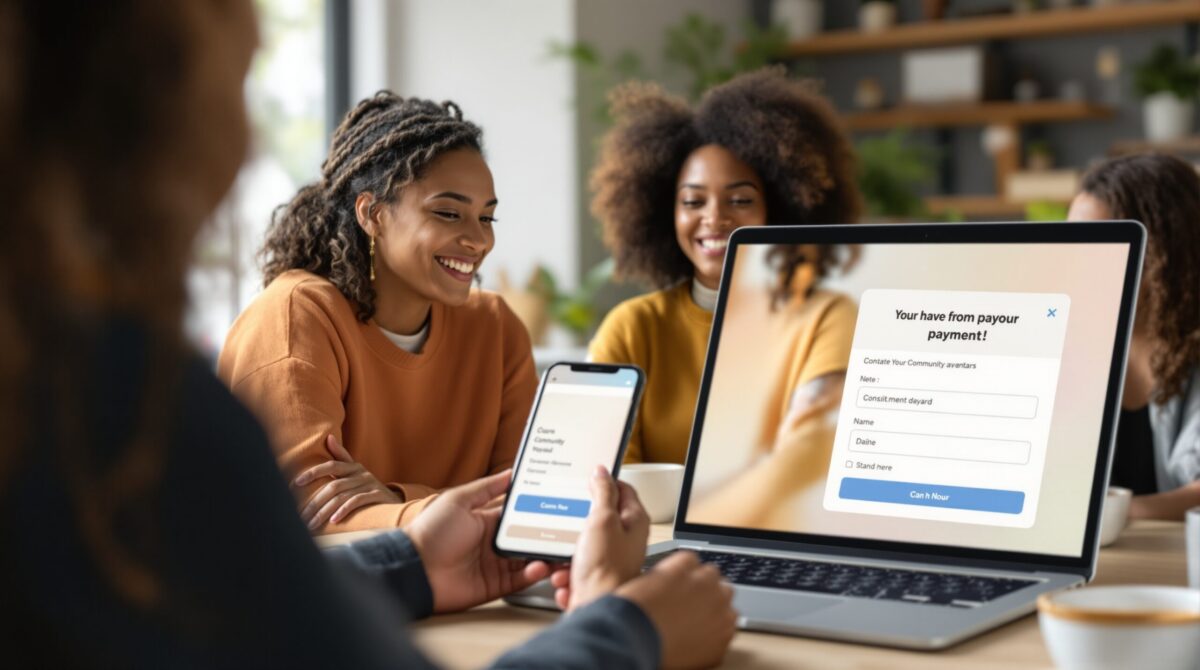
Nonprofit donation campaign with supporters and a digital donation page on a phone, illustrating practical...
Quick answer
Use the comparison table below to sort fundraising ideas by effort, budget, channel, repeatability, and prerequisites. If your team is small, start with the low-lift column; if your donors already give online, prioritize digital-native ideas; if repeat support matters, favor formats you can run again without rebuilding the whole process. Event-heavy ideas can still work, but only when staff, sponsors, and logistics are already in place.
Why most fundraising idea lists are not enough
Most nonprofit lists lead with familiar ideas such as a gala, charity auction, fun run, trivia night, or a low-cost challenge campaign. Those ideas are useful, but they do not answer the first planning question: which format actually fits the team in front of you?
For a broader reference point, see Fundraising and Pew Research Center's charitable giving research.
This page is built to answer that question. Instead of ranking ideas by popularity, it sorts them by effort, budget, channel, repeatability, and prerequisites. That matters because the wrong fundraiser is often more expensive than the wrong slogan. A popular idea can still waste a month of staff time if it needs a venue, volunteers, sponsor outreach, or a strong on-site logistics plan.
Fit is the first filter
Two nonprofits can use the same idea and get very different results. A shoe drive can be manageable for a group with pickup help and storage space, but it becomes awkward if nobody can handle collection and processing. A gala can raise strong money, but only when the organization already has sponsor access, a donor list that will show up, and enough people to manage the night.
Low-lift does not mean low value
Low-lift ideas are not automatically small ideas. Matching gifts, digital eCards, 100 envelopes, and challenge campaigns can be realistic for a small team because they do not depend on a full event crew. They still need a clean donation path and a way to keep donors moving from interest to action.
Repeat support is a separate decision
A fundraiser can raise money once and still be a poor fit if it cannot be repeated without rebuilding the whole process. That matters when the nonprofit wants steady support instead of one spike and a quiet inbox. If the goal is ongoing donor behavior, formats that can be relaunched with the same structure deserve more attention than one-off spectacles.
The donor channel changes the answer
A fundraiser that works well in a community room may stall in an email-only audience. The reverse is true too: a digital-first idea can underperform if your donors expect local participation or physical attendance. Channel is not a detail. It is part of the idea.
How to shortlist fundraising ideas without wasting capacity
The easiest way to narrow the field is to ask four questions before anyone picks a campaign:
1. Do we have event staff, or do we need a low-lift format?
2. Do our donors respond online, offline, or both?
3. Can we repeat this format later without starting from zero?
4. What prerequisite would break the idea first: volunteers, sponsors, tools, or a simple payment flow?
That filter is the reason this article is different from the classic idea dump. If you are looking for a step-by-step fundraising process, move to the nonprofit fundraising guide. If you need help turning an idea into a live page, use the fundraising page guide. If your goal is promotion rather than selection, the online promotion guide covers that lane.
Small team, limited budget
Small teams usually do better with ideas that have low overhead and fewer moving parts. Matching gifts, digital eCards, 100 envelopes, coin war, and a simple challenge campaign are common first picks because they can be run without a venue, a packed volunteer schedule, or a long sponsor chase. They still need discipline, but they do not punish a small staff the way a gala or large walkathon can.
Donor list already exists
When the nonprofit already has email reach or an active supporter base, online-first ideas deserve a closer look. Digital eCards, matching gifts, Google Ad Grants, and challenge campaigns work best when the next step from interest to donation is short. If the organization has no digital donation flow, fix that before expecting online ideas to perform well.
Volunteer-heavy or community-led group
Volunteer depth changes the math. Coin wars, trivia nights, shoe drives, auctions, and walkathons become more realistic when the group can share the workload. The tradeoff is that the format should stay simple enough to repeat without burning out the same people every time.
Need repeat support, not just one event
If the real goal is repeat support, favor ideas that can be relaunched with little setup: challenge campaigns, matching gifts education, digital eCards, and recurring online asks. Higher-effort events can still work, but they are better when the organization already has the people, sponsor access, and follow-up process to support them more than once. A one-night success is not the same thing as a sustainable campaign rhythm.
Comparison table: fundraising ideas for nonprofits by channel, effort, and repeatability
Use this table as a shortlist tool. It is designed to separate low-lift ideas from event-heavy ones and to show which formats work online, offline, or in both places.
| Fundraising idea | Channel fit | Effort | Budget | Repeatability | Prerequisites | Not a fit if |
|---|---|---|---|---|---|---|
| 100 envelopes campaign | Online, offline, hybrid | Low | Low | Medium | Donation board, shareable update path, simple payment link | You cannot keep the progress board current |
| Coin war | Offline, community-led | Low | Low | Low | Group access, collection rules, counting method | Your audience is mostly remote |
| Challenge campaign | Online, hybrid | Low to medium | Low | Medium | Social sharing, donor prompt, clear action mechanic | You have no audience willing to participate publicly |
| Game night / trivia | Offline or hybrid | Medium | Low to medium | Medium | Host, prizes, entry flow, promotion | You cannot secure volunteers or a venue |
| Gala | Offline | High | High | Low to medium | Sponsors, venue, guest list, program, follow-up | Your team cannot manage event logistics |
| Charity auction | Offline, hybrid, virtual bidding | High | Medium to high | Medium | Donated prizes, bidder tracking, promotion, payment handling | You have no source for auction items |
| Fun run / walkathon | Offline, hybrid | High | Medium to high | Medium | Route, safety plan, registration, volunteer support | You cannot coordinate participants on-site |
| Matching gifts | Online, donor-channel dependent | Low | Low | High | Eligible donor base, employer awareness, follow-up workflow | Your donors do not work for matching-gift employers |
| Google Ad Grants | Online | Medium | Low cash cost, higher management cost | High | Account management, landing pages, keyword work | No one can maintain the account |
| Digital eCards | Online | Low to medium | Low | High | Templates, seasonal timing, payment flow | Your audience does not buy digital gifts |
| Read-a-thon | Online, school/community | Medium | Low to medium | Medium | Participant tracking, prize logic, school or family network | You do not have a reading-centered audience |
| Shoe drive fundraiser | Offline, community collection | Medium | Low | Low to medium | Drop-off or pickup logistics, storage, partner for processing | You cannot manage physical collection |
Low-lift ideas
Matching gifts, digital eCards, 100 envelopes, and challenge campaigns are the cleanest first tests for a small team. They are low-cost, low-overhead, and simple enough to launch without a venue or a long volunteer schedule. That does not make them automatic wins, but it does make them realistic when time is tight.
These ideas work best when the nonprofit can keep the donation path simple and the follow-up visible. A digital board or a clear update flow matters more than extra decoration. If the team can only manage one strong ask at a time, a low-lift format is usually the right place to start.
Higher-yield ideas
Galas, auctions, and fun runs can raise more money per event, but they also need more setup and more cleanup. Sponsor outreach, guest management, prize handling, safety planning, and venue coordination all add risk. That is why these ideas should be chosen only when the organization can actually support the work.
A higher-effort fundraiser is not better by default. It only becomes the better choice when the group has the staff, vendor relationships, volunteer base, and donor demand to execute it well. If those pieces are missing, the event can consume more capacity than it returns.
Online-first ideas
Google Ad Grants, digital eCards, matching gifts, and challenge campaigns are the most natural online fits in this set. They work when the nonprofit already has an email list, a payment flow, and a simple way to keep donors engaged after the first click. Without that path, online attention is easy to lose.
Digital ideas are especially useful when the organization wants repeat support. They can be relaunched with less rebuilding than a large event, and they fit donors who already give through email, search, or social. If you are still deciding how to structure the campaign surface, compare that question with the nonprofit fundraising page guide and the how to promote a fundraiser online guide before you build too much.
Offline and community-led ideas
Coin wars, shoe drives, trivia nights, auctions, fun runs, and galas depend on people showing up in a shared physical space. They can work very well when volunteers are available and sponsors are easy to reach. They are usually a poor fit when the audience is remote or the staff is already stretched thin.
Offline ideas also differ in how easy they are to repeat. A trivia night can be refreshed with modest effort. A shoe drive can be repeated if collection and pickup are stable. A gala can be repeated too, but the repetition cost is high, which makes it a stronger fit for organizations that already know how to manage event work.
Best fundraising ideas by nonprofit situation
At some point the question stops being “What ideas exist?” and becomes “Which one fits this organization right now?” The answer changes by capacity.
Small team with no event budget
Start with low-lift formats first: matching gifts, digital eCards, 100 envelopes, or a simple challenge campaign. These ideas do not require venue bookings, a long volunteer list, or sponsor-heavy planning. If the team can manage one clean donation flow and one follow-up sequence, the idea is realistic.
Digital-capable nonprofit with an existing donor list
When the organization already has email reach, search traffic, or a strong online donor base, online-first ideas become more attractive. Google Ad Grants, digital eCards, matching gifts education, and challenge campaigns are strong fits. The real gain is often not a brand-new idea but a cleaner campaign structure that lets the team repeat the effort later.
Community-based nonprofit with volunteers
Volunteer depth changes the shortlist. Coin wars, trivia nights, shoe drives, walkathons, and seasonal auctions become more feasible because the work can be shared. The hidden risk is burnout, so the format should be simple enough to run again without depending on the same few people every time.
One-off push versus repeat support
If the goal is a single visible push, a gala or fun run may still make sense. If the goal is repeat support, prioritize ideas that can be relaunched without a rebuild: digital asks, matching gifts education, challenge campaigns, or other formats that fit a regular donor habit. Repeatability is not a guarantee. It is a planning signal.
Common mistakes when choosing a fundraising idea
The biggest errors are usually capacity errors, not creative errors. A good idea can still be the wrong idea for a specific nonprofit.
Choosing by popularity only
A popular fundraiser is visible because many people talk about it, not because it fits every team. Gala, auction, and fun run all have their place, but they are not universal answers. The better question is what the idea needs before it can work.
Picking an event that eats staff time
Event-heavy ideas create hidden work: sponsor outreach, logistics, registration, payments, volunteer scheduling, cleanup, and donor follow-up. If the organization is already overloaded, that extra work becomes the real cost. A fundraiser that crowds out mission work is not cheap, even when it looks polished.
Ignoring donor behavior and channel fit
An online-first audience will not wait for a physical ask, and a community audience may want local participation instead of a digital form. The best fundraising idea is the one donors can complete without friction. If the channel does not match the donor, the idea loses momentum before it starts.
When a generic fundraising idea becomes a bad fit
Some ideas look universal until a missing prerequisite shows up. That is when the fundraiser stops being a clean campaign and starts becoming extra workload.
No volunteer base
Without volunteers, physical collection and event support fall back on staff. That can be manageable for a digital campaign, but it is a real problem for a gala, walkathon, or shoe drive. When volunteer depth is thin, choose a format that does not depend on bodies in a room.
No sponsor access
Some higher-yield ideas only work because sponsors absorb part of the cost. Without sponsor reach, a gala can become a budget drain, and auction or event ideas lose margin quickly. That should be a hard check before the team commits.
No simple digital donation flow
Online-first ideas fail when the payment path is clunky. Donors will not stop to decode a broken checkout or a page that feels unfinished. If the nonprofit wants repeat digital campaigns, the payment and update flow has to be simple enough to trust on the first visit. This is one reason some teams prefer a branded fundraising system instead of stitching together separate tools.
Choose the next idea without adding more work
Use a short validation pass before you book a venue or ask volunteers to commit.
First, pick two or three ideas from the low-lift and online-first columns. Do not start with ten. The goal is to see which idea survives the capacity check, not to create a longer wish list.
Next, map each idea to one donor channel you already own. If email, social, and payment flow do not line up, the campaign will leak attention and slow down the team.
Then name the one prerequisite most likely to break the idea. It might be sponsors, volunteers, a donation board, or a simple payment path. Solve that first.
Finally, if the nonprofit wants a repeatable fundraising surface rather than a one-time event, Scrile Connect – Fundraising Platform can fit that use case by keeping the campaign, donor activity, and follow-up in one owned place. For teams that want the broader execution path, the nonprofit fundraising guide is the better next stop.
Where Scrile Connect – Fundraising Platform fits
Scrile Connect – Fundraising Platform fits nonprofits that want the fundraiser itself to be repeatable, branded, and easier to manage in one place. That matters when the team is past the one-off event stage and wants a structure it can use again without rebuilding donor flow each time.
Fundraising Tips: Practical Ways to Raise More Donations
Product-fit signal: Fundraising founders, nonprofits, creators, campaign operators, charities, and community projects seeking donation and supporter-management workflows.
Practical advantages: donation and campaign fit; recurring support
Ready to build the setup behind this?
If this is the operating problem you need to solve, use the product page as the next step. It shows where build your setup fits and what the platform covers beyond a single payment widget.
Frequently asked questions
When is a gala a bad fit for a nonprofit?
A gala is a bad fit when the team cannot handle venue work, sponsor outreach, guest management, and follow-up without slowing the rest of the mission. It also becomes weak when the donor list is too small to support a room full of attendees.
What looks cheap but still takes too much time?
A campaign can have a low cash cost and still eat staff time if collection, tracking, or promotion is messy. Shoe drives and challenge campaigns can land in that trap when the process is not simple.
How do we know when to choose online instead of offline?
Choose online when the donor list already lives in email, social, or a digital community and you can complete the donation in one path. Choose offline when the audience expects local participation or the fundraiser depends on physical presence.
What happens if we pick an idea without sponsor access?
Higher-yield event ideas usually lose margin fast without sponsors. The organization ends up paying more of the cost itself, which makes the fundraiser look successful on the surface and weak in the ledger.
How can a nonprofit tell whether repeat support is realistic?
Repeat support is realistic when the fundraiser connects naturally to an ongoing donor habit, not just a one-time event day. Matching gifts, recurring asks, and campaign systems with clear follow-up are stronger signals than one-off spectacles.
What should a small team avoid first?
Avoid formats that require a venue, many volunteers, or complex on-site logistics. A small team usually does better with a low-lift digital campaign that can be launched, measured, and repeated without rebuilding the whole process.
