
How to Monetize a Blog: Revenue Streams for Publishers
Learn how online funeral services combine private consultations, document collection, payments, memorial access, and compassionate family support.

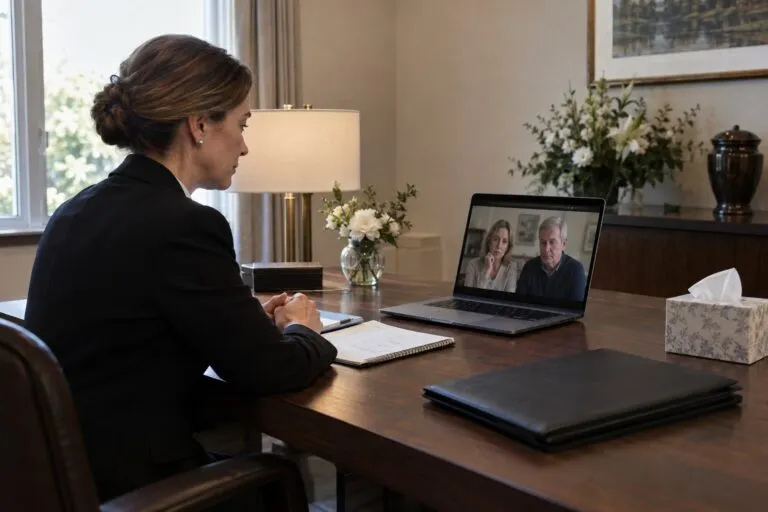
Funeral director conducting a private online arrangement consultation
Quick answer
Online funeral services can include remote arrangement consultations, family coordination, document collection, payments, ceremony streaming, virtual memorials, and grief-support sessions. A strong service guides people through these steps in one calm, private workflow. The business opportunity lies in reducing coordination burdens without treating grief as a checkout funnel or confusing funeral arrangements with the ceremony itself.
What Online Funeral Services Actually Need to Deliver
Online funeral services should help a family arrange, attend, or remember a funeral remotely. The useful product is the coordinated service around video: triage, appointments, decisions, documents, payments, permissions, ceremony access, memorial content, and follow-up.
The costly mistake is treating an online funeral as a livestream with a payment button. A family usually arrives with an urgent practical problem: relatives are in different places, decisions must be made, and nobody knows which choice comes first. The provider must distinguish three jobs. Arrangements cover the director consultation, identity checks, authorizations, service options, and payment. The ceremony covers attendance, participation, moderation, and recording consent. Remembrance covers memorial pages, guest messages, media, and later access. Combining those jobs in one service is sensible; collapsing them into one undifferentiated screen is not.
- Remote arrangements: scheduled consultations, secure document exchange, decisions, and payment.
- Ceremony access: private invitations, participant roles, accessibility support, and controlled replay.
- Memorial support: approved photographs, tributes, guest contributions, and retention choices.
- Human support: a named coordinator who can explain the next step and take over when technology becomes a burden.

Which Online Funeral Services Are Worth Offering?
The most useful offers solve a specific access or coordination problem. Start with remote arrangements and private ceremony access; add memorial production or support sessions only when the team can operate them with equal care.
Demand is better understood by circumstance than by format. A relative abroad may need to join a decision call, an older guest may need one-click ceremony access, and several siblings may need a shared record of choices. Those are different workflows. A provider should therefore evaluate each offer by customer job, responsible staff member, privacy level, failure consequence, and follow-up obligation. The table turns a vague digital package into operating decisions.
| Offer | Primary customer job | Essential control | Operational owner |
|---|---|---|---|
| Remote arrangement consultation | Make informed decisions together | Scheduled private access and documented handoff | Funeral director |
| Private ceremony stream | Attend from another location | Invitation control and participant moderation | Service producer |
| Online memorial | Share approved memories over time | Content approval and retention settings | Family representative |
| Bereavement support session | Speak privately with a qualified provider | Booking, payment, and confidential access | Support professional |
Suppose a regional funeral home receives an inquiry from a daughter locally while two siblings live abroad. The worked process is: assign one coordinator, book a joint arrangement call, record decisions in the case file, request required documents through a protected channel, collect approval and payment, issue ceremony invitations, and schedule one follow-up. The example contains no exotic technology; its value comes from preserving context across handoffs. If the team cannot say who owns each step, it should narrow the offer before adding more features.

How Should the Remote Arrangement Workflow Operate?
A remote arrangement workflow should move one case through inquiry, triage, consultation, documents, decisions, payment, ceremony coordination, and follow-up without asking the family to repeat sensitive information.
The first response should establish urgency, location, preferred contact method, accessibility needs, and the authorized decision-maker. It should not demand a full account before a person has acknowledged the loss. After triage, the system can present an appropriate appointment rather than an open calendar with unexplained meeting types. This is where a lead management system becomes relevant: ownership, status, and handoff history matter more than collecting another email address.
- Acknowledge the inquiry and provide a clear human contact.
- Confirm who may make decisions and who else should join.
- Schedule the appropriate private consultation and offer phone access where needed.
- Collect only the documents required for the current stage.
- Summarize choices, responsibilities, costs, and outstanding approvals.
- Take payment through the defined business process and issue confirmation.
- Coordinate ceremony access separately, then complete the promised follow-up.
Design the case record around a single source of truth, but restrict each role to what it needs. A ceremony producer may need the running order and speaker list, not identity documents or payment details. A support professional may need an appointment and contact preference, not the funeral arrangement history. Build explicit handoff states such as awaiting family approval or ready for ceremony coordination, and show customers what is outstanding. This reduces avoidable calls while preserving the option to call when the situation does not fit the workflow.

How Do You Design for Privacy, Accessibility, and Grief?
Design for low attention, mixed digital ability, and high emotional stakes. Every screen should explain the immediate action, who can see the information, and how to reach a person; privacy and accessibility are service features, not footer material.
Bereaved customers should not have to decode internal terminology or create several accounts. Use plain labels, short forms, generous error recovery, and a visible contact route. Let an authorized relative invite others without exposing the entire case. Provide captions or interpretation workflows where available, keyboard navigation, phone alternatives, and device checks before a ceremony. A private community platform can inform the access model, but a funeral service needs stricter roles, shorter paths, and clear rules for recordings and memorial contributions.
- Ask consent separately for attendance, speaking, recording, replay, and memorial publication.
- Verify the family representative before allowing invitations or content changes.
- Keep arrangement records separate from guest-facing ceremony and memorial spaces.
- State retention and deletion choices in plain language, including what happens after access ends.
- Provide a staffed fallback for failed links, forgotten passwords, hearing needs, or distressed callers.
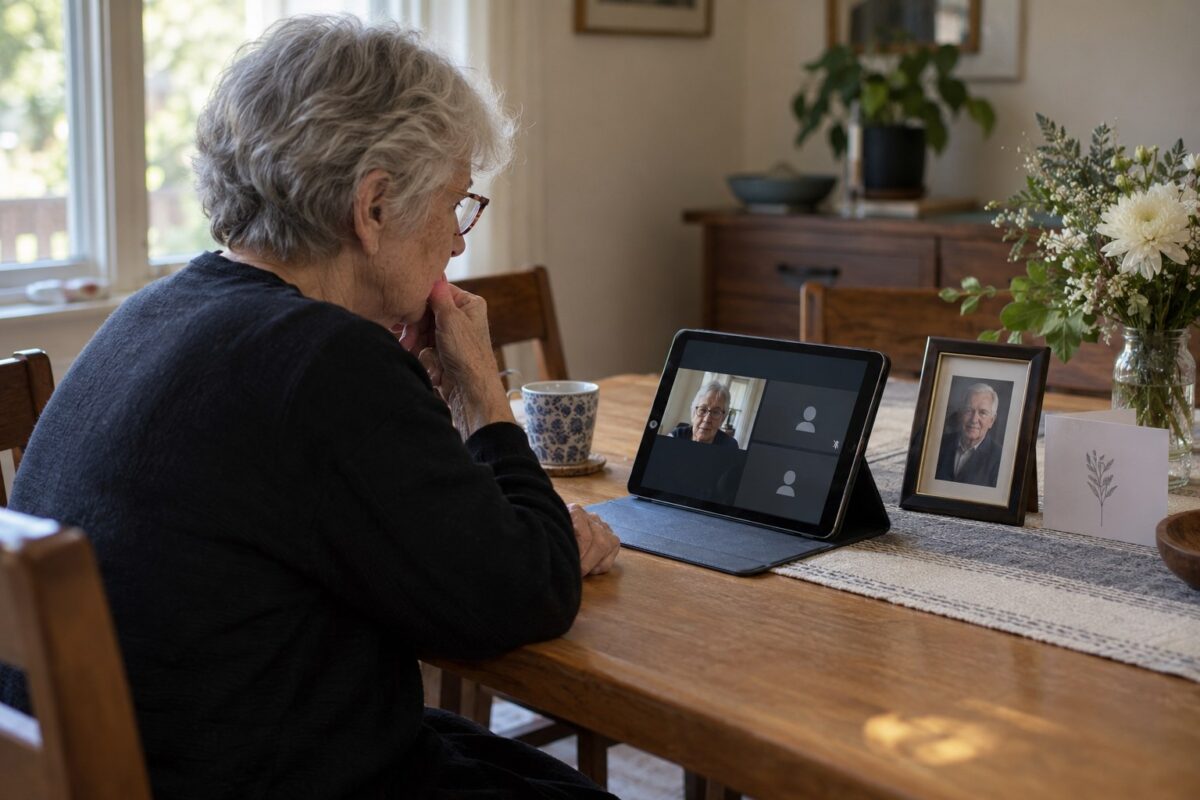
A useful test is to give the invitation journey to someone unfamiliar with the case and ask them to join from an older phone without coaching. Observe where they hesitate, not merely whether they eventually succeed. Then run the opposite test: can an unauthorized recipient infer private details from the invitation preview, URL, notifications, or replay page? Convenience and confidentiality must survive the same exercise. If either fails, the service is not ready for a live ceremony, where troubleshooting competes with the reason everyone has gathered.
When Does the Business Need Its Own Platform?
A dedicated platform becomes justified when appointments, paid consultations, private video, staff roles, and follow-up must operate as one branded service. A collection of unrelated tools may launch quickly, but every integration creates another handoff for staff and families to manage.
Map the service before making the build decision. If the offer is an occasional public stream, a full custom operation may be unnecessary. If it includes scheduled director consultations, multiple experts, controlled access, payments, chat, and repeatable case administration, ownership matters. The same principle applies to online funeral planning: the platform should reflect the provider's sequence, permissions, and duty of care instead of forcing families through the vocabulary of generic meetings and events.
| Operating condition | Tool bundle may suffice | Owned workflow is stronger |
|---|---|---|
| Service frequency | Occasional, manually coordinated event | Repeatable service with concurrent cases |
| Customer journey | One link and limited follow-up | Inquiry, booking, consultation, payment, and follow-up |
| Roles | One organizer | Directors, coordinators, experts, producers, and family representatives |
| Control | Standard branding and access | Business-defined permissions and administration |
Choose the narrowest owned workflow that removes a genuine operating risk. For many providers, that means starting with paid private consultations and scheduling, while ceremony broadcasting remains a separately managed service. Review telehealth app development for a useful parallel: sensitive appointments also require clear booking, access, professional roles, and boundaries, although funeral care has its own consent and case-handling obligations. The next action is to document one real case from first inquiry to follow-up and mark every point where people, data, or payment change hands.

Turn Compassionate Service into a Controlled Workflow
The strongest platform decision is not to digitize every interaction. It is to connect the moments where delay, repetition, or unclear ownership makes an already difficult experience worse. Begin with one defined service, one accountable coordinator, and a clear boundary between private arrangements and ceremony access.
Scrile Meet – Live Video Consulting Platform supports paid video consultations, scheduling, chat, appointment flows, integrated payments, expert marketplace use cases, and administrative controls. For funeral-service businesses, those supplied capabilities fit the consultation side of the operation: branded appointments with directors, celebrants, or support professionals. Ceremony production, legal compliance, consent design, and case-specific safeguards still require deliberate implementation.
Frequently asked questions
What are online funeral services?
They are digitally delivered funeral-related services such as remote arrangement consultations, family coordination, secure document collection, online payments, private ceremony access, virtual memorials, and scheduled support sessions.
Is an online funeral the same as a livestream?
No. A livestream covers remote attendance at a ceremony. A complete online funeral service may also include arrangements, approvals, documents, payments, invitations, memorial content, and follow-up.
What should an online funeral service website include?
It should include clear service choices, triage and contact options, scheduling, private video access, role-based permissions, secure document handling, payment workflows, accessibility support, and human assistance.
How should families be given access to a virtual funeral?
Use private invitations tied to defined roles, with simple joining instructions and a staffed fallback. Speaking, recording, replay, and memorial contribution permissions should be controlled separately.
Can funeral arrangements be completed through video consultations?
Many discussions and decisions can be handled remotely, but applicable legal, identity, signature, and documentation requirements depend on the provider and jurisdiction. The workflow should support an offline or in-person step when required.
How can an online funeral service protect privacy?
Verify authorized decision-makers, minimize collected data, separate case records from guest spaces, restrict staff access by role, obtain specific consent, and define recording, retention, and deletion rules.
Should an online funeral service charge for consultations?
It can charge for professional consultations or include them within a broader service package. The fee, scope, cancellation terms, and relationship to later funeral costs should be clear before booking.
When should a funeral provider build a dedicated platform?
Consider a dedicated platform when scheduled consultations, payments, private video, several professional roles, controlled access, and case follow-up form a repeatable service rather than an occasional event.
