



White Label Fitness Products 2026
Launch white label fitness products in 2026 without manufacturing headaches. Discover how coaches, studios, and gyms can brand apps, gear, and apparel under their own name, understand real costs, avoid common pitfalls, and scale smarter. Learn why digital delivery is becoming core, how to mix physical and digital products, and how Scrile Stream can help you build a fully branded, custom fitness platform that you truly own.

white label fitness products
White label fitness products let you launch under your brand without building everything from scratch. The fastest path in 2026 is to start with a branded digital product (app/video/coaching), then add a small physical line (gear or apparel) that reinforces your method and boosts retention.
In 2026, a fitness coach in a rented studio looks at three paths that all feel risky. They can build everything themselves and burn months on development, suppliers, and logistics. They can sell someone else’s brand and stay invisible. Or they can launch white label fitness products under their own name and own the relationship with their clients from day one.
In fitness, “white label” simply means this: someone else makes the product or technology, and you put your brand, voice, and business model on top of it. The difference is ownership of experience, not ownership of factories.
This year feels sharper for a reason. Margins are tighter, audiences are savvier, and digital tools are far more sophisticated than they were even two years ago. Clients expect branded apps, polished content, and real personality, not generic templates.
That reality has created three clear pillars for modern fitness brands: digital apps, branded coaching platforms, and physical goods like gear or apparel. The smartest operators are learning how to mix all three, and Scrile Stream are making it easier to do it under your own brand.
What to white-label first (and what it realistically costs)
| Product type | Best for | Time to launch (realistic) | Example budget from your “Realistic Launch Cases” | Main business upside | Common risk to mention |
|---|---|---|---|---|---|
| Digital (branded coaching app / platform) | Online coaches, hybrid studios, scalable memberships | Weeks to a few months | ~$7,000 for app branding/onboarding + first-year fees (your Case 2) | Recurring revenue, low variable cost, better retention | Getting stuck in a tool that can’t support pricing/workflows later |
| Gear (bands, mats, small equipment) | Boutique studios, corporate wellness kits, tangible “starter packs” | Weeks to months (supplier + shipping) | ~$9,000 first gear run (your Case 1) | Easy to explain, instantly visible brand touchpoint | MOQs + packaging/storage costs hitting harder than expected |
| Apparel (private label activewear) | Regional chains, lifestyle brands, community/identity plays | ~8–12 weeks typical cycle (design → bulk delivery) | ~$35,000 first apparel run (your Case 3) | Strong “identity merch”, clients become walking ads | Inventory risk if designs don’t sell; cash tied up in stock |
| Blended launch (digital + one physical SKU) | Most sustainable route long-term | Staged rollout | $18k–$65k range shown across your cases | Digital drives LTV; physical increases brand stickiness | Trying to launch too many SKUs at once dilutes messaging |
What White Labeling Really Means in Fitness

White labeling in fitness is a business model, not a factory trick. It lets you use existing systems while keeping your brand in charge. With white label fitness products, you don’t disappear behind a supplier — you stand in front of it.
Three approaches often get mixed up. White label means you take a ready-made product or platform, brand it as your own, and sell it while another company handles most of the technical or manufacturing work. Private label usually refers to physical goods, where a manufacturer produces items for you based on your specifications, but you still rely on their production lines. A custom build goes furthest: everything is designed specifically for your business, giving you maximum control at a much higher cost.
With white label fitness products, ownership is shared in a practical way. You typically own your brand, your pricing, and your client relationships. You control the look and feel — logos, colors, messaging, and overall experience — while the backend technology or manufacturing stays with your partner. Customer data depends on the contract, which is why clear data policies matter. Day-to-day operations are split: you coach, market, and sell; your provider maintains the system or production line.
Fitness fits white labeling particularly well because it runs on repetition. Clients train regularly. Subscriptions are normal. Progress unfolds over time. That rhythm rewards brands that can scale smoothly without rebuilding tools every year. A coach who delivers results benefits from systems that grow with them rather than slow them down.
People rarely buy workouts, supplements, or gear in isolation. They buy trust in a coach, a method, and a community. White label fitness products let you attach that trust to professional-grade tools that would be expensive to create alone, while your brand stays front and center.
From Factory Floor to Coach’s Dashboard
White labeling looks different depending on what you launch, but the logic stays consistent: use proven capabilities, keep your brand visible, and avoid unnecessary complexity.
A coach launching supplements
- Selects an established manufacturer with tested formulas.
- Designs labels and packaging around their own coaching method.
- Spends time educating clients instead of managing production.
A gym launching branded apparel
- Partners with a private label supplier that handles fabrics and manufacturing.
- Chooses cuts and colors that match the gym’s identity.
- Starts with small batches before committing to larger orders.
A studio launching a white label coaching app
- Begins with a ready-made digital backbone for scheduling, payments, and content.
- Rebrands the interface so members feel inside the studio’s ecosystem.
- Adds custom flows for classes, challenges, and progress tracking.
Across all three, the result is the same. The product feels native to the brand even though the engine behind it was built elsewhere. That is how white label fitness products move from factories and codebases into real coaches’ dashboards and real clients’ routines.
Three Types of White Label Fitness Products
The white-label landscape in fitness no longer sits in a single box. In 2026, it stretches across software, hardware, and apparel, each with different economics, risks, and creative potential. Some founders start digital because speed matters. Others begin with gear because it feels tangible and easy to explain. The most resilient brands usually end up blending all three. Understanding how these pieces behave is more important than chasing any single trend.
Digital First: Apps, Programs, and Platforms
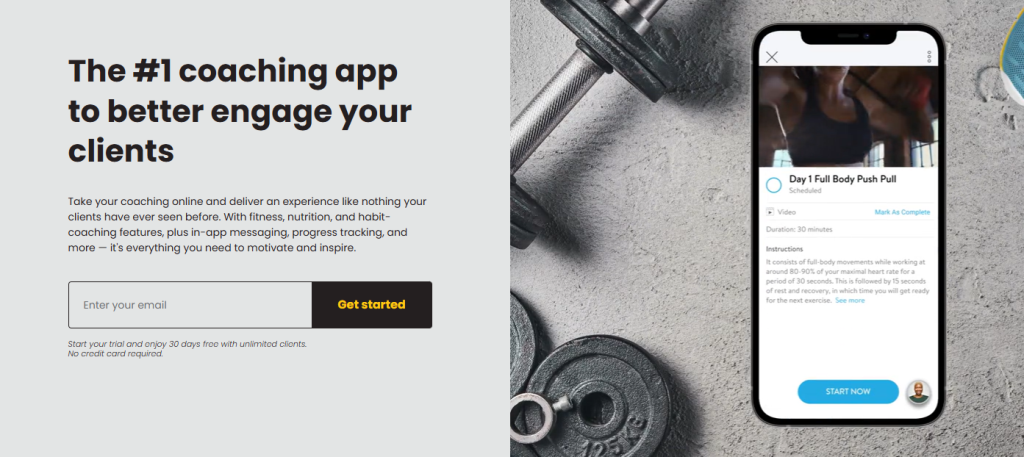
For many coaches, digital is the fastest way to launch white label fitness products. You avoid warehouses, shipping, and inventory, and you can start earning within weeks instead of months. This is where most “white label fitness” apps sit today, and several well-known platforms dominate this space.
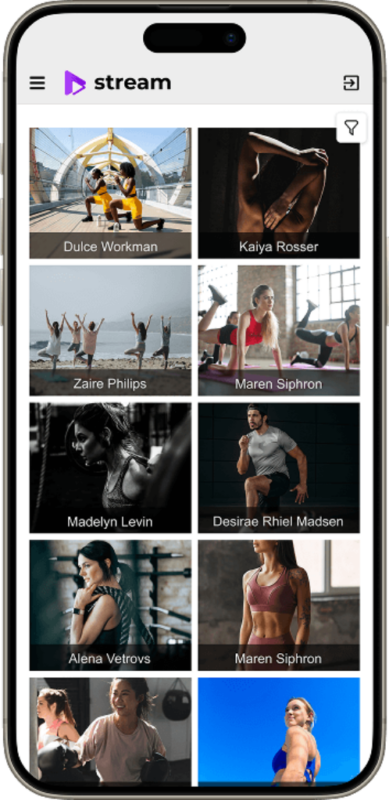
Trainerize, for example, lets you release your own branded app where clients can follow programs, log workouts, and message coaches. Virtuagym goes further for studios, bundling scheduling, memberships, and basic CRM into a single branded interface. Exercise.com positions itself as more premium, with custom-branded apps, challenge tracking, and stronger gym management tools. My PT Hub targets personal trainers who want a clean, simple app for programming and check-ins without running a full tech stack.
Across these platforms, you typically get a similar baseline:
- Your logo, colors, and app name in the app store
- Client accounts, onboarding, and progress tracking
- Workout libraries you can edit or reuse
- Scheduling, basic payments, and dashboards
- Standard analytics on engagement and attendance
That is enough for many solo coaches to look professional immediately. You can send one app link, onboard clients, and collect subscriptions without hiring a developer.
The limits appear as you scale. Most of these apps are built for broad use, not your exact business. You often lack control over:
- Complex pricing models, bundles, or hybrid memberships
- Deep redesign of the user experience beyond branding
- Custom coach payout logic or studio-specific workflows
- How your data is structured for long-term growth
Plenty of brands start here because it is fast. The smartest ones treat these tools as a stepping stone, not the final destination for their white label fitness products strategy.
Physical Goods: Gear and Equipment
For many studios, physical white label fitness products feel like the most intuitive starting point. They are visible, tangible, and easy to explain to clients. Instead of reselling someone else’s brand, you sell your own.
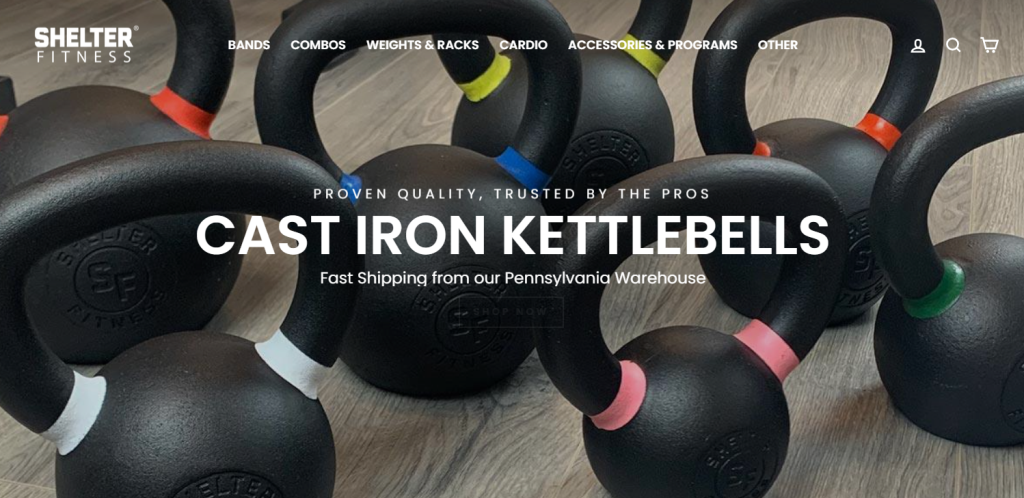
Suppliers like Shelter Fitness make this relatively straightforward. You can order resistance bands, kettlebells, mats, sliders, or dumbbells in bulk and add your logo, color palette, or custom packaging. For a boutique studio, that might mean branded glute bands for every new member. For a corporate wellness provider, it could be full “home workout kits” shipped to employees.
The reality behind the scenes is more complex than Instagram makes it look. Three constraints shape most decisions:
- MOQs (minimum order quantities). Many suppliers require you to order dozens or hundreds of units before they will customize anything.
- Lead times. From approval to delivery, production can take weeks, sometimes months, depending on customization and shipping.
- Packaging costs. Boxes, inserts, and branded wrapping add up quickly if you want a premium feel.
Because of this, smart operators rarely launch with a full catalog. They start small and focused:
- A single signature product, like branded bands or a yoga mat
- Starter kits that combine two or three items instead of ten
- Limited runs to test demand before scaling inventory
Physical goods work best when they reinforce your method. A strength coach might lean into heavy, durable equipment. A Pilates studio might prioritize sleek, minimalist accessories. When done well, these white label fitness products become walking advertisements for your brand every time a client trains at home.
Apparel: Private Label Activewear
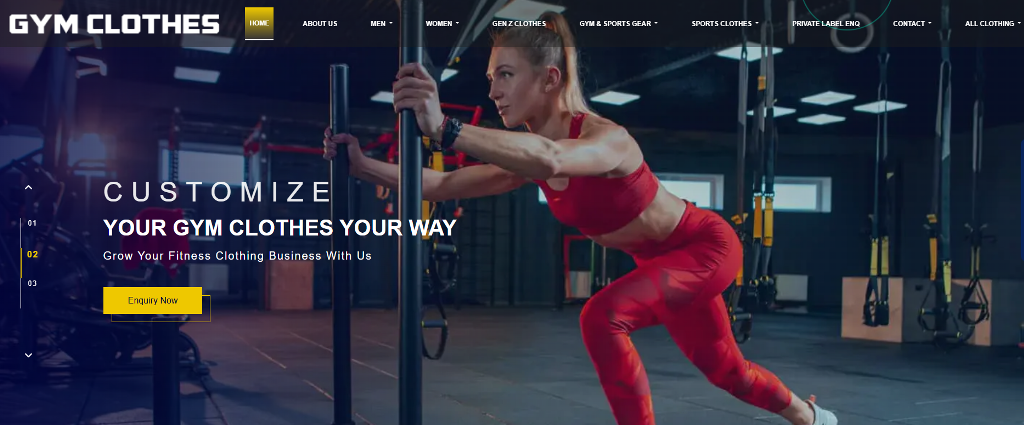
Activewear sits somewhere between merchandise and identity. Most clients cannot tell the difference between premium and mid-range fabric, but they immediately recognize branding. That is why, in a white label fitness strategy, story and design often matter more than technical specs.
Manufacturers like GymClothes make it possible for small brands to launch apparel without owning a factory. They offer both low-MOQ and high-MOQ models, which changes how you plan your rollout:
- Low MOQ: easier to test new designs, but higher per-unit cost
- High MOQ: better margins, but more inventory risk if a design flops
Typical timelines also shape expectations. From initial design to finished delivery, most private label apparel runs take roughly 8–12 weeks. That includes pattern approval, sample production, revisions, and bulk manufacturing. If you want custom fabrics or special stitching, the clock stretches further.
Many studios approach apparel like this:
- Start with one or two core pieces (leggings, hoodie, or tank).
- Keep branding clean and consistent with their visual identity.
- Release limited drops instead of permanent collections.
When apparel works, it does more than generate revenue. It turns clients into brand ambassadors. People wear your logo to the gym, on walks, or in everyday life, giving your white label fitness products visibility far beyond your classes or app.
Why Trainers, Gyms, and Agencies Choose White Label

Most fitness professionals do not wake up dreaming about supply chains or software architecture. They want to coach, build community, and grow revenue. That is why white label fitness products have become so attractive in 2026 — they remove friction while keeping the spotlight on the brand.
Faster time to market is usually the first win. A coach can launch a branded app in weeks instead of spending a year chasing developers. A studio can roll out branded bands or mats without setting up manufacturing. Speed matters because momentum is fragile. The faster you can test an idea with real clients, the faster you learn what actually works.
Then comes brand perception. Clients see a unified experience: your logo on the app, your colors on the gear, your name on the packaging. That coherence makes even small businesses feel established. It signals professionalism without forcing you to behave like a corporate giant. Over time, that consistency builds trust, and trust converts better than marketing hype.
Margins improve gradually, not overnight. At first, white labeling may look similar in cost to reselling someone else’s brand. But as volume grows, your economics get better. You control pricing, bundles, and promotions. You are not stuck in someone else’s margin structure. With digital white label fitness products, the incremental cost of adding new clients is low, which compounds in your favor.
Control over customer relationships is another quiet advantage. When you sell through a third-party platform, you often rent access to your own audience. With white label, the clients belong to you. You own the messaging, the data, and the follow-up. That makes it easier to cross-sell, retain members, and build long-term loyalty instead of chasing one-off transactions.
Scaling from local to regional also becomes smoother. A single studio can expand to multiple locations while keeping one branded app, one content library, and one product line. Agencies that manage multiple coaches can standardize systems without stripping individuality. White labeling gives you a repeatable blueprint that grows with your ambition rather than locking you into rigid templates.
Finally, there is a psychological benefit that rarely appears in spreadsheets. Running a business under your own brand changes how you show up. Decisions feel more intentional. Clients take you more seriously. Teams align around a shared identity. White label fitness products do not just optimize operations — they elevate how the business feels from the inside.
“Fitness is moving from a hobby to a core part of people’s identities, especially among Gen Z consumers.”
Source: McKinsey — What is the future of wellness?
The Economics Nobody Tells You
The money side of white labeling is less glamorous, but it is where most brands either win or stumble.
Upfront vs recurring costs usually look like this. Upfront, you pay for setup: branding, initial customization, design work, and sometimes minimum orders for physical goods. Recurring costs then take over: monthly software fees, hosting, maintenance, and restocking inventory. Smart operators budget for both instead of celebrating a cheap launch that becomes expensive to sustain.
When comparing app subscriptions vs custom development, the trade-offs are clear. White-label apps typically charge predictable monthly fees that scale with users. Custom development demands a much larger initial investment, but you own everything and avoid per-user pricing later. Many brands start with a white-label app to validate demand, then move toward a custom build once revenue is stable.
Inventory risk is the sharpest edge for gear and apparel. Ordering too much ties up cash and fills storage rooms. Ordering too little creates stockouts and frustrated clients. Minimum order quantities can force tough decisions, especially for smaller studios. Lead times add another layer of complexity — a misjudged launch date can leave you with product arriving long after the hype has faded.
Margins also behave differently across categories. Digital white label fitness products tend to have low variable costs, which rewards growth. Physical goods have higher per-unit costs, shipping fees, and return handling. Apparel sits in the middle: good margins if designs sell, painful write-offs if they do not.
The most sustainable approach blends all three. Use digital to generate steady recurring revenue. Layer in a small, focused line of physical products that reinforce your method. Treat inventory cautiously, not emotionally. When the numbers are respected, white label fitness products become a reliable engine instead of a financial gamble.
Launching White Label Fitness Products in 2026
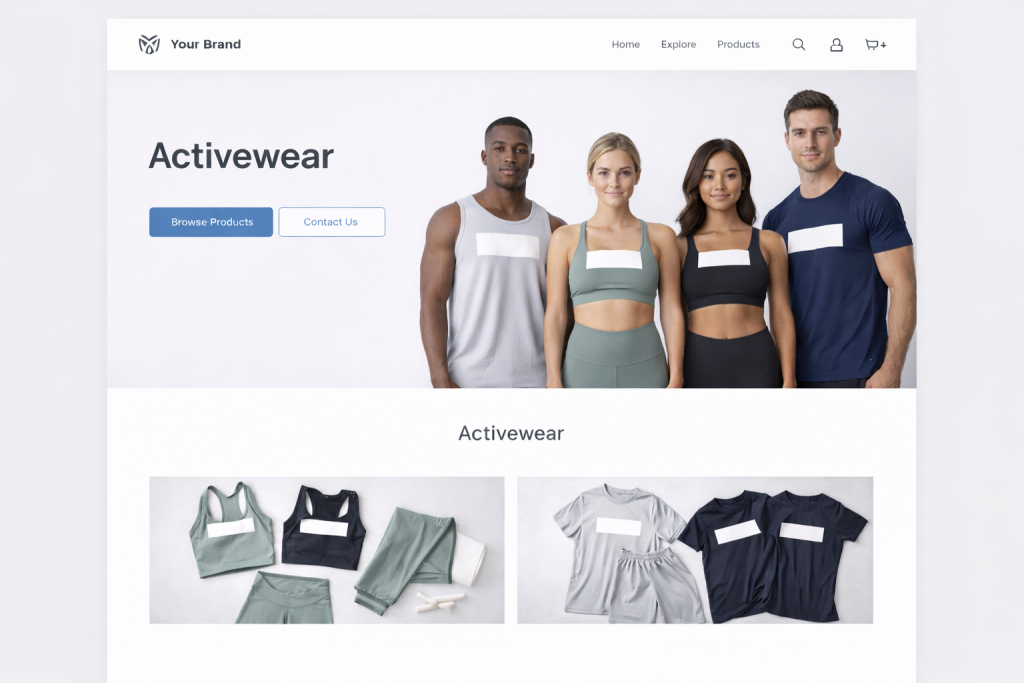
Launching white label fitness products in 2026 is a process of stacking sensible decisions, one after another, until your brand feels coherent and real. The strongest launches rarely look dramatic from the outside. They look thoughtful.
Step 1 — Pick your flagship product
Begin with the thing that already belongs to your world.
If you are an online coach, that usually means digital first. A branded coaching app or platform that reflects how you actually work with clients, how you program, how you communicate, how you track progress. You shape your system before you touch inventory.
If you run a physical studio, your starting point is often sitting on your shelves right now. The band members ask to buy. The mat that matches your space. The piece of gear that has become part of your identity. One product that carries your brand beyond your walls.
If your brand leans heavily on lifestyle and aesthetics, apparel can be the doorway. One hoodie. One legging. One tank. Something people would wear even if it didn’t have your logo.
Focus creates momentum. Spread creates confusion.
Step 2 — Choose your supplier or developer
This choice sets the tone for everything that follows.
With physical goods, conversations tend to revolve around practical realities:
- minimum order quantities
- production timelines
- customization limits
- how flexible the supplier is when you change your mind
The best partners explain constraints clearly instead of selling fantasies.
On the digital side, the key question is control. It is about whether workflows can actually reflect your coaching style, whether pricing can change as your business changes, and whether the system is capable of growing with you instead of pushing you toward a rebuild within a year.
A strong partner does not just deliver a product. They become part of how you operate.
Step 3 — Build your brand story
A product without a story feels replaceable.
Ask yourself three things before you launch:
- Why does this exist beyond revenue?
- Who is it truly for?
- How should it feel in use?
If your brand is disciplined and performance-driven, your app interface, packaging, and visuals should feel sharp and purposeful. If your brand is welcoming and community-first, the tone, colors, and language should reflect that warmth.
When the story is clear, white label fitness products stop looking like merchandise and start feeling like extensions of your method.
Step 4 — Test before scaling
Real feedback beats confidence.
Some brands run a small pilot with their most engaged clients and watch how people actually use the product. Others open pre-orders before placing large manufacturing orders. Digital-first businesses often release a beta version of their app to a limited group.
Listen for patterns, not opinions. If five people stumble on the same issue, that is data. If one person dislikes the color, that is taste.
Only after this stage does scaling make sense. Marketing budgets, larger production runs, broader distribution — all of that comes after you know your product works in the real world.
Common Pitfalls and How to Avoid Them

Many launch problems come from rushing decisions and assuming demand before it exists. Brands often order too much inventory out of enthusiasm, then end up storing products they cannot sell, which drains cash and creates pressure to discount. Others choose the cheapest app available, only to discover later that it cannot support their pricing, workflows, or growth, forcing a costly switch.
Weak branding quietly undermines otherwise solid products. When visuals, tone, or positioning feel unclear or inconsistent, the product becomes forgettable regardless of quality. Ignoring early customer feedback creates similar issues. Small complaints left unaddressed tend to resurface at a larger scale.
Timelines are frequently underestimated. Manufacturing delays, shipping issues, or software bugs can easily push a launch back, so buffer time is essential. Trying to launch multiple products at once also creates problems by splitting attention, inflating costs, and diluting the message.
Short-term hype can generate interest, but consistent product quality and usability determine whether people stay.
Realistic Launch Cases
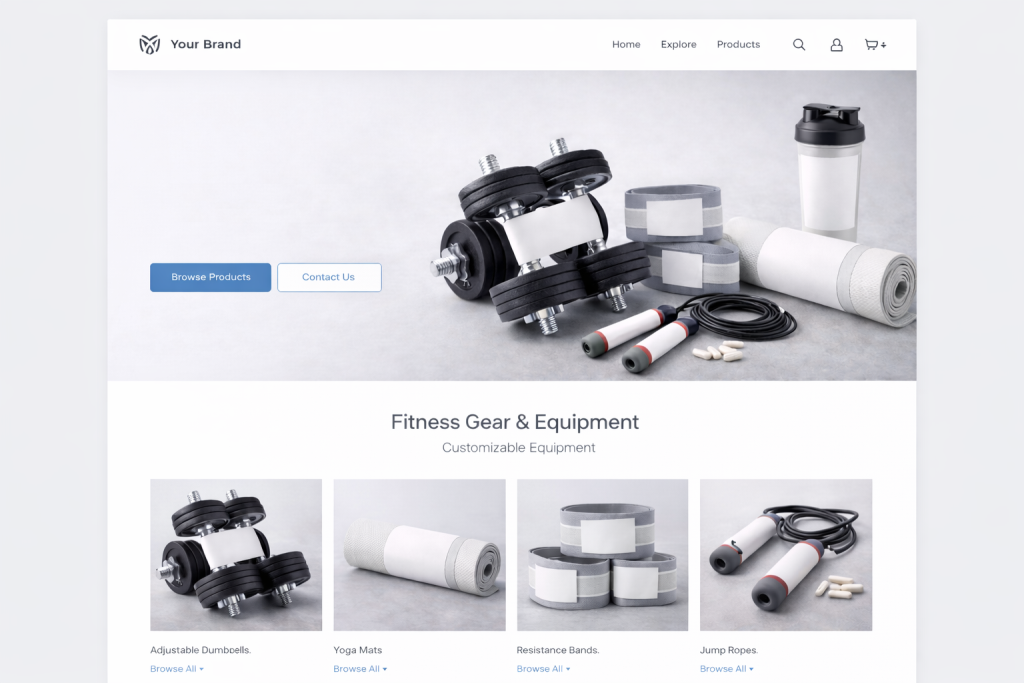
Three different paths show how white labeling can play out in practice.
Case 1 — Boutique Studio Brand
This studio treated its space as the testing ground before going digital.
- What they launched: branded resistance bands and yoga mats first, then a coaching app six months later.
- Budget: ~$18,000 total — about $9,000 for the first gear run (MOQs, packaging, shipping) and $9,000 for app setup, branding, and first-year fees.
- Timeline:
- Months 1–2: supplier selection, design, and samples.
- Months 3–4: first production run and in-studio sales.
- Months 5–6: branded app rollout to members.
- Months 1–2: supplier selection, design, and samples.
- Lesson learned: physical products created instant visibility, but packaging costs and storage were far higher than expected.
Case 2 — Online Coach
This coach built infrastructure before touching physical products.
- What they launched: a white label coaching app first, then a small line of supplements eight months later.
- Budget: ~$22,000 total — roughly $7,000 for app branding, onboarding, and first-year fees; ~$15,000 for the initial supplement batch.
- Timeline:
- Months 1–3: app launch, client migration, and beta testing.
- Months 6–8: supplement formulation, labeling, and first production run.
- Months 1–3: app launch, client migration, and beta testing.
- Lesson learned: starting digital created steady recurring revenue that reduced the risk of the supplement launch.
Case 3 — Regional Gym Chain
This chain used visibility first, then layered in digital.
- What they launched: branded apparel to unify locations, then digital programs a year later.
- Budget: ~$65,000 total — about $35,000 for the first apparel run and $30,000 for digital setup across all gyms.
- Timeline:
- Months 1–4: apparel design, samples, and bulk production.
- Months 9–12: rollout of branded digital programs and centralized content.
- Months 1–4: apparel design, samples, and bulk production.
- Lesson learned: apparel strengthened brand recognition, but digital programs were what actually improved retention.
White Label Fitness Products vs Building Everything Yourself
Choosing between these paths is really about speed, control, and risk.
| Aspect | White Label | Fully Custom | Off-the-Shelf App |
| Speed to launch | Fast | Slow | Very fast |
| Branding control | High | Very high | Limited |
| Upfront cost | Medium | High | Low |
| Long-term flexibility | Medium | Very high | Low |
| Data ownership | Usually yes | Yes | Sometimes |
| Maintenance | Vendor | You/Developer | Vendor |
In plain terms, off-the-shelf apps are the quickest way to get started, but they make you adapt to someone else’s system and design. They suit small, low-risk launches or short tests.
White label sits in the middle. You move quickly, your brand looks professional, and you avoid most technical work, yet you still live within some structural limits set by the provider.
Fully custom takes longer and costs more at the beginning, but it gives you the most freedom over workflows, monetization, data, and future growth. Many fitness businesses begin with speed and shift toward more control as they scale.
Digital Shift: Why Apps Matter More in 2026
The most meaningful change in fitness right now is not a new piece of equipment. It is how deeply digital delivery has become woven into everyday coaching. In 2026, apps are no longer a side channel. They are the spine of many fitness businesses, and that shift shows up clearly in the numbers.
“AI has become a cornerstone of modern fitness coaching, analyzing performance data to adapt exercise routines in real-time…”
Source: Global Wellness Institute — Initiative Micro-Trends
Grand View Research estimates the global fitness apps market at $12.12 billion in 2025, projecting it to reach $33.58 billion by 2033 with a 13.40% CAGR from 2026 to 2033. A separate Business Wire / ResearchAndMarkets report tells a similar story, forecasting growth from $12.1 billion in 2024 to $25.8 billion by 2030 at roughly 13.5% CAGR. Those are not niche figures. They reflect a structural move toward digital coaching, habit tracking, and remote engagement.
Live and on-demand video sit at the center of this shift. Clients now expect real-time access to their coach, whether through one-on-one sessions, small group classes, or recorded programs they can replay anytime. What used to feel like a bonus has become a baseline. For many brands, video is where retention happens, not just content marketing.
Branding your digital experience now carries the same weight as branding your gear. A beautifully designed band loses impact if your app feels generic. A polished studio identity falls flat if your coaching platform looks like a template. This is why white label fitness products increasingly include a strong digital layer alongside physical goods.
Even the supplements market, already above $210.41 billion in 2025 and moving toward $229.77 billion in 2026, ties back to digital. Successful brands rarely sell products in isolation. They pair them with programs, tracking, and community inside a branded app.
In 2026, growth belongs to fitness brands that treat their digital presence as core infrastructure, not an add-on.
Building a Fitness Platform Under Your Brand with Scrile Stream
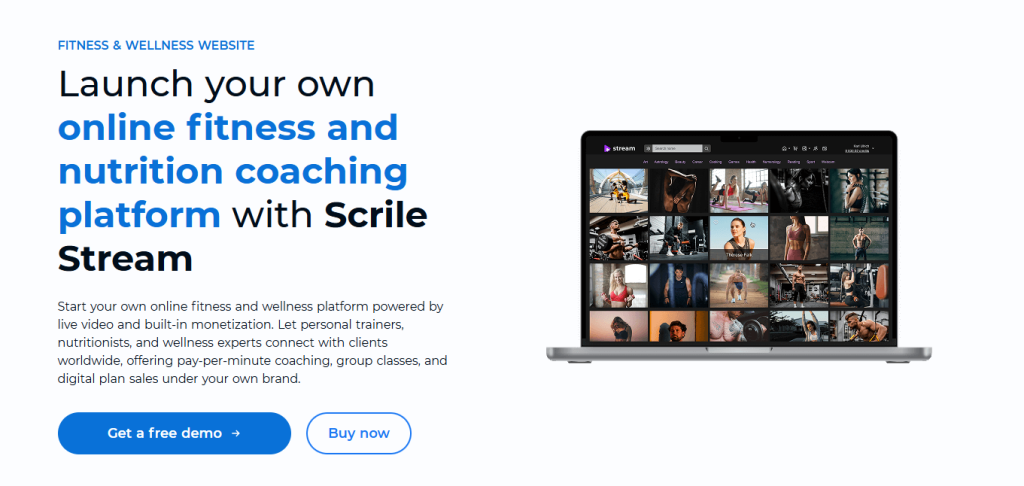
Scrile Stream exists for brands that want ownership instead of imitation. It is not a ready-made platform you sign up for and tweak with your logo. It is a custom development service that builds a fitness system around how you actually run your business, how you coach, and how you make money.
With Scrile Stream, you are not adapting to someone else’s rules. The software adapts to yours. You define workflows, pricing logic, and user journeys instead of squeezing your model into prebuilt templates. Your brand is not a skin on top of a generic product. It is the core of the product.
What this looks like in practice for fitness businesses:
- Fully branded interface: your logo, domain, color system, and visual language across the entire experience.
- Live 1-on-1 coaching: real-time video sessions with flexible pricing models that fit your style of working with clients.
- Monetization built your way: subscriptions, tipping, referrals, and prepaid session packages that match your business logic.
- Content library: a structured space for replays, programs, and bundles that you control and monetize.
- Smart admin layer: tools for managing trainers, scheduling, payouts, and permissions without technical friction.
- Actionable analytics: clear visibility into engagement, revenue, and client behavior so you can make decisions based on real data.
Because it is built specifically for you, Scrile Stream scales with your ambitions rather than limiting them. You keep control over your customer relationships, your data, and your product roadmap. You are not renting access to your own audience.
For studios, online coaches, and multi-trainer businesses that want a truly branded digital ecosystem, this approach removes the compromises that come with standard white-label apps.
Summary:
- Fitness apps aren’t niche anymore: Grand View Research estimates $12.12B (2025), projecting growth to $33.58B by 2033 (about 13.40% CAGR from 2026).
- Another major forecast shows similar momentum: $12.1B (2024) → $25.8B (2030) at roughly 13.5% CAGR.
- Your own “Realistic Launch Cases” show what “white label” looks like in practice: launches ranging from ~$18k (studio gear + app) to ~$65k (regional chain apparel + digital).
Takeaway: The strongest fitness brands in 2026 don’t pick one product type. They build a branded ecosystem: digital for recurring revenue + one focused physical line for identity and retention.
Conclusion
White labeling in fitness works best when you treat it as a toolkit that expands what your brand can do, not a quick fix for growth. It gives you access to professional infrastructure while keeping your identity, your pricing, and your relationships front and center. Used thoughtfully, it lets you move faster without losing control of what makes your business distinct.
The most resilient fitness brands in 2026 rarely rely on a single product type. They combine digital systems with physical goods in a way that reinforces their method. An app that tracks progress pairs naturally with branded equipment people actually use. Apparel builds visibility, while a coaching platform builds retention. Each piece supports the others instead of competing for attention.
Control has also become a defining advantage. Owning your brand experience and your customer data matters more than ever as platforms, algorithms, and policies continue to change. Businesses that depend entirely on third-party ecosystems remain vulnerable. Brands that design their own systems gain stability, flexibility, and leverage.
This is where the next step becomes clear for serious fitness entrepreneurs. If you want a digital foundation built around your coaching style, your monetization logic, and your long-term vision, you need a system created specifically for you, not a generic template.
Scrile Stream makes that possible by developing a fully branded, custom fitness platform that grows with your business. If you are ready to stop adapting to off-the-shelf tools and start building something truly yours, contact the Scrile Stream team and begin shaping your own fitness ecosystem today.
FAQ
What is an example of a white label product?
In fitness, this can be a branded resistance band produced by an external manufacturer, a private-label line of activewear made in a partner factory, or a coaching app released under your own brand while the technology is maintained by another provider.
What does white labelling a product mean?
For fitness businesses, it means selling a product or service under your own name while another company handles most of the manufacturing or technical work, allowing you to focus on branding, coaching, and client relationships.
What are white label digital products?
These are prebuilt digital tools such as branded fitness apps, online training programs, or coaching platforms that you customize with your identity and sell to clients while the original developer manages updates and infrastructure.

Digital first was the move. The app made renewals automatic, then merch started selling because the community felt real.
Anyone have tips for avoiding tool lock-in? Branding is easy; workflows + pricing flexibility are what I’m worried about later.
Apparel helped unify our locations, but retention only improved after we rolled out structured programs + video inside one platform
We started with one SKU (bands) and it sold out fast. Packaging was the surprise cost — wish I budgeted for it upfront.